By Cate Nakyanzi

As the world marks the international Cancer Day today, 4 February 2023, the latest figures indicate that the disease is the leading killer of human beings with about 10 million lives lost globally.
Cancer is a generic term for a large group of diseases that can affect any part of the body. One defining feature of cancer is the rapid creation of abnormal cells that grow beyond their usual boundaries, and which can then invade adjoining parts of the body and spread to other organs which is the primary cause of death from cancer.
Tobacco use, alcohol consumption, unhealthy diet, physical inactivity and air pollution are risk factors for cancer and other noncommunicable diseases. However, health experts say Cancer mortality can be reduced when cases are detected and treated early.
According to the World Health Organization (WHO), a specialized agency of the United Nations responsible for international public health, cancer is a leading cause of death worldwide, accounting for nearly 10 million deaths.
The recent WHO 2020 report (in terms of new cases of cancer) were; breast (2.26 million cases); lung (2.21 million cases); colon and rectum (1.93 million cases); prostate (1.41 million cases); skin (non-melanoma) (1.20 million cases); and stomach (1.09 million cases).
The WHO report indicates that the most common causes of cancer death in 2020 were: lung (1.80 million deaths); colon and rectum (916 000 deaths); liver (830 000 deaths); stomach (769 000 deaths); and breast (685 000 deaths).
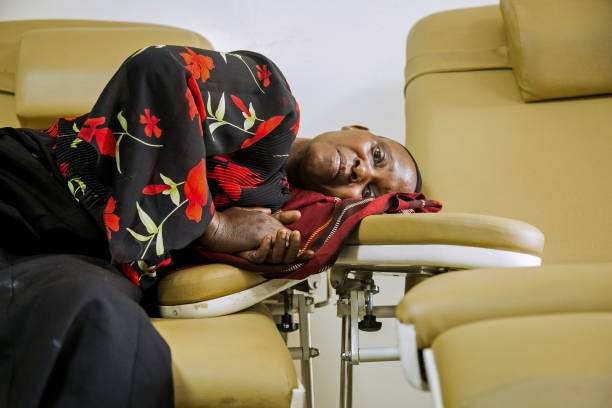
This year’s theme marks the second year of the campaign “close the care gap” which is about understanding the inequities in cancer care and taking actions to make the necessary progress to address them.
In Uganda, an estimated 33,000 Ugandans are diagnosed with cancer every year, of which, only about 7400 make it for care at the Uganda Cancer Institute.
Using the Kampala Cancer Registry data, the top five cancers in Uganda are; Kaposi sarcoma (KS), cervical, breast and prostate cancer, and non-Hodgkin’s lymphoma (NHL).
Uganda Cancer Institute (UCI), the only comprehensive cancer treatment center in Uganda, registers about 4000 new cancer patients a year. However, many cancer patients in Uganda never receive treatment due to a variety of challenges.
Addressing journalists this week, Dr Jackson Orem, the executive director of Uganda Cancer Institute (UCI) said about 54.6 percent of all cancer patients in Uganda come from the central region followed by the mid-northern region with 33.4 percent.
Dr. Orem added that Kigezi Sub-region in western Uganda is in third position with 31.62 percent, Busoga in eastern has 30.1 percent, Ankole Sub-region has 29.17 percent), Rwenzori (25.04 percent), Teso (21.07 percent), Bugisu (13.07 percent), West Nile (11.04 percent) and Karamoja with 8.68 percent.
In 2018, the Ugandan government announced plans to establish five regional cancer treatment centers in Mbale for Eastern Uganda, Gulu for the North, Mbarara for the West, and Arua for the West Nile region. Construction for the regional centers was estimated to cost over 175 billion Shillings.
The government so far launched the construction for some of these Regional Cancer Institutes.
It is estimated that by the year 2030, cancer deaths around the world will increase to 13 million people if no new measures are put in place.