By Oweyegha-Afunaduula
25 March 2024
The indigenous people of Uganda are today faced with the crisis of “belonging” and “liberation” from foreign interests and their agents. It is serious because while in the past we had a strong intellectual presence in our institutions of higher learning, and in society, that could articulate and clarify issues for the general public without fear or favour, there is a total conspiracy of silence when things are continually going wrong in every sphere of human endeavour. Our numerous universities are emphasizing academicism and scholasticism aimed at produce mem and women of great academic (or book) knowledge but little intellectual capacity.
Academic people who were in the past endowed with great intellectual powers have recently fallen silent. They preoccupy themselves with ensuring that they are not victims of the now institutionalised “Publish or Perish” cry-phrase in the academia.

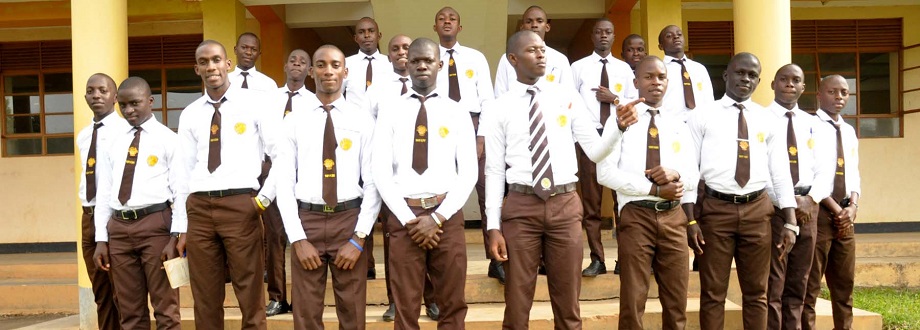
The hierarchical way of doing things continues to be the means to do research, teach, produce knowledge, transfer knowledge and stream off graduates at all levels of society. Virtually all graduates at all levels of education are produced as if all of them are destined to become professors in their disciplines of instruction. Educational change and leading educational change have over the last 20 years, at least in Uganda, tended to reproduce hierarchical change in every way, with the teacher as the source of all knowledge. Notes still predominate.
Jordan Corson (2023) says that the field of educational change needs to fundamentally shift understandings of, and approaches to, research, reform, and much else. In one sense, stepping back and rethinking what is meant by educational change and who is enacting change gets at how things are carved up and structured in schools and research. Even after many years of critiquing this isolated,
hierarchical way of doing things, it’s still a common setup to find a teacher who knows a thing at the front of a classroom and students who have to learn that thing lined up in rows”.
My interest in this article is to show why present-day academics cannot lead educational change that can assure Ugandans of continued security of belonging in their natural ecological and environmental spaces and hence ancestral lands. Manipulations to grab ancestral lands and agroecological systems are multiplying as our academics are preoccupied with qualifications and qualifying others. And
intellectuals offer themselves as easy prey for co-option by the powers that be. It is not uncommon for such intellectuals to speak louder than the owners of the political system in defence of system failures and in praise of even dismal achievements. This assures them of primitive accumulation.
In my article recent article “The military capture of Uganda’s civic space yesterday and today”, I defined Environmental Space as “the amount of any particular resource that can be consumed by a country without threatening the continued availability. In the thinking that defines environment as everything, environmental space includes all the other spaces, including the military”, and Ecological Space as” where different niches of different species of living things are congregated allowing coexistence to exist
and manifest “. I should have mentioned that the environmental space consists of many ecological spaces. Whatever the case, every species struggles for continuity of belonging and to liberate itself from threats to its belonging right. Charles Darwin, in his The Origin of Species, talked of “Survival of the Fittest”. However, in our human world of inequalities and injustices, it is the Unfit that are surviving in every sphere of human endeavour while those who would naturally be the Fit ones are being pushed
out of existence and survival. This can explain why the poor countries are becoming poorer and 2 unlivable. The surviving unfit are the ones teaching, leading, governing, legislating, leading, judging, et cetera.
In Uganda, the single most threat to the belonging of species, including Man, Homo sapiens, is Man; particularly the political, entrepreneurial, corporate and nomadic-pastoral Man. Most of the blame goes to our education system, which continues to produce selfish and individualistic graduates, who in the total society manifest as the greedy, the selfish and the individualistic. When they should be building communities, society and country as “wholes” they build themselves, their families, kith and kin and
ethnic groups. The government made it worse when early in the rule of National Resistance Movement (NRM), it chose to sow seeds of individualism through the President’s individual merit approach to politics, leadership and governance. The Uganda Constitution 1995 complicated matters even more when it invested all power, authority and sovereignty in the occupier of the Office of President of Uganda, who has been the same for 38 years. The President perfected the practice of presidentialism whereby he has acted more or less as an individual with the exclusive leeway to interfere in the structures, processes and functionality of State institutions in pursuit of his own and other interests.
Indeed, he has repeatedly said it is interests, not identity that matters. This stance of the President is one major reason why corruption of virtually of everything has become worse with the passage of time.
One aspect of the structure and function of our society that has been immensely corrupted is belonging.
Virtually all indigenous communities of Uganda are experiencing widespread pollution or displacement and dispossession of their time-tested belonging by people with historical, biological and ecological roots outside the country. These include Indians, Chinese and refugees from elsewhere, especially the nomadic pastoralists from Rwanda, Mulenge in the Democratic Republic of Congo and Karagwe,
Tanzania.
Therefore, the most critical challenge of the indigenous groups of Uganda today, as they are preoccupied with electoral politics that benefits others, is liberating their ancestral belonging from the foreigners. Unfortunately, the current education and educational changes being pursued by government do not promise much, if anything, by way of liberation of the belongings of the indigenous people.
We need knowledgeable, educated people with connected minds that are also connected to the minds of our local and traditional peoples, to wage a successful liberation struggle against displacement, disconnection and dispossession by people from elsewhere. We cannot have such educated people when our universities continue to produce graduates who are structurally and functionally disconnected from each other within the universities and from the local and traditional society. We need a drastically different education system to produce for us people who are forward-looking, not backward looking, and who are, therefore, futuristic rather than momentary in their outlook, focusing on individual benefits of the time: higher qualifications, careerism, money, possessions, power and glory.
Nyerere Kambarage (1975) wrote an educationally influencial article titled “Education for Liberation in Africa” We needed and still need education for liberation in Africa; not education for acquisitions, domination and exploitation. Unfortunately, in this century of new and different knowledge production, information and communication, our education continues to be what it was when Nyerere Kambarage called for education for liberation in Africa. We cannot continue with education tuned to the past and expect to liberate anything, including ourselves. What we see are the products of formal education that are easy prey for use and manipulation by foreigners in their scheme of continuous colonialism, neocolonialism, conquest, occupation, displacement, dispossession and concealment of genocide, this time round by proxy. 62 years later our academics and intellectuals have been almost totally silenced.
And go on with their business as usual as if nothing is grossly wrong.
3
I have spent a lot of my retirement time hyping the truism that we need graduates that are cortical thinkers; can genuinely interact with others within and outside the academia; are future-ready professionals; can help us build a more open society; and can prepare our young people for a future we cannot predict (e.g., Hatch, et. al., 2021). I have emphasised that disciplinary education belongs to the past because its designers, like the orthodox colonialists, prefer to produce graduates of the education
system with individualistic aspirations and goals, and who cannot think wholistically. Because they cannot think wholistically they cannot see wholistically (it is the brain that sees while the eyes observe) nor act wholistically. We cannot expect such knowledge workers to serve as agents of liberation in a century of integration and reintegration – the 21st Century. They are roadblocks to meaningful and effective belonging and liberation. They belong to academic territories and academic tribes, not the whole university system or country. They manifest there behind the ivory tower.
Sadly, the intellectual space in Uganda continues to shrink. Besides, it is being invaded and depressed by the military. The process of de-intellectualisation of the academics and the academia is spiraling upwards. There are now many military personnel manifesting as the intellectuals, articulating and clarifying issues for society in favour of the status quo. The intellectual situation is not being helped by the fact that the education system has, for more than a decade, been firmly in the hands of State House
with Mrs Kataha Museveni as Minister of Education and President Museveni as her Supervisor. Some academics work as second fiddle the Ministry of Education and its statutory bodies. There is so much fear in the academia, where now some of the military people are not only the students but also the lecturers, while others hover as spies. Meaningful, effective and qualitative higher education is in jeopardy.
As Buchanan (1973) writes, the major liberation struggle today is the struggle of peoples to free themselves from colonial and neocolonial domination, whether this domination be political, military, economic or cultural. He adds that the liberation must be total, including (i) liberation of students from educational systems devised to condition and dominate, and (ii) the liberation of workers from the false promise of an affluence, which makes of them supporters of a system that exploits them simultaneously with exploiting the rest of humankind. In Uganda, such exploitation is magnified by linking students and workers to the exploitative ruling party, National Resistances Movement, which in essence is resisting the nationals and nation of Uganda in order to satisfy and meet the interests of foreigners. And the poor
and needy people are being exploited through economic schemes such as Parish Development Model (PDM) whereby money bonanzas are given to them, ostensibly to develop themselves. However, most of the money ends up being misappropriated by State or NRM party functionaries. The Conversation (2016) discusses how liberators turn into oppressors by referring to rulers in Southern African States.
In my article “The New Imperialism in Uganda: Primitive Accumulation by Dispossession”, I describe how dispossession of indigenous peoples is proceeding in Uganda in a sea of silence in our universities. This partly explains what can happen in a country when there is inadequate academic and intellectual freedom. At a time when the people need the beneficiaries, that government spent public funds on to acquire education, to articulate and clarify complex issues for them, things are happening to
the disadvantage of the citizenry. Our academics and intellectuals seem either to be sleeping with naked eyes or are mired in primitively accumulating wealth just like those in charge of the country.
Clearly, the country cannot expect liberation leadership from our academics and intellectuals collectively or individually, as dispossession of our people of their ancestral belonging intensifies.
4
Suissa and Sullivan (2022) set out a powerful argument for the role of academic freedom in pursuing truth within the academy and developing democracy beyond it. They effectively counter attempts to narrow the scope of academic freedom so as to render it compatible with no-platforming. And they lay out a series of practical steps administrators can take to ensure that universities are places where an expansive and pluralistic intellectual climate prevails. However, as I have severally stated, freedom will begin to creep into, or to be taken seriously, our academia when we open up to the new sciences of interdisciplinarity, crossdisciplinarity, transdisciplinarity and extradisciplinarity, which are the vehicles and theatres of connected learning and teaching. In these sciences there is no superiority and inferiority. Fear is not a source and means of influence and domination. Both students and teachers can act together in favour of genuine liberation and freedom within and outside the knowledge enterprises.
Let there be academic achievement and intellectual well-being at our university campuses relevant to the aspirations of our people and country.
For God and My Country.
FURTHER READING
Buchanan Keith (1973). The Role of Intellectuals in Aiding the Liberation Struggle. The Journal of Contemporary Asia; Abingdon, Vol. 3 Issue 1 (Jan 1973): 34.
HATCH, T. (2023). Belonging and Liberation through Educational Change: Lead the Change Interview with Jordan Cordon. International Education News, December 20 2023. https://internationalednews.com/2023/12/20/belonging-and-liberation-through-educational-change-lead- the-change-interview-with-jordan-corson/ Visited on 24th March 2024 at 11.48.
Hatch, T., Corson, J., & van den Berg, S. G. (2021). The education we need for a future we can′ t predict. Corwin.
Ito, M., Gutiérrez, K., Livingstone, S., Penuel, B., Rhodes, J., Salen, K., … & Watkins, S. C. (2013). Connected learning: An agenda for research and design. Digital Media and Learning Research Hub.
Jocelyn Alexander, Paolo Israel, Miles Larmer & Ricardo Soares de Oliveira (2020) Liberation Beyond the Nation: An Introduction, Journal of Southern African Studies, 46:5, 821-828, DOI: 10.1080/03057070.2020.1810912.
Judith Suissa and Alice Sullivan (2022). How can Universities Promote Academic Freedom? Insights From the Frontline of the Gender Wars. IMPACT,18 September 2022 Wiley Online Library https://onlinelibrary.wiley.com/doi/full/10.1111/2048-416X.2022.12007.x Visited 24th March 2024. Moll, L., Amanti, C., Neff, D., & Gonzalez, N. (2006). Funds of knowledge for teaching: Using a qualitative approach to connect homes and classrooms. In Funds of knowledge (pp. 71-87). Routledge.
Nyerere, J. Kambarage (1975). Education for Liberation in Africa. Prospects: quarterly review of education, V, 1, p. 3-11; UNESCO International Bureau of Education.
OWEYEGHA-AFUNADUULA: The New Imperialism In Uganda: Primitive Accumulation By Dispossession https://ultimatenews.co.ug/2023/02/oweyegha-afunaduula-the-new-imperialism-in- Uganda-primitive-accumulation-by-dispossession/ Visited 24th March 2024.
5
Patel, L. (2015). Decolonizing educational research: From ownership to answerability. Routledge.
The Conversation (2016). How Liberators Turn into Oppressors: A Study of Southern African States.
The Conversation, April 11 2016. https://theconversation.com/how-liberators-turn-into-oppressors-a- study-of-southern-african-states-57213 Visited 24 March 2024 at 14:32 Wortham, S., Shim, C., Kim, D., & Shirley, D. (2023). Can Korea have academic achievement plus well- being? The case of Hyukshin schools. Journal of Educational Change, 1-23.