

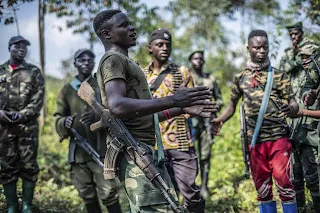
Peace negotiations between the Democratic Republic of Congo (DRC) government and M23 rebels in Doha, Qatar, have made significant progress, with both sides committing to steps aimed at ending the long-standing conflict.
The dialogue, which began earlier this month, is being mediated by Qatar’s Emir, Tamim bin Hamad Al Thani. On Wednesday, M23’s political spokesperson, Lawrence Kanyuka, announced in a statement that both parties had agreed on a set of recommendations intended to guide the peace process.
These include a mutual commitment to an immediate and effective ceasefire, a complete halt to hostilities, condemnation of hate speech and threats, and an agreement to address the root causes of the conflict in eastern DRC. The parties also pledged to determine the appropriate mechanisms for ending the crisis.
In addition, they jointly urged the Congolese public, religious institutions, and media to promote the message of peace and unity. On Thursday, Papy Mbuyi Kanguvu, head of the DRC government delegation, released a matching statement, confirming the agreements.


