

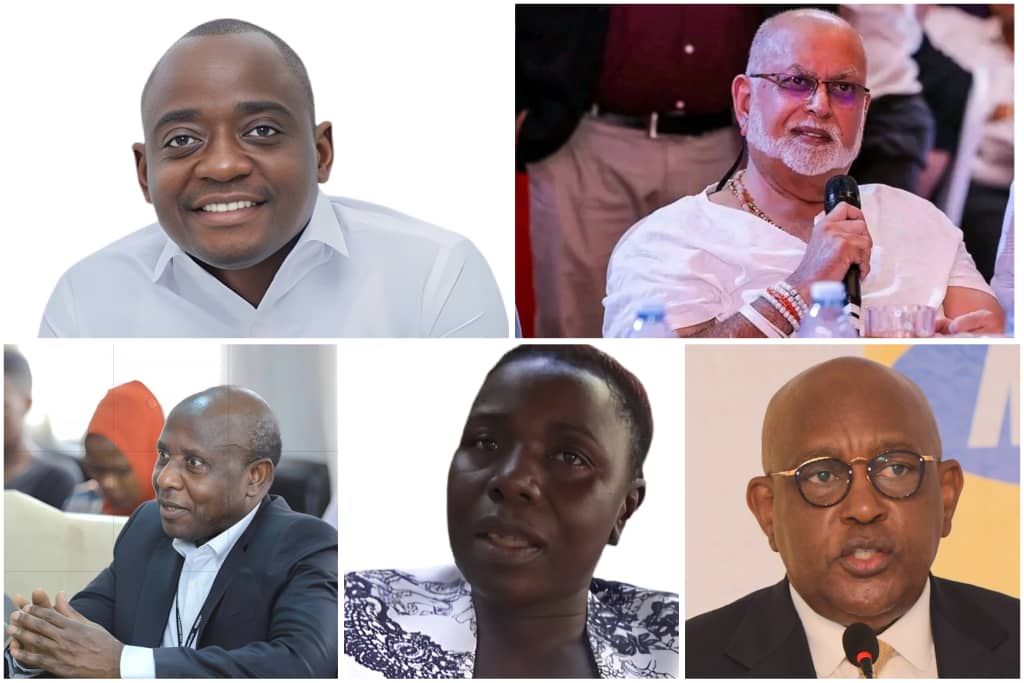
Uganda’s wealth story is being written not on trading screens, but in property registries, fuel depots, hotel estates and industrial yards. In a market where public equity participation remains limited, the country’s largest fortunes are overwhelmingly privately built, asset-backed and operationally driven.

With nominal GDP estimated near US$65 billion, the combined estimated wealth of Uganda’s 15 largest private capital holders stands at roughly US$10.3 billion — a material share of national output for a frontier economy. While per capita income remains modest and much of economic activity remains informal, a small group of entrepreneurs has accumulated substantial capital through strategic control of tangible, income-generating assets.
Unlike mature economies where wealth is equity-market centric, Uganda’s high-net-worth landscape is anchored in commercial real estate, petroleum distribution, hospitality estates, manufacturing platforms and selective telecommunications equity stakes. Prime urban land in Kampala’s central corridors remains the single most powerful wealth multiplier, with rental yield stability and long-term appreciation driving valuations more than stock market exposure.
The country’s leading fortunes fall into identifiable archetypes: development-driven builders expanding through successive construction cycles; CBD consolidators monetizing dense retail corridors; distribution magnates leveraging fuel and logistics networks; industrial operators scaling production; and equity-linked strategists tied to corporate performance. Across models, one constant remains — asset intensity.
As oil production advances and digital finance expands, Uganda stands at a structural inflection point. The coming decade will determine whether new sectors broaden capital participation or reinforce the dominance of land-heavy incumbents. In 2026, the architecture of wealth in Uganda remains tangible, operational and concentrated — shaped less by financial engineering and more by control of the country’s most valuable physical assets.
The Ranking (Asset-Based Estimates)
Below are indicative asset-based estimates compiled from commercial property holdings, corporate shareholdings, industrial operations and publicly verifiable enterprises. Figures are not audited declarations.
1. Hamis Kiggundu — ~$1.35 Billion
Source of Wealth: Commercial Real Estate, Industrial Infrastructure, Fintech, Land Banking
Justification: High-density mixed-use property portfolio across Kampala, emerging agro-industrial free zone, beverage production assets, fintech platform exposure and reported international holdings.
2. Sudhir Ruparelia — ~$1.2 Billion
Source of Wealth: Real Estate, Hospitality, Education, Insurance, Floriculture
Justification: Extensive commercial property control, premium hospitality estates, institutional education assets and export-oriented floriculture operations under the Ruparelia Group.
3. John Bosco Muwonge — ~$850 Million+
Source of Wealth: CBD Commercial Property
Justification: Large-scale concentration of rental-generating commercial real estate across Kampala’s highest footfall corridors.
4. Drake Lubega — ~$800 Million+
Source of Wealth: Commercial Property, Industrial Assets
Justification: Aggressive acquisition of CBD arcades via Jesco Industries Limited, recurring rental cash flow and supporting industrial holdings.
5. Mansour Matovu — ~$785 Million
Source of Wealth: Retail Commercial Real Estate
Justification: High-density CBD arcades built from reinvested trading capital; strong rental yield concentration.
6. Karim Hirji — ~$785 Million+
Source of Wealth: Hospitality, Commercial Real Estate, Automotive Distribution
Justification: Imperial Hotels Group portfolio, Cham Towers ownership and diversified Dembe Group enterprises.
7. Christine Nabukeera — ~$710 Million+
Source of Wealth: Premium Residential & Commercial Property
Justification: Landmark commercial holdings including New Pioneer Mall and upscale residential developments in high-growth corridors.
8. Tom Kitandwe — ~$700 Million+
Source of Wealth: Commercial Real Estate, Land & Agribusiness
Justification: Multi-decade CBD property expansion plus large agricultural landholdings and telecom-linked investments.
9. Guster Lule Ntake — ~$670 Million+
Source of Wealth: Hospitality, Agriculture, Manufacturing
Justification: Blended service-sector revenue with food processing and land-backed assets.
10. Godfrey Kirumira — ~$615 Million+
Source of Wealth: Petroleum Distribution, Real Estate
Justification: Cash-flow-driven fuel network under GELP/KPI, stabilized by commercial property and telecom infrastructure leases.
11. Charles Mbire — ~$600 Million+
Source of Wealth: Telecommunications Equity, Energy
Justification: Significant MTN Uganda shareholding and diversified strategic corporate investments.
12. Amos Nzeyi — ~$550 Million+
Source of Wealth: Beverage Manufacturing, Food Production
Justification: Crown Beverages bottling dominance, staple food production and hospitality assets.
13. Ahmed Omar Mandela — ~$535 Million+
Source of Wealth: Petroleum Retail, Hospitality, Milling
Justification: Vertically integrated fuel distribution, Café Javas brand equity and agro-processing through Mandela Millers.
14. Haruna Ssentongo — ~$490 Million+
Source of Wealth: Urban Commercial Real Estate
Justification: Redevelopment of high-density retail zones into structured markets and rental towers.
15. Patrick Bitature — ~$220 Million+
Source of Wealth: Telecommunications Distribution, Energy
Justification: Simba Telecom regional expansion, thermal power generation investment and hospitality assets.
Capital, Control and the Next Phase of Growth
Uganda’s largest private fortunes are built less on financial markets and more on control of tangible, income-producing assets — commercial property, distribution networks, hospitality estates, manufacturing platforms and selective equity stakes. In a market where public capital instruments remain limited, land ownership and operational scale have been the primary engines of wealth creation.
This asset-heavy model provides durability: rent recurs, infrastructure compounds and industrial capacity scales. Yet concentration is material. In a roughly US$65 billion economy, more than US$10 billion in estimated private assets sits within a relatively small cohort, reflecting both entrepreneurial execution and structural barriers to entry.
As oil production, digital finance and industrial expansion accelerate, the central question is whether Uganda’s next growth phase broadens capital participation — or further consolidates economic power among existing asset holders.


