Archbishop Charles Agyinasare has urged church leaders and Christian associations to engage and guide prophets whose pronouncements cause public concern, arguing that the police should not be expected to regulate prophecy.

The Founder and Prelate of Perez Chapel International said law enforcement agencies could intervene when prophetic declarations create fear and panic, but questioned how the police could assess the spiritual claims behind such pronouncements.
Speaking on Channel One TV’s The Point of View with Bernard Avle on Monday, November 16, Archbishop Agyinasare said the responsibility for addressing excesses in prophetic ministry should largely rest with the Church.
“I believe that what the police can do is to prevent people from getting into excess or people creating fear. But to want to really police prophecy, how are you going to measure it?” he asked.
He called on church leaders and Christian associations to take the initiative by bringing prophets together for dialogue and biblical instruction.
“I think the churches and the associations need to invite the prophets,” he stated.
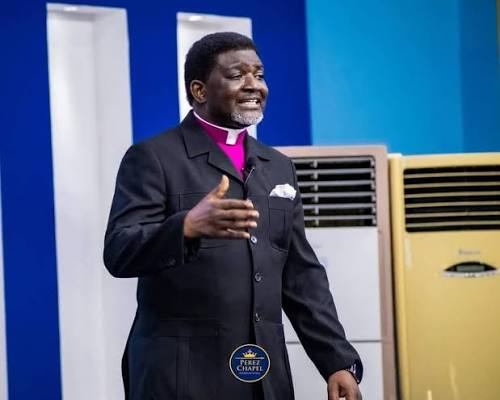
Archbishop Agyinasare said some people involved in prophetic ministry had emerged from difficult circumstances and developed their spiritual practices through prayer and fasting, while receiving little support or guidance from established religious authorities.
He urged church leaders to approach them through engagement rather than condemnation, arguing that a more conciliatory approach could encourage them to listen and change.
“The way to deal with those people is not to hit them on the head. You don’t attract bees with vinegar. You attract bees with honey,” he said.
He added that some prophets had indicated they would have welcomed opportunities to discuss concerns about their conduct and teachings with established church leaders.
“I think that the leaders of the church must consciously make an effort to get these people to sit down,” he said.
Archbishop Agyinasare urged the Church to use such opportunities to provide guidance and correct practices that depart from biblical teachings.
“So if that is what they are saying, I think that we should take it as an opportunity to help school them,” he said.
He noted that false prophets, apostles and teachers were not a new phenomenon, citing examples from the time of Moses, Jesus, Peter and Paul.
“False prophets, false apostles, false teachers didn’t start today,” he said.
“But if we want to sanitise the church, then we must have proactive ways of reaching them and teaching them,” he added.
He also called for ministers to be taught the biblical standards expected of church leaders, citing the qualifications for overseers outlined in 1 Timothy chapter three.
He said church leaders must uphold those standards while communicating in a way that encourages people to change rather than alienating them.
“So we as leaders must preach the truth in a way that we don’t drive people away, in a way that people are willing to change,” he said.