

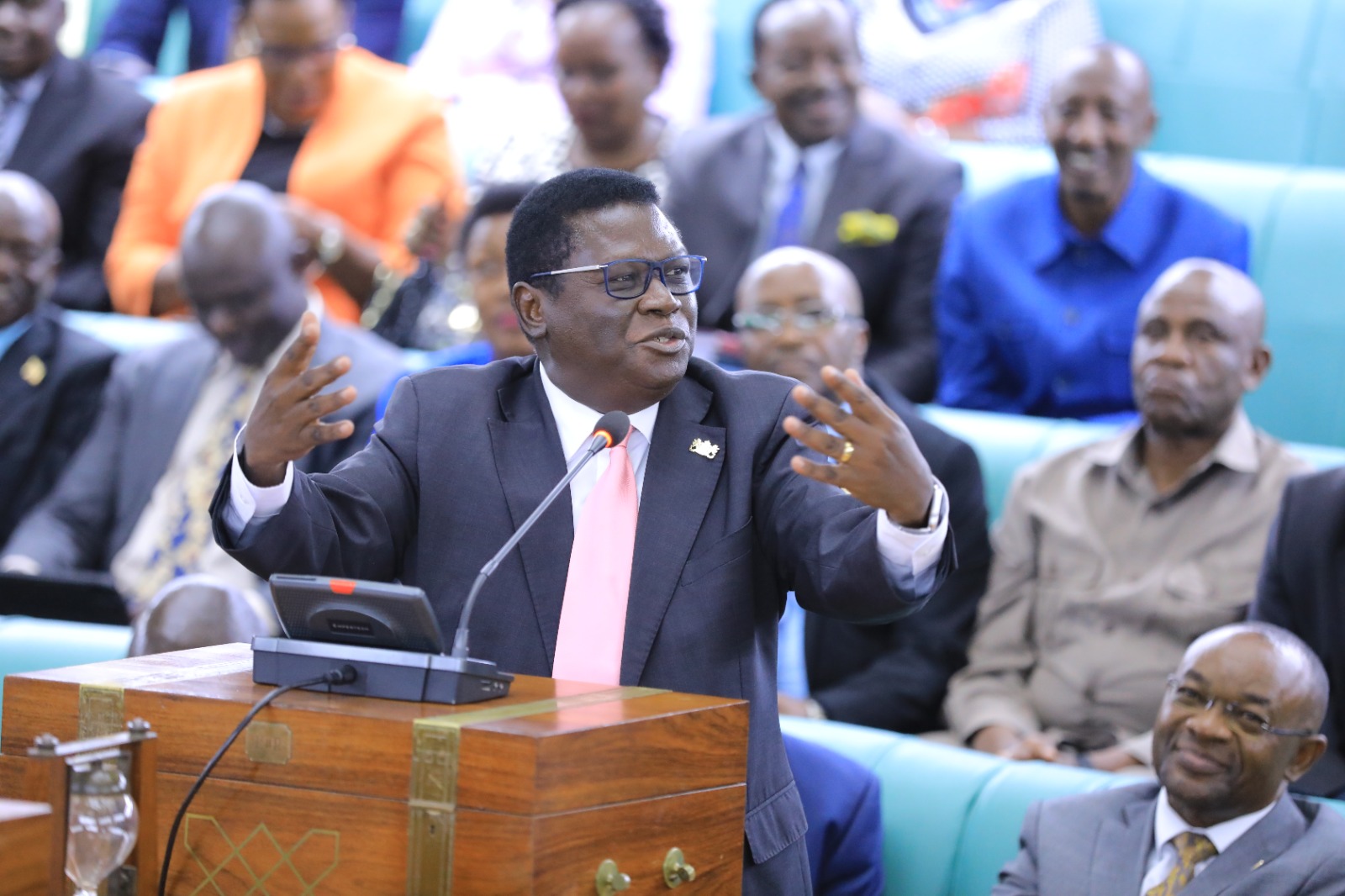
Justice Minister Norbert Mao has challenged security agencies to operate within the confines of the Constitution, saying unlawful arrests, abductions and incommunicado detention have no place in a country governed by the rule of law.

Mao argued that those who wish to continue such practices should openly seek to provide for them in the law rather than allow security agencies to operate outside established legal procedures.
Speaking at a press conference at the Uganda Media Centre, where he announced this year’s Justice Week, Mao condemned the continued detention of suspects without communication to their families or access to legal representation, describing the practice as unconstitutional.
He stressed that security agencies have an obligation to respect the rights of individuals taken into custody, regardless of the offences they are suspected of committing.
Mao also expressed concern over delays in the handling of habeas corpus applications, which allow courts to examine the circumstances surrounding a person’s detention and determine whether it is lawful.
He argued that applications concerning personal liberty should be handled expeditiously, warning that judicial delays could prolong unlawful detention and undermine the protection the courts are expected to provide.
“I don’t know why judges find it hard to handle these cases. It shouldn’t be interpreted that whoever has a habeas corpus application ruled in their favour is innocent. The goal is to ensure they undergo a fair trial,” Mao said.
He explained that securing a person’s release through habeas corpus proceedings does not amount to an acquittal or prevent the state from pursuing legitimate criminal charges. Rather, it ensures that suspects are subjected to lawful procedures and afforded their constitutional rights.
The minister also weighed in on recent remarks by journalist and political commentator Andrew Mwenda, who suggested during a podcast discussion that members of the public could face military force if they failed to comply with certain government directives.
Mao questioned the political motivations behind some of the increasingly hardline public statements, suggesting that individuals were seeking to position themselves as Uganda approaches what he described as a probable transition period.
He argued that some political actors were attempting to remain relevant and secure their positions amid uncertainty about the country’s political future.
He likened the situation to a contest in which players scramble to claim a ball while it is still in the air, each seeking to be the first to secure possession.
“It is akin to when players are vying for a ball that is in the air, with competing players trying to be the first to win it,” Mao said.
His remarks come amid continued public debate over the conduct of security agencies, particularly allegations of arbitrary arrests and abductions of political opposition members.