

Prophet Elijah confronted King Ahab of Israel, declaring a severe drought as punishment for the nation’s idolatry. This bold decree directly challenged Baal, the Canaanite storm god. You can Dive deep in this historic clash detailed in 1 Kings 17 GNT.

The drought lasted for three and a half years, fulfilling Elijah’s initial warning: “As the Lord God of Israel lives… there shall not be dew nor rain these years, except at my word”. During this time, God protected and sustained the prophet.
The dramatic conclusion of the drought culminated in a showdown on Mount Carmel and Elijah’s subsequent earnest prayer for rain. You can read the full account of the heavens opening and the rain finally returning in 1 Kings 18;41-19;8 NLT.
1 Kings 17 Good News Translation (GNT)
Elijah and the Drought
17 A prophet named Elijah, from Tishbe in Gilead, said to King Ahab, “In the name of the Lord, the living God of Israel, whom I serve, I tell you that there will be no dew or rain for the next two or three years until I say so.”
2 Then the Lord said to Elijah, 3 “Leave this place and go east and hide yourself near Cherith Brook, east of the Jordan. 4 The brook will supply you with water to drink, and I have commanded ravens to bring you food there.”
5 Elijah obeyed the Lord’s command, and went and stayed by Cherith Brook. 6 He drank water from the brook, and ravens brought him bread and meat every morning and every evening. 7 After a while the brook dried up because of the lack of rain.
From the above account, Prophet Elijah at one altered the climatic season of Israel by stopping rain to cause a drought and praying again to God to bring back rain in Israel.
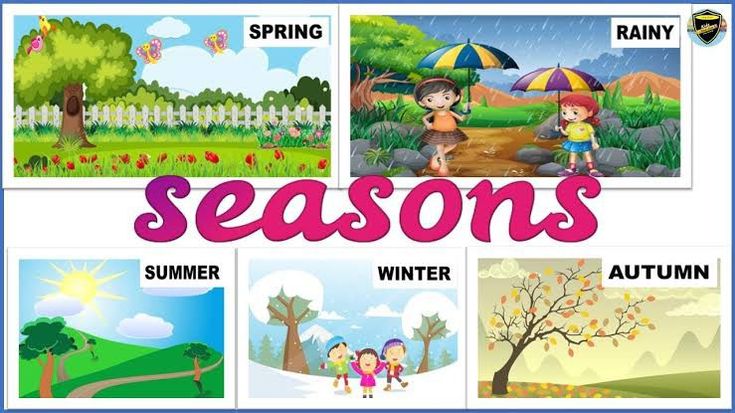
What is a season?
A season is a primary division of the year, typically characterized by specific weather patterns, daylight hours, and ecological changes. The four traditional seasons are spring, summer, autumn (or fall), and winter
What Causes the Seasons?
The cycle of seasons is caused by the earth’s tilt on its axis (about 23.5 degrees) and its yearly orbit around the Sun. Because of this tilt, different hemispheres receive varying amounts of direct sunlight throughout the year
What is a spiritual season?
A spiritual season is a metaphorical phase in a believer’s faith journey. Just as the natural world undergoes changing weather and agricultural cycles, your spiritual life experiences periods of growth, rest, trials, and harvest. Recognizing your current season helps you align with God’s purpose rather than fighting against it.
The Four Primary Spiritual Seasons
Many scholars and believers categorize these phases using natural seasons to understand the specific work God is doing in their hearts:
- Spring (Renewal & Growth): A season of fresh starts, new beginnings, and spiritual awakening. It is characterized by planting seeds of faith, hope, and discovering a renewed passion for God’s word.
- Summer (Labor & Testing): A period of active service, stretching, and testing. Often called the “growing season,” this is where you are called to do difficult things to stretch your spiritual muscles.
- Autumn (Harvest): A time of visible breakthrough, reaping the rewards of past faithfulness, and experiencing the fulfillment of your labor.
- Winter (Rest & Preparation): A quiet, sometimes lonely season of stillness and dormancy. Spiritually, this is a time to heal, build deep roots, and prepare for the next season of growth.
In this article let us limit our discussion on two biblical characters; Prophet Elijah and Hezekiah.
Prophet Elijah;
God used Prophet Elijah to punish King Ahab of Israel and to show his power and in doing this Israel’s season changed. If Prophet Elijah was in our times, he could have been nicknamed “drought or rain marker”. In Rukiga/Runyankore he could have been called omwamuzi we’zura(rain chaser and vice versa).
In the book of James in the Bible, we are explicitly told that Prophet Elijah was human like us but God used him mightily, so brethren let wake up and command our drought seasons to change, it can happen.
Hezekiah;
Hezekiah made a few famous “open petitions” to God in the Bible. Two big ones stand out:
- When Sennacherib threatened Jerusalem — 2 Kings 19:14-19, Isaiah 37:14-20
This is the classic “spread the letter before the Lord” moment.
What happened:
King Sennacherib of Assyria sent Hezekiah a threatening letter saying Judah’s God couldn’t save them, just like other nations’ gods hadn’t saved them.
Hezekiah’s prayer:
He took the letter, went up to the Temple, and spread it out before the Lord — literally laid it open before God.
What he prayed for:
- Recognition of God’s sovereignty: “O Lord, the God of Israel, enthroned between the cherubim, you alone are God over all the kingdoms of the earth.”
- Deliverance from Assyria: “Now, Lord our God, deliver us from his hand”
- God’s glory: “So that all the kingdoms of the earth may know that you alone, Lord, are God”
Result: That night the angel of the Lord struck down 185,000 in the Assyrian camp, and Sennacherib withdrew.
- When Hezekiah was sick — 2 Kings 20:1-6, Isaiah 38:1-5
What happened:
Isaiah told Hezekiah “Put your house in order, because you are going to die.”
Hezekiah’s prayer:
He turned his face to the wall and wept bitterly, reminding God of his faithfulness: “Remember, Lord, how I have walked before you faithfully and with wholehearted devotion”.
What he prayed for:
Healing + more years of life. He didn’t want to die yet.
Result: God added 15 years to his life and promised to defend Jerusalem.
Key pattern in both prayers
Hezekiah was blunt and specific. He brought the actual problem — a letter, a death sentence — straight to God. No hiding. He prayed for:
- Deliverance from enemies
- Healing from fatal illness
- God’s name to be honored through the answer
Those two answered prayers make Hezekiah an outstanding vessel in the Bible because he changed what was like a drought season to tangible achievements for his nation and family.
Today Christians pray in Hezekiah style – they put written prayer requests to God especially in end of year prayers. You can choose to present a tough medical report before God in your prayer closet, etc.
Let us say the summer season could be called the drought season for purposes of this article or the dry Season: A tough phase where you may struggle to hear God’s voice or sense His presence, requiring you to rely on truth of his written word rather than feelings.
Your drought season might be;
Childlessness, poverty, spiritual dryness, singleness, stagnation in church growth and business etc.
It is your right time to command and change your season to productivity, prosperity and tangible blessings from God.
What should we do you to change the season;
-Speak God’s word to the negative situation and make a prophetic declaration of that which you want to see coming and happening in your season and life immediately.
-Walk in righteousness
-Be expectant and ready to experience a new season from the drought
-Surround yourself with positive people
-Read and believe God’s word that are in line with walking out of a drought.
-Indulge in prayer and fastings asking God to change from the drought.
-Discard hopelessness and fear for they are from the devil replace them with hope and positive expectations and confessions of greatness. (I have an apostle he is writing a book entitled “A trillion-dollar book’).
-Have faith in God and his word because he is behind it to fulfil it in your life.
– Pay God’s dues (your) for example atenith
-Find work, do not be seated with out work or seek to expand your work, if in full time ministry as a leader or God’s minister seek for expansion of your work/service/ ministry.
Finally, but it is well elaborated bellow as the Bible calls God’s children ‘gods’,
- The main verse people point to: Psalm 82:6
“I said, ‘You are gods; you are all sons of the Most High.’”
Jesus Himself quotes this in John 10:34-35 when the Jews accuse Him of blasphemy for calling Himself the Son of God.
- What “gods” does NOT mean here
- Not polytheism: The Bible is clear there’s only one true God. Isaiah 45:5 — “I am the Lord, and there is no other.”
- Not “you become God”: Christians don’t become omnipotent, omniscient, or divine in essence like God. That’s a heresy called divinization in the wrong sense.
- Not a license to act like God: It’s not saying we’re judges of the universe.
- What it DOES mean — 3 main interpretations
Most scholars + church tradition land on these:
Interpretation, explanation and why it fits;
- Judges/rulers In Psalm 82, God is speaking to Israel’s judges/rulers. They were called “gods” [Hebrew: elohim] because they represented God’s authority and judgment on earth. The context of Psalm 82 is God rebuking corrupt judges. Jesus uses it in John 10 to say “if Scripture called human judges ‘gods’, why are you mad I said I’m God’s Son?”
- Children of God by adoption Through Christ, believers are “sons of God” and share in His divine nature in a limited sense. 2 Peter 1:4: “partakers of the divine nature”. John 1:12: “to all who received him… he gave the right to become children of God”. We’re not God by essence, but by grace we’re in His family. Early church fathers like Athanasius said “God became man so man might become god” — meaning united to Him, not equal to Him.
- Image-bearers with authority Humans were made in God’s image Genesis 1:26 to rule/represent Him on earth. Christians, renewed in Christ, are restoring that role. We exercise delegated authority — to bring justice, mercy, and truth. Psalm 8:5-6: God made man “a little lower than the heavenly beings” and crowned him with glory.
- Jesus’ point in John 10
When Jesus quotes Psalm 82, His argument is:
“If God called mere humans ‘gods’ because the word of God came to them, how can you say I’m blaspheming when I say I’m the Son of God, whom the Father set apart and sent?”
He’s using a “lesser to greater” argument. He’s not saying all Christians are divine beings.
Bottom line
When the Bible calls people “gods,” it means humans entrusted with God’s authority, or believers adopted as God’s children who share His nature relationally — not essentially. We remain creatures. God remains Creator.
It’s a high calling, not a promotion to deity. But we can use this status (“gods,” ) to cause change to our seasons, do not seat, my brethren to relax in the drought season, command GOOD and let it happen, command prosperity, increase, great productivity after all God says in his word, I have come that they may have life and have it abundantly, he also says I have GOOD plans, to give you a great future, Hallelujah.
A Prayer for Changing Seasons
Heavenly Father,
Just as You beautifully orchestrate the changing of the seasons in nature, i pray and declare change of my season from drought to abundance, prosperity and increase today.
In Jesus’ name, I pray.
Amen.
Prayer of salvation
“Dear Lord Jesus, I know that I am a sinner and I ask for Your forgiveness. I believe You died for my sins and rose from the dead. Right now, I turn from my sins and receive You as my Lord and Savior. Come into my life and help me to live for You. Thank You for saving me. In Jesus’ name, Amen.”
About the author;
The above opinion was written by Pastor Magara Darious (Kampala-Uganda)
Email; dmagara2000@ gmail.com
Mobile; +256-702434884.