

Maputo, Mozambique

A key witness in the upcoming treason trial of Mozambican opposition leader Venâncio Mondlane was kidnapped and murdered earlier this month, a killing that has thrown a harsh spotlight on the climate of violence surrounding one of Southern Africa’s most closely watched political prosecutions and raised fresh questions about whether the case against Mondlane can proceed fairly.
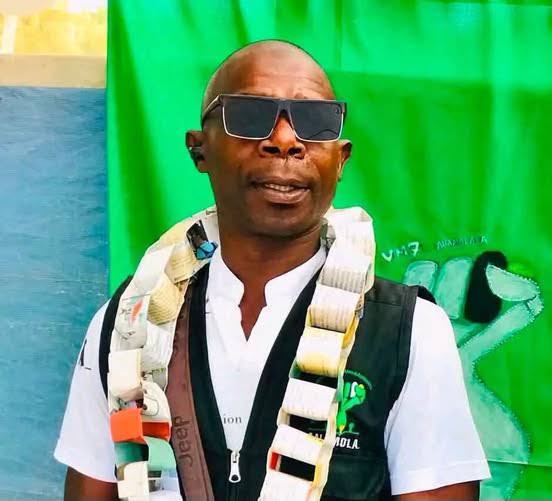
Ilídio Facitela Gustavo, a local mobilizer for Mondlane’s Anamola party in Morrumbene district in the southern province of Inhambane, was abducted and killed, with his body later discovered in the neighboring district of Homoíne, according to party and local reports confirmed around Sept. 14. Mondlane identified Gustavo publicly as “one of my witnesses for the trial scheduled at the Supreme Court,” writing on Facebook that he “was kidnapped and murdered.” The killing came roughly a month before Gustavo would have been expected to testify, and it has become the latest flashpoint in a prosecution that already sits at the center of Mozambique’s most serious political crisis in a generation.
A Trial Rooted in a Disputed Election
Mondlane, a former presidential candidate, faces five criminal charges connected to the mass protests that followed Mozambique’s October 2024 election, an election in which he rejected the declared victory of Frelimo’s Daniel Chapo and called on supporters to take to the streets. The charges — which prosecutors describe as public advocacy of crime, incitement to collective disobedience, public instigation to crime, and terrorism incitement and advocacy — carry potential prison sentences exceeding 20 years. Mondlane has pleaded that the case against him is invalid at its root, arguing that a decision by Mozambique’s Council of State to suspend his political immunity and clear the way for prosecution was itself unlawful and is “null and void.” He holds a seat on the Council of State by virtue of having finished as the runner-up in the 2024 presidential race, a constitutional provision that had shielded him from prosecution until the Council acted to lift that protection.
Mozambique’s Supreme Court has pushed back on suggestions that the case is politically motivated. Justice Pedro Nhatitima, addressing the proceedings, emphasized what he described as the judiciary’s independence and its role as a neutral arbiter of the evidence prosecutors present, rejecting characterizations of the trial as a political vendetta. The trial, originally scheduled to begin Oct. 6, was rescheduled this month to Nov. 17 at the defense’s request, which cited a scheduling conflict; it is expected to draw significant domestic and international attention given Mondlane’s continued standing as the most prominent face of opposition to Frelimo, the party that has governed Mozambique since independence from Portugal in 1975.
Among those expected to testify is Albino Forquilha, president of Podemos, the opposition party that backed Mondlane’s 2024 candidacy and has since become a vehicle for organized resistance to Frelimo’s dominance. Forquilha has said simply that he intends “to say what I saw and what I did not see” from his vantage point during the protests — testimony that could bear directly on whether prosecutors can establish that Mondlane’s public statements crossed the line from political speech into incitement.
The Toll of the 2024 Protests — and What Has Followed
The scale of the unrest that followed the 2024 election was severe by any measure: nongovernmental organizations monitoring the crisis have documented more than 400 deaths over roughly five months of demonstrations between October 2024 and March 2025, with the large majority of those killings attributed to police action against protesters. That toll placed Mozambique’s post-election crackdown among the deadliest in the region in recent years and drew condemnation from international human rights organizations, which have separately noted that, more than a year on, authorities have made no arrests in connection with the killings of protesters.
Rather than subsiding, violence connected to the political standoff has continued to claim victims well into 2026, with the pattern increasingly shifting toward targeted attacks on opposition figures rather than mass street confrontations. Gustavo’s killing this month was not an isolated case: two other members of Anamola, Anselmo Vicente and Pedro Chauke, were killed in earlier incidents, according to the party, which has called for “a swift, rigorous, and transparent investigation” into Gustavo’s death and prosecution of those responsible. Mondlane himself said in January, marking the anniversary of his return to Mozambique from a period of self-imposed exile, that 45 members of what was then his political movement and is now the registered Anamola party had been killed over the preceding year, a figure he has attached to formal complaints filed with the Attorney General’s Office — though the claim has not been independently verified and the government has not directly responded to it. Separately, the “Decide” Electoral Platform, a civil society monitoring group, has recorded more than 20 attacks on opposition members between July 2025 and the present.
Anamola’s Rise and Mondlane’s Continued Influence
Anamola — formally the National Alliance for a Free and Autonomous Mozambique — began as an informal political project built around Mondlane’s 2024 candidacy before formally registering as a political party in August 2025. It grew rapidly, signing up more than 64,000 members within its first ten days of registration, and has positioned itself as a durable successor to the protest movement that emerged from the disputed election, with plans to elect party leadership through an internal congress. The party’s swift growth — and Mondlane’s continued high profile despite the looming criminal case against him — reflects the extent to which he has remained the central figure of Mozambican opposition politics even from a position of significant legal jeopardy.
That dual reality — a popular opposition figure simultaneously facing decades in prison and mourning murdered supporters — has made the run-up to the November trial one of the most closely watched political storylines in Southern Africa. Frelimo and the Mozambican government have not publicly linked Gustavo’s killing to any political motive, and no arrests have been announced in connection with his death as of this reporting.
What Comes Next
The rescheduled Nov. 17 trial date sets up a collision between Mozambique’s judiciary and its opposition movement at a moment when trust in state institutions among Mondlane’s supporters is already severely strained. A conviction on the terrorism-related charges Mondlane faces could remove him from active politics for years and potentially reshape the opposition landscape ahead of Mozambique’s next electoral cycle, while an acquittal — or a trial process seen as fair by independent observers — could help restore some domestic and international confidence in Mozambique’s courts. Either outcome will unfold against the backdrop of continued violence against Anamola’s rank-and-file membership, violence that, absent a credible investigation into Gustavo’s murder and the earlier killings the party has reported, seems likely to deepen distrust regardless of the verdict.
International observers, including regional bodies within the Southern African Development Community, are expected to monitor both the investigation into Gustavo’s killing and the conduct of the November trial closely, given Mozambique’s post-election death toll and the country’s history of unresolved political violence. For now, the most immediate question is whether the six weeks between now and the rescheduled trial date pass without further attacks on the witnesses and party figures central to a case that has already claimed lives before a single day of testimony has been heard.
Frelimo’s Dominance and a Fracturing Opposition Landscape
The crisis surrounding Mondlane’s prosecution also reflects a broader realignment underway in Mozambican opposition politics. For decades, Frelimo’s dominant rival was Renamo, the former rebel movement turned political party that fought a long civil war against the ruling party before entering electoral politics. But Renamo has struggled with internal splits in recent years, including dissident factions that have called for extraordinary party congresses to resolve leadership disputes, even as some of its own members have reported being targeted by politically motivated violence. Into that vacuum has stepped Anamola, Mondlane’s newer movement, which some observers now describe as positioning itself to supplant Renamo as Mozambique’s principal opposition force — a dynamic that has only intensified since Anamola’s rapid formal registration and membership growth in 2025.
That shifting balance of power carries its own risks. An opposition landscape fragmented between a weakened Renamo and an ascendant but legally embattled Anamola could make it harder for Mondlane’s opponents within the opposition, let alone Frelimo, to present a unified response to political violence or to coordinate on electoral strategy ahead of Mozambique’s next national vote. For Frelimo, which has governed uninterrupted since independence, the prosecution of Mondlane carries its own political calculus: a conviction could weaken the most galvanizing opposition figure in a generation, but a trial widely perceived as unfair — especially one proceeding against the backdrop of unsolved killings of the defendant’s own witnesses — risks reinforcing exactly the narrative of authoritarian overreach that has fueled Mondlane’s support in the first place. How Mozambique’s institutions navigate that tension over the next several weeks will do much to determine whether the country’s post-election crisis begins to ease or deepens further heading into 2027.


