
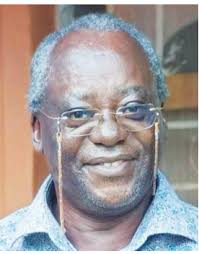
Mahir Balunywa is writing his PhD in Interdisciplinary Studies, with focus on International Political Economy (IPE), looking at the Food Security and the Land Question in Busoga sub region.

He is the author of “The Collapse of Local Governments and Decentralization Policy in Uganda, published (2012)
by Lambert Publishers, UK, When Individual and Institutional Interests Clash: Governance dilemmas at
the Islamic University in Uganda (2019- In draft form), The Operations of the State in a free Market Economy, Bipolar Colonial relations in the domain of Busoga (Conference Paper-School of Oriental and African Studies-London), Domesticity and the colonial project in Africa-Eritrea. (Kindly goggle the name for details and other academic pieces)

ABSTRACT
This paper, formatted in a Question–Answer approach interrogates the underlying
challenges encased in promoting large long established Sugar factories in Uganda
at the expense of the small-scale out-growers indigenous sugar factories. The cen-
tral argument inhere is premised on the position that small scale factories should
be supported by the government to grow and promote competitive economies of
scale, there by discouraging monopolies. Basing on this argument, the presenters
quash the concept of zoning sugar factories and out growers in the interest of aliberalized Ugandan economy.
AFUNADUULA INTERVIEWS MAHIR BALUNYWA:
Oweyegha-Afunaduula (OA) Mahir Balunywa.
This is my 4th Interview with you. You may be wondering why you. The reason is
because you are a critical, open-minded interdisciplinary scholar, intellectual, thinker
and writer. So you appeal to my taste.
OA. My first question is: Uganda is faced with so many un-negotiated, unresolved
issues, but we are going on as if they do not exist. They include the Northern Question,
the Asian Question, The Buganda Question, the Rwandese Question, the Constitutional
Question, the Governance Question, the Plantation versus small scale Farming Ques-
tion, the GMO question, the Militarisation of Agriculture Question, the Sugar Question
and the Palm Oil Question, to name but a few. What is your critical view of this scenar-
io?
MB. This proves that Uganda is besieged in a multitude of endless questions, old
questions giving rise to new questions and new questions giving rise to new problems.
So Uganda as a country is now problematic.
Ideally these problems are supposed to turn into bills and clear policies for parlia-
mentary debates. Unfortunately, both Cabinet and Parliament have gone into slumber
for reasons best known to themselves.
OA. But Balunywa aren’t you blaming Parliament unfairly? Isn’t it true that it is Cabi-
net, which designs policies and Bills for Parliament to debate and approve or reject?
MB. As a student of public policy science, I know more than you would think. Ideally
bills are part of the business that the Executive brings to Parliament. However, at
times the Executive needs to be tickled to swing into action by the legislature through
problem identification, which then initiates the Cabinet agenda.
This in essence means that if the Executive does not generate business, the Legisla-
ture (MPs) initiates the business by identifying the problems in their respective Con-
stituencies for the Executive (Cabinet) to respond to. This is the binary between Par-
liament and the Executive.
OA. Are you confirming we have a governance question or governance problem?
MB. We do not have one at the exclusion of the other. We have both. They are mutually inclusive.
.OA Isn’t that semantics? Where is the difference?
MB. No no it is not semantics. Thomas Dye, a classical authority on public poli-
cy-making, distinguishes the two -governance Question and governance problem. He
says governance question is one where the relationship between the Executive and
Legislature is either unclear or mixed up. Governance problem emerges out of the
incompetence of the actors involved, and this gives rise to problems like policy abor-
tion and policy miscarriage. Examples of governance question include policy confu-
sion, policy dilemmas and policy trilemma.
OA. Do you know what? You have to explain all these bombastic terms you have bom-
barded me with.
MB. Okay Mzee. Let me start with policy abortion. This is when a policy, which passed
through proper legal procedures, upon enactment fails to be implemented or is
rejected by the policy consumers (the people). Policy miscarriage is when a policy,
which was supposed to turn into law is either rejected by the President or Parliament.
Examples are the Domestic Relations Bill, which was rejected by Parliament, and the
2016 Sugar Bill, which was rejected by the President twice.
Policy dilemma is when there is uncertainty between the theory and practice of a
policy. This creates a policy lacuna; that is a gap (or tabula-rasa) within the policy.
Policy trilemma is when there is confusion among the actors right from the time the
bill transmutes into a policy or law (for example, the Presidential Age Limit Law, which was contested but Court ruled that it was okay.
OA. Thank you Mahir. I want us now to discuss the Sugar Industry. Give me a brief his- tory of the sugar industry in Uganda.
MB. Sugarcane is not an indigenous crop in Uganda. The early Indian traders intro-
duced it in Uganda in 1862. By then it was merely for chewing. In 1900 it came to be rec-
ognized as a cash crop by the British Colonial Government but grown on a small scale
by the two Asian families of Muljibhai Madhvani and Nanja Kalidas Mehta.
In 1930 it became an export-oriented crop to Latin America, Caribbean and Asia. Since
then Asian became out-growers in Uganda. Africans were not involved. Ahluwalia
(1995) argues that the Sugar industry in Uganda is purely a product of Asian capital.
OA. If the sugar industry was a product of Asian capital, why was it so dependent on
State support to survive?
MB. By Asian capital I mean that the Asians worked hard on the Uganda Railway to
make their own capital to invest in the sugar industry. Initially there was no colonial
State support but later the colonial State actively supported the Asian sugar industry
in Uganda after recognizing them as their colonial agents in their colonial exploitation
project. The European Planters Class provided then gave the two Asian families of
Madhvani and Mehta the opportunity to engage in large-scale production of sugar-
cane.
OA. Were both Madhvani and Mehta Indian Coolies?
MB. No. Madhvani is a product or an offspring of the Indian Coolies who came to build
the Uganda Railway. Upon the completion of the Railway he established retail shops at
railway stations in Busoga. It was there that he accumulated money as an out-grower
of sugarcane in what we now call the New World Sugar Order.
On the contrary Kalidas Mehta was not a Coolie. He came with his own capital after
working in his brother’s shop in Madagascar and later in Zanzibar for a large Indian
Company. He then decided to go to Mombasa and then later come to Uganda by the
invitation of an uncle who had a retail shop in Jinja. However, the uncle sent him to a
small village called Kamuli where he started a shop with his small capital of 240
Rands. He went on to establish small shops in Teso and Lango then acquired 5000
acres of land in Kyagwe and 2000 acres in Kawolo for large-scale sugar plantation in
1924. He was the first to construct a sugar factory at Kawolo. Madhvani constructed
his in 1929 at Kakira on 4000 acres of land.
OA. How then does the sugar question arise?
MB. The sugar question can be located on three colonial strands in Uganda and
post-colonial governments of Obote and Museveni have replicated this. The first
strand is the Land strand. The second is labour strand and the third is the capital
strand. I call the three strands the paradoxes of the sugar question in Uganda.
OA. Can you elaborate please?
MB. The land strand is located within the colonial land policy, which stated that land was not to be allocated to non-Africans. This meant that the colonial policy favored natives at the expense of Asians. Yet Asians wanted land to expand their sugar planta-
tions. How they finally got the land remains a million-dollar question
The labor strand was located in the colonial labor policy. This allowed labor migration
from outside Uganda to come and work on the sugar plantations. It is this, which ignit- ed the influx of Rwandese and Asian casual laborers, especially from 1926.
The capital strand evolved out of the hard earned money of the Asians after working
on the building of the Uganda Railway. As I have explained before Mehta came with his own capital. However, global capital, championed by the British imperial power, gave the Asian sugar plantation owners more capital to engage in large-scale sugar pro-duction.
OA. I have been in a classroom. How then do you link the colonial Asian Sugar Ques-
tion to the current 2016 Sugar Bill?
MB. Like the Colonial State, the current post-colonial State, seems to be reinventing
the wheel by supporting the old Asian large-scale sugar producers at the expense of
the native involved in outgrowing of sugarcane.
OA. Which other firms is the current government supporting at the expense of natives?
MB. The popular view is that besides Kakira Sugar Works (KSW) and Sugar Corpora-
tion Lugazi (SCOL), government is also showing preferential support for GM Sugar
Uganda Limited, Kinyara Sugar Works Limited, Sango Bay Sugar Limited against
natives.
OA. But we have over 16 small-scale sugar factories in Uganda and at least 5 in
Busoga. What happens to them now?
MB. There are intentions to have them frustrated and eventually forced to close
through the politics of zoning.
OA. What is this politics of zoning Mahir?
MB. Zoning was a colonial European-Asian model, which zoned land for sugarcane
growing between European and Asian Settlers. In this model the Asians and Europe-
ans gazetted land through an enclosure system.
OA. What is that enclosure system?
MB. The enclosure system legalized land grabbing from natives to the settlers. The
natives were turned into a floating population whereby they were slaves on their own
land, growing sugarcane for certain large sugar producing industries for export in
Latin America, Caribbean and Asia.
OA. So what is zoning that I have read in the 2016 Sugar Bill? Is it similar to the zoning
in Latin America, Caribbean and Asia?
MB. I don’t know whether I would be right if I argued that the zoning in Uganda is
more or less a replica of the Asian model. However, during the land question debate
in the period 2017-2019, Prof. Mahmoud Mamdani introduced the zoning concept as if it
was new and advocated for its introduction as a solution to the land Question in
Uganda. I wondered whether this strategy, which was meant to dispossess natives of
their land could be a solution to the land question in Uganda. Surprisingly the ancient
concept of zoning found itself in the Sugar Bill 2016.
To answer your Question explicitly, the zoning of sugarcane growing in Uganda pro-
vides that there should be only one Sugar Company within 25 km, which means that
the companies will be 50 km apart. It also provides that out-growers are not allowed
to sell their sugarcane beyond 50 km. Therefore, the implication is that the out-grow-
ers are not price makers but price takers.
OA. Do you mean out-growers will no longer negotiate prices for their sugar cane?
MB. Out-growers have never negotiated for prices in the sugar industry. They have
just been hunting for the highest price fixer. In the sugar industry the manufacturers
fix the price of sugarcane and the out-growers must accept the price or go away. For
example, Madhvani buys a tone of sugarcane at 128,000. The Bwayuya Sugar factory
buys at 134,000/-. Mayuge factory buys at 130,000/-. GM factory buys at 132,000/-. This
means Madhvani pays the least, fears competition and wants to benefit from the poli-
tics of zoning.
OA. Isn’t this zoning politics going to bring a lot of chaos and instability in the sugar
industry?
MB. The zoning is going to lead to the closure of small sugar factories, like Bwayuya
in Kaliro, Kiroba in Kamuli, Jinja Sugar Miller’s in Mbiko , Mayuge in Mayuge. This is
going to lead to unemployment and deepening poverty. Already chaos has started in Busoga and Parliament against the politics of zoning. The popular Question is: Why not zone cattle, milk and beef? Besides Madhvani is growing sugar on 20,000 acres of
land in Busoga he has also sought for 40,000 acres of land in Acholiland through gov-
ernment. Acholi women stripped themselves naked in protest.
OA. But that is land grabbing! Has Madhvani got the land?
MB. Through State violence, poor rural communities have lost their land to Madh-
vani. He has already put up Amuru sugar factory and it is guarded by the military. In
2008 the High Court of Gulu ruled in favor of the natives. When the State appealed in
favour of Madhvani and the Court handed over the land to him.
OA. There seems to be over exploitation of the out-growers in Uganda. If they are
price takers and not price makers, then we are not in a liberal economy. In a liberal
economy one has the liberty to establish his/her business as long as he/she meets
the requirements of the business. Comment on this Mahir.
MB: Its not simply exploitation, but Kleptocracy of the highest order. I was recently
reading a script of the benefits out –growers in Tanzania get. The out growers in Tan-
zania receive a payment on every product of the sugar cane they provide to the indus-
try. Some of the products are: Sugar, fertilizers, Sukali gulu, sweets, electricity, mo-
lasses and Waragi. In Uganda, the out-growers only receive payments for the sugar.
OA You seem to be pinning Madhivan sugar industry so much, aren’t you aware that
Madhivan has contributed a lot beyond providing sugar? I here he offers scholarships,
bursaries, he has set up hospitals and schools. Can’t you commend him at least on
these positive aspects?
MB Oh Mzee, you seem to be reminding me of what the colonialists did in Uganda. You
see these colonialists established hospitals, schools and social amenities. Equally
Madhivan has done a lot but with what intention? He has constructed roads in Busoga.
I wish you to appreciate that he only constructs Murram roads leading to his sugar
plantation firms. True, he has constructed primary schools to offer basic education to
his casual laborers. Mark the quality and products of those who have gone through
Madhvani schools. He has set up hospitals, I want you to go and carry out the quality
of medical services provided in those Madhvani established hospitals. I want to add
that Madhvani further taxes out-growers to develop these roads. This tax is called Gasiya tax. Mzeeei, we need to have a comprehensive investigation of the activities of
the Madhivan group of companies.
OA. With all these many sugar factories in Busoga, what then explains the deepening
food insecurity in Busoga. The hiking sugar prices and the immediate finance capital
obtained from the sugar cane industry. Land use has changed. Instead of people
growing food they are growing sugar cane plantations. Survey reveals that 79% of the
land in Busoga is full of sugar cane. Landowners have decided to grow sugarcane at
the expense of food. And a good number of them have even gone ahead to cut down
coffee and cotton gardens due to the long gestation period and the bureaucracy there-
in which affects the farmer’s immediate income. I think we need to find time to discuss
about the food security question in Busoga sub region. Now, what do you see as the
future of the sugar industry in Uganda? Is it not likely to collapse like it did in the early
1970s? It seems people are bitter.
MB. Francis Fukuyama, in his book “The end of History” argues that what is happen-
ing today has happened yesterday and what happened yesterday is happening today.
However, there is still chance to save the sugar industry from renewed collapse. A
feasibility study was carried out by out growers, which revealed that they needed
200bn shillings to standardise their factory in Mayuge. They requested President Mu-
seveni to support them to obtain a loan from the African Development Bank of 100bn
shillings. They had already saved 100bn shillings. The President promised to support.
Surprisingly the response has been the Bill of zoning.
OA. Lastly Ugandans are worried about the increasing militarisation of Agriculture.
According to President Museveni, it is only the military that can wok to improve agri-
cultural production and distribution in the country. What is your critical view?
MB. I don’t see any relationship between militarism and agriculture. Guns don’t dig
but shoot. Plato and Aristotle have long classified the role of the military as guardians
of the State, peasants as the growers of the food. The military culture is different from
the culture of the society that grows the food. This is another topic for another time.
OA. Thank you very much Mahir. I will not say goodbye because you have set the topic
for our next discussion.
check full document here; A Reflection On The Sugar Industry In Uganda-1