

“She just wants to lead a decent life”: One man’s campaign to change the way we think about disability
An accountant from Eastern Uganda has launched a new campaign aimed at changing the way communities think about disabilities.
Peter Waiswa, who is also a social worker and part of the Global Compassion Coalition, argues that the Ugandan government’s recognition of disabled people’s rights will only become effective when norms and perceptions change in the community.
Peter argues that Ugandans with disabilities still experience multiple forms of discrimination including a perception that they are an economic “burden” or, in extreme cases, that their disability is the result of witchcraft or black magic. That means they are very often excluded from society and provided with little or no support by their community.
The poverty rate for people with disabilities in Uganda is 30% higher than the overall average and just 9% of children with disabilities attend school.
Peter is calling for a mass education campaign to change public understanding of people with disabilities, community organizing to help people in need, and initiatives to support parents worried about how to support their children if they are born with disabilities.
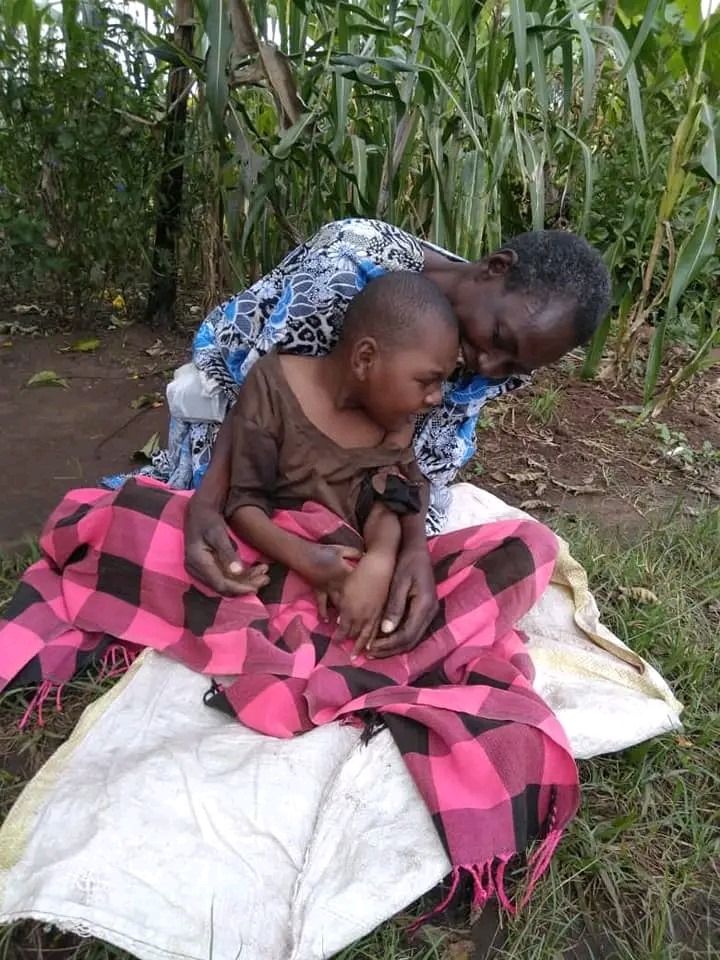
Peter’s work was inspired by his encounter with 13-year old Barbara, a girl with learning disabilities living in the impoverished neighborhood of Namwendwa Sub county, Kamuli District.
Barbara has profound learning disabilities and struggles to move, eat, or go to the toilet without help. Social stigma led to her being abandoned by her parents.
She now lives with her grandmother and since neither can work, they live in extreme poverty.
Peter has created a crowdfunder , supported by the Global Compassion Coalition, to try and pay for Barbara to get the help she needs to lead a more independent life. He is hoping to raise enough to pay for her to have an adjusted toilet and wheelchair as well as to give her access to more regular supplies of food and water. Peter Waiswa said:
“In too many communities across Uganda we still live with an outdated idea that people with special needs are a curse. But the true curse is that way of thinking. It means that innocent, young children like Barbara are being punished when our humanity should call upon us to help and care for them. Barbara just wants to lead a decent life.
She wants some freedom. She wants to be able to use the toilet without constant assistant. She wants to meet and make friends. And we can give that to her if we only allow ourselves to be led by compassion.

“Sadly Barbara is one of many many people in Uganda who are being shunned and persecuted. We have to rise above this. A strong person looks at suffering and reaches out their hand. A strong community is one that recognizes pain and works to address it. We can do and be so much better and I hope that Barbara can prove to be the first of many many Ugandans who can be seen, heard, and valued.”


