

No new indictments from eight-year investigation as state attorney general says church knew about abuse
More than 270 Catholic clerics sexually abused nearly 1,000 children across three Massachusetts dioceses over several decades, according to a report released by the state’s attorney general’s office on Wednesday.
The eight-year-long investigation did not result in new indictments, the office said, claiming that some conduct identified was not a crime under Massachusetts law at the time it occurred, and that in other cases the applicable statute of limitations had expired.
However, three cases were referred to different district attorney’s offices and one of those resulted in criminal charges. The majority of the abuse occurred before 2002.

“The evidence gathered during this investigation also shows that, for decades, and especially before 2002, church officials in all three dioceses knew about the sexual abuse of children yet did not take effective action to prevent it or to examine the institutional failures of leadership that led to scores of children being victimized at the hands of abusive priests,” the report stated.
The attorney general’s office said the report was “the first comparable public accounting of the institutional failures within the Fall River, Springfield and Worcester dioceses”.
The abuses in the archdiocese of Boston drew international attention after the Boston Globe published its Pulitzer-winning coverage in 2002, and prompted other investigations around the world that found similar cases of sexual abuse.
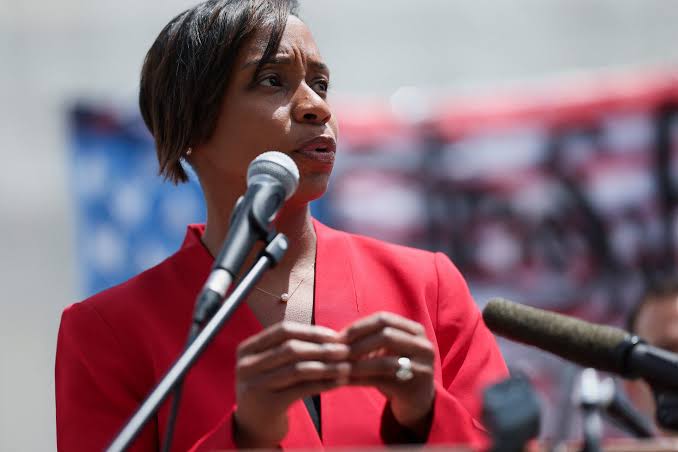
“I strongly urge the dioceses and the broader church to take these recommendations seriously and implement greater, meaningful changes to strengthen child protection and improve responses to allegations of abuse,” the Massachusetts attorney general, Andrea Joy Campbell, said at a press conference.
“Behind every one of those numbers is a child whose safety was violated, a family that was changed forever and a survivor who carried that abuse for years, and in many cases decades. They continue to carry this trauma even today,” Campbell said.
“I know many survivors have been waiting a long time to see these findings made public. I understand the frustration that comes with that wait. It is my hope that today is a meaningful step forward toward truth, accountability and healing that survivors deserve,” she added.
The diocese of Worcester did not apologise on Wednesday for its clerics’ behavior, but pointed to an apology by Bishop Robert J McManus, who wrote in 2022 that he was “profoundly sorry for the abuse of minors by priests” within his diocese.
“I continue in my commitment with the help of many collaborators to do everything we can to ensure such abuse does not happen again,” he said at the time. The diocese of Worcester also highlighted that no charges were filed.
Many of the individuals identified in the report are also deceased, the report said. “Any legal limitations do not diminish the seriousness of what this investigation found. The office believes that while criminal law cannot provide justice for all survivors today, the office still has a responsibility to tell the truth of what happened.”
-
In the US, call or text the Childhelp abuse hotline on 800-422-4453 or visit their website for more resources and to report child abuse or DM for help. For adult survivors of child abuse, help is available at ascasupport.org. In the UK, the NSPCC offers support to children on 0800 1111, and adults concerned about a child on 0808 800 5000. The National Association for People Abused in Childhood (Napac) offers support for adult survivors on 0808 801 0331. In Australia, children, young adults, parents and teachers can contact the Kids Helpline on 1800 55 1800, or Bravehearts on 1800 272 831, and adult survivors can contact Blue Knot Foundation on 1300 657 380. Other sources of help can be found at Child Helplines International
… we have a small favour to ask. Tens of millions have placed their trust in the Guardian’s fearless journalism since we started publishing more than 200 years ago, turning to us in moments of crisis, uncertainty, solidarity and hope. More than 1.5 million supporters, from 180 countries, now power us financially – keeping us open to all, and fiercely independent. Will you make a difference and support us too?
Unlike many others, the Guardian has no shareholders and no billionaire owner. Just the determination and passion to deliver high-impact global reporting, always free from commercial or political influence. Reporting like this is vital for democracy, for fairness and to demand better from the powerful.
And we provide all this for free, for everyone to read. We do this because we believe in information equality. Greater numbers of people can keep track of the global events shaping our world, understand their impact on people and communities, and become inspired to take meaningful action. Millions can benefit from open access to quality, truthful news, regardless of their ability to pay for it.
Whether you give a little or a lot, the support of readers like you from Uganda will power our reporting for the years to come.
We value whatever you can spare. Your support enables greater investment in our most crucial, fearless journalism. Thank you.


