The concluded G77 Summit+China Summit hosted by Uganda makes Uganda a center of Global South Diplomacy and presents an unparalleled opportunity to redefine the role that Africa and the rest of the Global South countries take in steering up an approach that’s more consultative, constructive, collaborative and development oriented. One that places the voice and leadership of Global South countries at the center, and responds to Global South’s genuine development needs to build a future that is not only prosperous but also sustainable and equitable. Our vision for this future is one where our people, our rich biodiversity, and our vital natural resources such as food systems and water are protected.
It’s a vision that demands a leadership approach, one that’s bold, innovative, and inclusive.
To create a meaningful dialogue ahead and during the leadership of Uganda at the
G77+China, we call on you to;
Statement 1: The G77 to revive the new international economic proposed by the G77 in
1774
Introduction:
Greetings esteemed members of the G77,
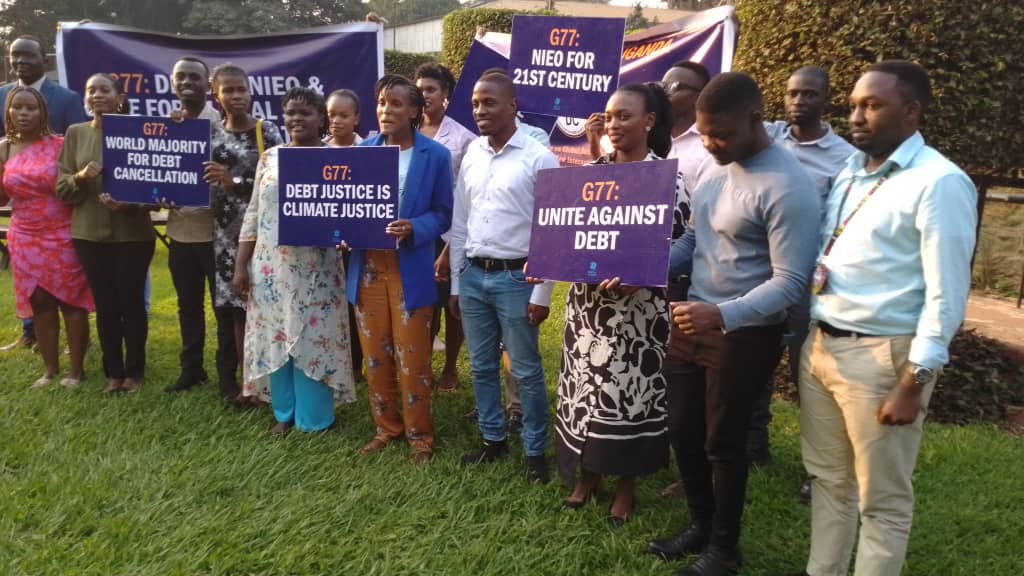
As representatives of the vibrant youth in Uganda, we stand before you with a collective vision to revive and strengthen the New International Economic Order (NIEO) proposed by the G77 in 1974 at the United Nations. The ideals set forth during that pivotal moment continue to resonate, and we, the youth, are eager to play an active role in shaping the future in accordance with these principles.
Acknowledgment of Historical Significance:
We recognize the historical significance of the G77’s proposal for a New International
Economic Order in 1974. The visionary goals outlined then have inspired nations to
collaborate, striving for a more just and equitable global economic landscape.

Youth Inclusion and Empowerment:
In the spirit of the NIEO, we emphasize the importance of youth inclusion in the
decision-making processes. Empowering the youth is not just a matter of justice but a
strategic imperative. We are ready and committed to contributing our ideas, energy, and innovation to breathe new life into the NIEO’s principles.
Sustainable Development Goals (SDGs):
The NIEO and the Sustainable Development Goals (SDGs) share common ground in their commitment to global well-being. We urge member states to accelerate efforts toward achieving the SDGs, ensuring that the NIEO principles guide our path towards sustainable and inclusive development.
Digital Transformation:
The digital era presents opportunities to realize the goals of the NIEO more effectively. As digital natives, we advocate for policies that leverage technology to bridge economic gaps, foster innovation, and create new avenues for prosperity. Prioritizing digital literacy and accessibility is crucial to ensure the benefits of the NIEO extend to all corners of the globe.
Climate Change Resilience:
In the face of climate change challenges, we call upon the G77 to lead in developing
comprehensive strategies to mitigate its impacts. The NIEO principles should guide our collective efforts to build resilience and promote sustainable practices. As youth, we are committed to adopting eco-friendly technologies and practices, but international collaboration is essential to address this global challenge effectively.
Conclusion:
In conclusion, we, the youth of Uganda, pledge our unwavering commitment to the
principles of the New International Economic Order proposed by the G77 in 1974. We look forward to collaborating with member states to breathe new life into these ideals, ensuring they remain at the forefront of international economic discourse.
Thank you for your attention and consideration.
Statement 2: G77 unite to end financial Neo colonial approaches by America and
European countries.
Esteemed members of the G77,
In the pursuit of equitable global development, we, the youth of Uganda, call upon the G77 to unite against financial neo-colonial approaches perpetuated by certain American and European countries. It is time for a collective stance against practices that undermine the sovereignty and economic autonomy of developing nations. Additionally, we urge the International Monetary Fund (IMF) and the World Bank to actively contribute to ending financial colonialism, fostering a more just and inclusive international economic order.
Acknowledgment of Historical Context:
Recognizing the historical roots of financial neo-colonialism, we commend the efforts of the G77 in addressing the persistent challenges faced by developing nations. The
historical imbalances must be rectified to ensure a fair and equitable global financial
system.
Unification against Financial Neo-Colonialism:
We call upon the G77 to unite and strengthen its collective voice to resist financial
neo-colonial approaches. It is imperative that member states work together to counter
practices that perpetuate economic dependency and hinder the self-determination of
nations.
IMF and World Bank Reform:
We urge the IMF and the World Bank to actively engage in reformative measures, putting an end to financial colonialism. This includes revisiting policies that may inadvertently contribute to economic disparities and ensuring that financial assistance aligns with the development goals and priorities of recipient nations.
Promoting Sustainable Development:
Financial assistance should be directed towards sustainable development that empowers nations rather than perpetuating cycles of dependency. We advocate for a shift towards projects that prioritize local capacity building, infrastructure development, and the establishment of resilient economies.
Transparency and Accountability:
To foster trust and collaboration, we call for increased transparency and accountability in financial agreements. Developing nations should have a greater say in shaping the terms of financial assistance, and clear mechanisms for accountability should be established to ensure the responsible use of funds.
Global Solidarity:
In the spirit of global solidarity, we encourage member states to support each other in
negotiating fair terms with international financial institutions. Together, we can amplify our voices and challenge the status quo, fostering a more just and inclusive international economic landscape.
Conclusion:
In conclusion, we, the youth of Uganda, stand united in our call for an end to financial
neo-colonial approaches. We implore the G77, the IMF, and the World Bank to actively contribute to reshaping the global financial architecture, fostering a future where all nations can thrive independently and collaboratively.
Thank you for your attention and commitment to a more just world.
Statement 3: Adopt An integrated approach to the global south’s climate, clean energy
transition and debt cancellation.
Esteemed members of the international community, As representatives of the youth in Uganda and echoing the sentiments of the global South, we stand before you with a pressing plea to adopt an integrated approach that addresses the intertwined challenges of climate change, access to clean energy, and the burden of unsustainable debt. It is our collective responsibility to forge a path towards a sustainable
future that prioritizes the well-being of both people and the planet.
Climate Change Imperative:
The urgency of climate action cannot be overstated. The global South bears a
disproportionate burden of the impacts of climate change, affecting livelihoods,
ecosystems, and future generations. We call upon the international community to commit to ambitious and immediate measures to mitigate climate change and support adaptation efforts in vulnerable regions.
Transition to Clean Energy:
Access to clean energy is a fundamental right that can catalyze sustainable development.
We urge the world to accelerate the transition from fossil fuels to renewable energy
sources, ensuring that developing nations have the necessary support and resources to
embrace clean and sustainable technologies. Collaboration on research, development,
and the transfer of green technologies is paramount for a just energy transition.
Ending Fossil Fuel Production:
To effectively combat climate change, it is imperative to end the production and
consumption of fossil fuels. We call for a global commitment to phase out subsidies for
fossil fuel industries and redirect these resources towards renewable energy solutions.
Simultaneously, we urge developed nations to support the global South in managing the economic implications of this transition.
Debt Cancellation for Sustainable Development:
Unsustainable debt poses a significant barrier to the development aspirations of many
nations in the global South. We advocate for a comprehensive and fair approach to debt cancellation, recognizing that freeing nations from the shackles of debt is essential for them to invest in sustainable development, climate resilience, and the well-being of their citizens.
Global Solidarity and Collaboration:
The challenges we face are global, requiring a united effort. We call for increased
international collaboration, resource sharing, and the establishment of mechanisms that ensure the equitable distribution of the benefits of sustainable development. This includes fostering partnerships for technology transfer and capacity building to empower nations in the global South.
Conclusion:
In conclusion, we implore the international community to adopt an integrated approach that
addresses the interconnected issues of climate change, access to clean energy, and
unsustainable debt. By working collaboratively and committing to bold actions, we can
pave the way for a future where every nation, regardless of its economic status, can thrive sustainably.
Thank you for your attention and commitment to a more equitable and sustainable world.
Statement 4 : Transparency, participation, inclusion of the global south youth led movements and civil society organizations in the activities of the G77
Introduction
Respected members of the G77,
As representatives of the youth in Uganda and in alignment with the principles of
openness, inclusivity, and participation, we bring forth a call for greater transparency and the active involvement of youth-led movements and civil society organizations from the global South in the activities of the G77. Embracing the diversity of voices is essential for ensuring the effectiveness and relevance of the G77’s initiatives.
Acknowledgment of Youth and Civil Society Contribution:
We commend the G77 for its historical role in advocating for the interests of developing nations. Recognizing the invaluable contributions of youth-led movements and civil society organizations, we believe that their active involvement is indispensable for shaping a more equitable and sustainable future.
Transparency in Decision-Making:
We urge the G77 to enhance transparency in its decision-making processes. Providing
clear and accessible information about discussions, decisions, and policies ensures that the actions of the G77 are understood and supported by the broader community.
Transparency fosters trust and strengthens the credibility of the G77 in the eyes of the
global public.
Inclusive Participation:
In the spirit of inclusivity, we call for the active participation of youth-led movements and civil society organizations in G77 activities. Meaningful inclusion ensures that a diverse range of perspectives is considered, enriching the discussions and contributing to more well-rounded and effective policies. This should extend to both formal and informal aspects of G77 engagements.
Youth Empowerment:
Empowering youth is an investment in the future. We advocate for mentorship programs, capacity-building initiatives, and platforms for youth to actively contribute to G77 activities.
Recognizing the innovative ideas and energy that the youth bring, their inclusion is vital for shaping policies that resonate with the realities of the present and the aspirations of the future.
Civil Society Engagement: Civil society organizations play a crucial role as intermediaries between governments and
citizens. We encourage the G77 to engage with civil society organizations from the global South, leveraging their expertise, grassroots connections, and commitment to social justice. This engagement can amplify the impact of G77 initiatives on the ground.
Commitment to Collaboration:
Building bridges between the G77 and youth-led movements, as well as civil society
organizations, requires a commitment to collaboration. We propose the establishment of mechanisms that facilitate ongoing dialogue, joint initiatives, and partnerships, fostering a sense of shared responsibility for global challenges.
Conclusion:
In conclusion, we believe that a more transparent, participatory, and inclusive approach is essential for the continued success of the G77. By embracing the energy, ideas, and perspectives of the youth and civil society organizations from the global South, we can collectively work towards a more just and sustainable world.
Thank you for your attention and commitment to inclusivity.
The above statement was written and sent in by Debt For Climate Global South Ugandan team