
By Lt. Col. Dr. Kato Damiano Abooki

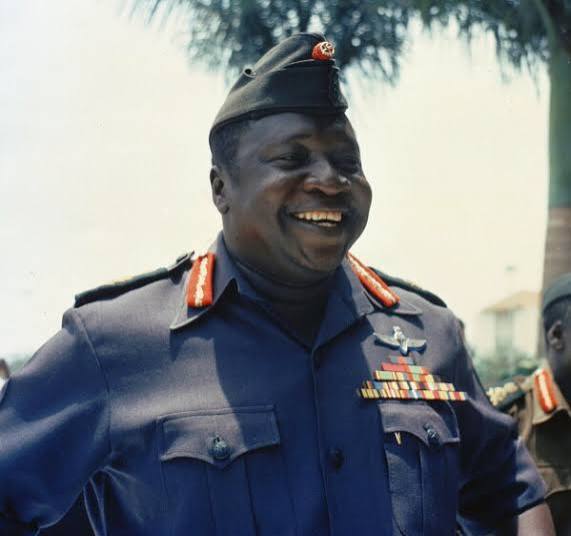
Amin was in a tight spot. Uganda in 1976 was isolated, broke, and trying to look like a leader in Africa.
What Amin told each side?
To the hijackers:
– He gave them sanctuary, fuel, and Ugandan army guards around the terminal.
– He let them make demands and announce them from Entebbe.
– Privately he encouraged them to keep hostages alive, because a massacre on Ugandan soil would bring huge retaliation.
To Israel, via back channels:
– Messages went through France, Egypt’s Sadat, and Kenya’s Kenyatta.
– Amin told the Israelis he was “pressuring” the hijackers to release everyone. He suggested he could convince them to take money and asylum instead.
– He offered to host negotiations in Kampala with the Red Cross and UN.
To Egypt and other Arab/African states:
– Sadat called Amin directly and urged him not to let it turn into a bloodbath. Egypt didn’t want Israel invading an African country.
– Amin used this to look like a pan-African statesman mediating between Israel and the PFLP.
The problem:
Everyone knew Uganda was sympathetic to the hijackers’ cause. Amin had expelled Israelis from Uganda in 1972 and armed Palestinian groups. So Israel didn’t trust his mediation, and the hijackers didn’t trust him to protect them from Israel.
By July 3, the deadline was set for July 4. Israel decided the talks were going nowhere.
- The Raid: Planning and Execution
Israel called it Operation Thunderbolt. The Mossad called it “too far to fail.”
Planning:
– Intel: Released hostages described the terminal. Mossad built a full-scale mockup at Lod Airport in Israel and trained for a week.
– Cover: The plan hinged on surprise and speed. They needed to land, kill the hijackers, get hostages, and leave before Ugandan reinforcements arrived.
– Logistics: Kenya quietly agreed to refuel. No African country would officially allow it. The C-130s flew at low altitude over the Red Sea to avoid radar.
– Deception: The lead car was a black Mercedes like Amin’s, with Israeli commandos in Ugandan army uniforms. The idea was to get to the terminal door before anyone realized.
On the ground, July 4th, 11pm local:
- Land, drive straight to terminal. Shoot the tower.
- Breach and kill the 4 hijackers inside in under 3 minutes.
- Move hostages to planes while a second team destroyed Ugandan MiGs on the runway so they couldn’t be pursued.
- Total: 53 minutes from landing to takeoff.
Casualties: 3 hostages, 1 commando, all hijackers, and 45 Ugandan soldiers.
- How Both Sides Spun It
Israel’s version:
– “We had no choice. Diplomacy failed and a massacre was hours away.”
– Framed it as a triumph of determination and a warning to terrorists: “nowhere is safe.”
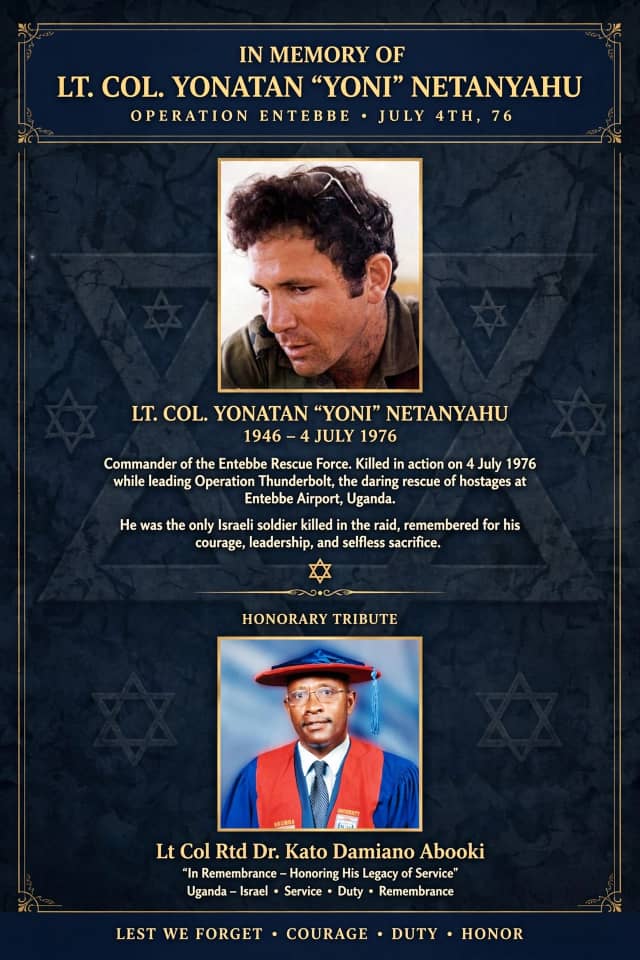
– Yonatan Netanyahu became a national hero. The name “Operation Yonatan” was later used.
Uganda / Amin’s version:
– Called it “Israeli aggression” and a violation of Ugandan sovereignty.
– Claimed the hostages were being treated well and would have been released.
– Used it domestically to rally support and blame “Zionist imperialism.”

International version:
– US and UK praised the rescue privately.
– At the UN, African and Arab states condemned Israel. Western states stayed quiet.
– The PFLP called it a massacre. Many European papers called it daring.
The raid basically ended Amin’s credibility as a mediator and made Entebbe a textbook case: when diplomacy stalls and time runs out, states will use force.
About the author;
Lt. Col. Dr. Kato Damiano Abooki is a retired senior UPDF officer and an academician.