

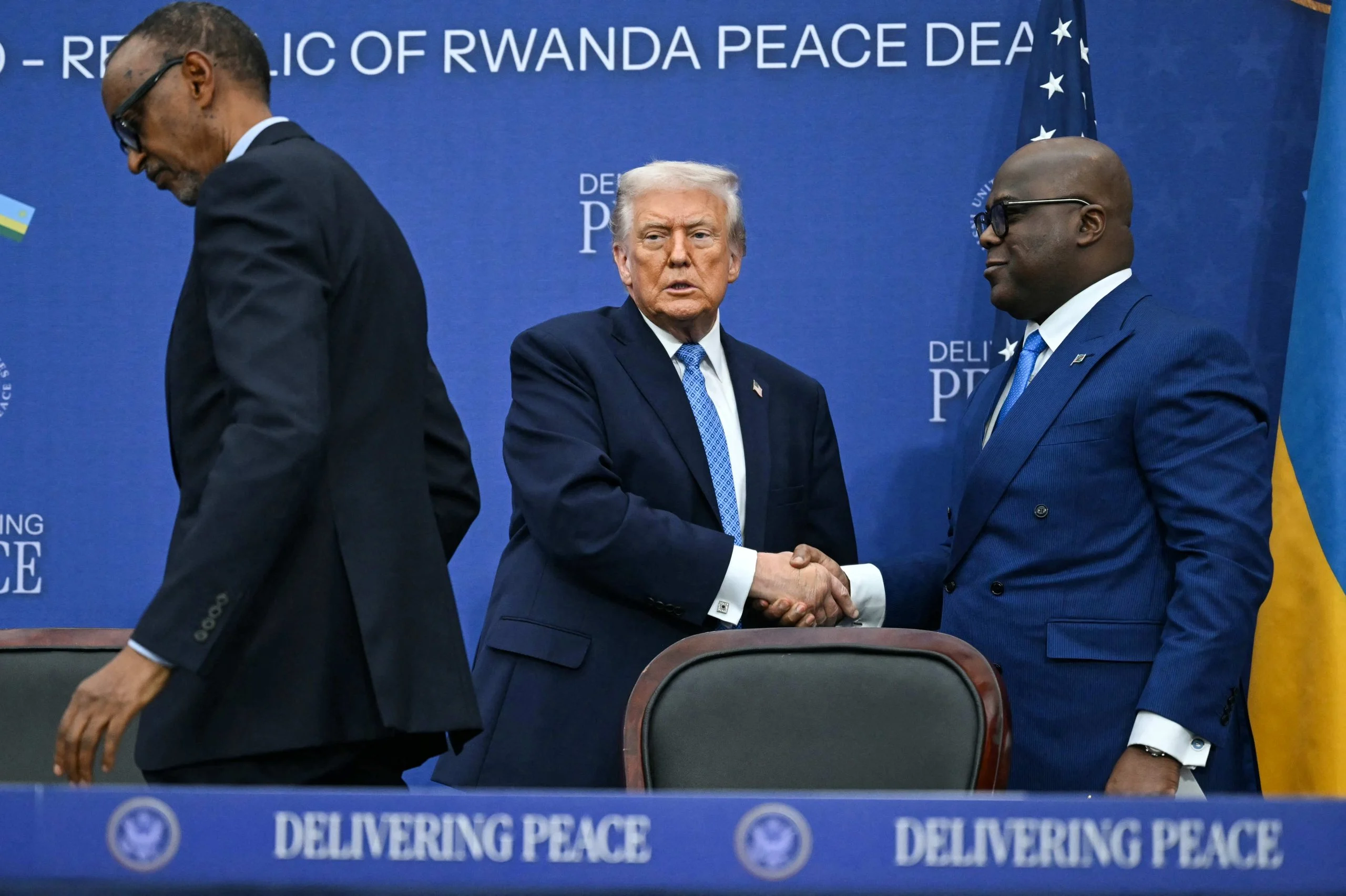

Kinshasa reiterated that durable stabilisation in eastern Congo and the wider Great Lakes region depends on “the cessation of all support to armed groups” and strict respect for international law
The government of the Democratic Republic of Congo has welcomed U.S. sanctions imposed on the Rwanda Defence Force (RDF) and four of its senior commanders, calling the move a “clear signal” in defence of Congo’s sovereignty and territorial integrity.
In a statement issued in Kinshasa, Congo’s Ministry of Communication and Media said it “salutes the decision” by the U.S. Treasury Department’s Office of Foreign Assets Control (OFAC) to designate the RDF and its top officials over what Washington described as direct involvement alongside the March 23 Movement (M23) in eastern Congo.
“These measures constitute a clear signal in favour of respect for the sovereignty and territorial integrity of the Democratic Republic of Congo, justice, and the effective implementation of commitments undertaken under the Washington Accords,” the Congolese government said.
Earlier on Monday, the United States announced sanctions against the RDF and four senior officers, accusing Rwanda’s military of “actively supporting, training, and fighting alongside” M23 as the group seized territory in North and South Kivu, including the provincial capitals of Goma and Bukavu and strategic mining sites.
Rwanda has denied supporting M23 and described the sanctions as “one-sided,” arguing that the Congolese government has failed to dismantle armed groups hostile to Kigali.
U.S. Treasury Secretary Scott Bessent said Washington expected “the immediate withdrawal of Rwanda Defence Force troops, weapons, and equipment” from Congolese territory.
The sanctions were imposed under Executive Order 13413, as amended, which targets individuals and entities deemed responsible for threatening peace and stability in Congo.

Defence of Sovereignty
In its communiqué dated March 2, the Congolese government said the U.S. action underscored the need for “coherence between diplomatic commitments and operational realities on the ground,” referencing the Washington Accords signed months ago following talks hosted by U.S. President Donald Trump with Congolese President Felix Tshisekedi and Rwandan President Paul Kagame.
Kinshasa reiterated that durable stabilisation in eastern Congo and the wider Great Lakes region depends on “the cessation of all support to armed groups” and strict respect for international law.
The government expressed “profound gratitude” to the United States for what it described as consistent engagement and leadership in efforts to restore peace in Congo and across the region.
Congo also urged Washington to continue its efforts “with constancy and a sense of responsibility” to ensure compliance with commitments made and to secure lasting peace.
Financial Impact
The U.S. sanctions designate the RDF as an entity and individually list four senior officers: Vincent Nyakarundi, the Army Chief of Staff; Ruki Karusisi, commander of the 5th Infantry Division; Mubarakh Muganga, Chief of Defence Staff; and Stanislas Gashugi, Special Operations Force Commander.
Under the measures, any property and interests in property of the RDF and the named officers that are in the United States or in the possession or control of U.S. persons are blocked. U.S. individuals and companies are generally prohibited from conducting transactions with them unless authorised by OFAC.
The sanctions also extend to entities owned 50% or more by the designated persons. Transactions in U.S. dollars that pass through the U.S. financial system could be frozen, and banks or businesses that facilitate significant dealings risk exposure to enforcement action.
Non-U.S. persons may face civil penalties if they cause violations of U.S. sanctions or engage in efforts to evade restrictions.
While the measures stop short of a comprehensive arms embargo, they are likely to complicate international procurement, financing and military cooperation involving the RDF.
Regional Stakes
Eastern Congo has long been plagued by armed groups competing for control of land and mineral resources.
The resurgence of M23 has intensified diplomatic tensions between Kinshasa and Kigali, with Congo accusing Rwanda of backing the rebels — allegations Rwanda denies.
In its statement, Congo said it remains “fully committed, alongside its regional and international partners, to work towards the complete restoration of peace, security and state authority across the entire national territory.”
There was no immediate response from Kigali to Kinshasa’s remarks on Monday.


