
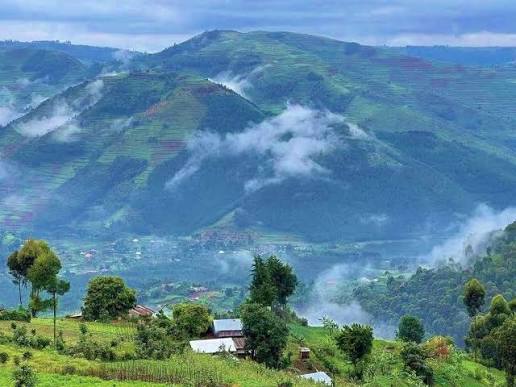
A Letter from Karubanda

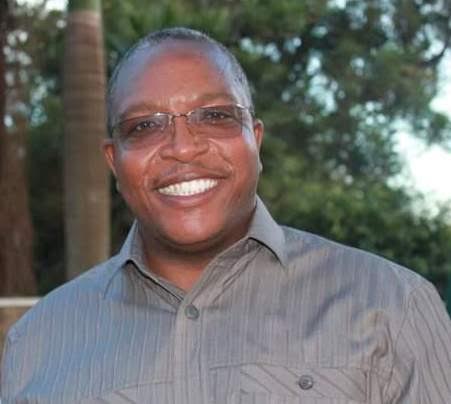
Dr Francis Runumi
Email: francis.runumi2@gmail.com
Phone: 0782303247
11th October 2026
TO: RELIGIOUS LEADERS OF the KIGEZI SUB-REGION,
RE: A HUMBLE APPEAL FOR A HOLISTIC APPROACH TO THE SPIRITUAL, SOCIAL AND ECONOMIC TRANSFORMATION OF THE FAITHFUL.
Your Lordships, Eminences, and All Esteemed Religious Leaders,
I write with profound respect and humility to express my sincere appreciation for the exceptional shepherding and leadership that you, together with the clergy, religious men and women, Imams, Sheikhs, Pastors, and other faith leaders, undertake every day in the service of God, humanity and our communities. It is through this kind of interaction that I was last Sunday awakened to the reality by a homily delivered at a thanksgiving mass for the newly ordained Bishop of Kabale Diocese, by Rev Fr Kiiza Lucas. He underscored the vast mental prisons engulfing the faithful, highlighting people struggling with indebtedness (e.g one borrowing from one SACCO to pay another SACCO), alcoholism, domestic violence, hatred among the faithful even within the clergy, and the failure to nurture a people with good character. All these are ramifications of chronic and deep rooted multi-dimensional poverty.
These ramifications notwithstanding, it is worth noting, that for generations, our faith institutions have been among the most trusted and deeply rooted institutions in Kigezi. Through spiritual guidance, moral formation, pastoral care, counselling, education, healthcare, charitable work and numerous social development programs, you have made an immeasurable contribution to the wellbeing of our people. Our churches, mosques, schools, hospitals and community programs have touched generations, while our religious leaders have stood with families in times of joy, sickness, bereavement, poverty and hardship.
For all this good shepherding and service to humanity, I sincerely thank and commend you.
It is precisely because of my appreciation for this role and confidence in the unique position of our faith institutions that I humbly bring before you an area which, in my view, deserves greater collective attention: the holistic wellbeing and economic transformation of the people entrusted to your care especially in our Kigezi sub-region. Many preachers have alluded to this transformation but failed to walk the talk. We should collectively, affirmatively and assertively explore the available opportunities.
I am informed some faiths already have in place strategic plans and programs for youth, women and have rolled them out. This is plausible and should serve to motivate all as benchmarks. We, however, need greater coordination to impactfully tackle the poverty amongst us.
- THE CHALLENGE FACING OUR COMMUNITIES
Kigezi is blessed with hardworking people, a strong culture of education, rich faith traditions, plenty of natural resources and significant economic potential. Yet many families continue to experience poverty, unemployment and limited economic opportunity. Our people are not happy.
Of particular concern is youth unemployment and underemployment. A young person without meaningful work, income or hope for the future is vulnerable to destructive influences. We increasingly see alcoholism, drug and substance abuse, gambling, risky sexual behavior and other social ills affecting sections of our youth. A state of hopelessness is palpable. The consequences are visible in our communities: HIV and other diseases, early pregnancies, school dropout, unstable and broken marriages, domestic violence, family disintegration, emotional distress, suicide among youth, crime, premature deaths, dependency and hopelessness (begging).
These are not merely economic problems. They are social, moral, family, health and spiritual challenges. They affect Christians and Muslims alike—our sons and daughters, parents, brothers and sisters—the very people who sit in our churches and mosques, attend our schools and seek guidance, healthcare, counselling and hope from our institutions. This raises a fundamental question:
Can we adequately shepherd our people if we understand their spiritual condition but do not sufficiently understand the economic and social circumstances in which they live? I believe this question deserves our collective reflection.
- KNOWING OUR PEOPLE BETTER
I humbly propose that our faith institutions consider becoming more digitally enabled in understanding and serving the people entrusted to our care. Could we progressively develop secure community information systems through which members of our respective congregations and communities, with appropriate consent and safeguards, can be registered and their broad socioeconomic circumstances understood? The purpose would not be surveillance or simply maintaining membership statistics. It would be to understand the people we serve: their demographic structure, education and skills, occupations, livelihoods, employment status, productive assets, vulnerabilities and opportunities. You cannot serve satisfactorily people you don’t know or understand when you are not under one roof.
We would move beyond asking: “How many people belong to our congregation?” to asking:
“Who are our people, how are they living, what challenges do they face, what talents and resources do they possess, and how can we help them realize their God-given potential?”
Such information, responsibly collected and protected, could improve pastoral and community planning, targeting of support, partnerships and measurement of results. It could also enable our leaders to identify problems before they become crises. This point is going to get real during this El nino period where the dry season is unfortunately prolonged in Kabale especially unlike other regions of the country. Famine in the next few months is expected in our region, unfortunately. Relief planning ought to start now.
- FROM POVERTY RELIEF TO POVERTY ELIMINATION
Our faith institutions have rightly provided charity and assistance to those in need. Charity will always have its place. However, I humbly suggest that it should increasingly be complemented by systematic efforts to address the root causes of poverty. Most of the congregation is affected albeit at different magnitudes.
Where possible, assistance should create pathways towards:
Productive employment → self-reliance → entrepreneurship → savings → investment → asset ownership → dignified livelihoods.
Our grassroots faith communities—Small Christian Communities, church cells, mosque communities and other local structures—could become important building blocks for this transformation.
If we know that a community has unemployed youth, farmers with inadequate markets, women with entrepreneurial skills but limited capital, or skilled artisans without equipment, interventions can be targeted accordingly.
The objective should be not merely to relieve poverty, but to help families escape it sustainably.
- UNLOCKING KIGEZI’S ECONOMIC OPPORTUNITIES
Kigezi should not be viewed only through the lens of poverty. Our region possesses significant economic opportunities. The challenge is to organise our people so that they can participate in, own and benefit from them.
Agriculture and agro-processing: Kigezi has considerable potential in coffee, tea, cocoa, avocado, Irish potatoes, spices, high-value bananas, horticulture, dairy, poultry, piggery, honey and other suitable enterprises. We need to address the complete value chain—inputs, production, extension, aggregation, quality, storage, processing, financing, packaging, branding, marketing and off-taking/export. Faith institutions could encourage producer and cooperative structures and facilitate market and off-taker linkages. To illustrate Bufumbira Twifatanye Cooperative Union has started to champion such a cause. A replica of this model can be spread to the region to uplift the faithful involved in cash crops especially.
Tourism and hospitality: Our assets include Bwindi Impenetrable National Park, Mgahinga Gorilla National Park, Echuya NP, Lake Bunyonyi, the Virunga landscape, spectacular scenery and rich cultural heritage. Tourism should be viewed as a community-wide opportunity, creating employment and enterprise in guiding, hospitality, catering, transport, cultural tourism, handicrafts, eco-tourism, homestays, local food production and digital marketing.
Manufacturing and industrialization: Kigezi should progressively move from exporting raw materials to processing, manufacturing, packaging and branding locally. Opportunities include coffee and tea processing, avocado oil, potato and fruit processing, banana products, spices, dairy, meat and poultry, grain milling, honey, packaging materials, furniture, building materials, agricultural equipment, textiles and small-scale engineering. The desired progression is: raw material → processing → manufacturing → packaging → branding → regional/export markets. But we don’t have to be tied to raw materials produced in Kigezi only. Where feasible, industrialisation can be promoted on imported raw materials and value added.
Mining and mineral-based development: Kigezi also possesses mineral resources, including iron ore and other mineral occurrences, presenting opportunities for responsible mining, beneficiation, and processing, manufacturing and associated services. Where commercially viable, the opportunity should be viewed as a mineral-to-industry value chain rather than simply extraction and transportation. Mining must be accompanied by environmental stewardship, community participation, transparency, protection of landowners and equitable benefit-sharing.
Regional trade: Kigezi’s proximity to Rwanda and the wider Great Lakes region provides markets for agricultural products, processed foods, minerals, manufactured goods, tourism services and other enterprises. We should therefore ask: What can Kigezi produce competitively for Uganda, Rwanda and the wider regional market?
- OUR PEOPLE MUST PARTICIPATE IN THE OPPORTUNITY
The issue is not simply whether opportunities exist. THEY DO. The challenge is whether our people are sufficiently mobilized, organized, skilled, financed and connected to markets to take advantage of them. Our faith institutions need not necessarily become business operators. Their role could be to:
Identify potential → mobilize people → build capacity → promote ethical conduct → facilitate partnerships → connect communities to finance, technology and markets → monitor outcomes. [Bufumbira Twifatanye Cooperative Savings Union alluded to, last year embarked on this trajectory – Kudos]
This would enable faith communities to become powerful platforms for economic mobilisation without compromising their spiritual mission.
Our people should not merely hear about the economic potential of Kigezi. They should participate in it, own part of it and benefit from it.
- OUR YOUTH: FROM DEPENDENCY TO PRODUCTIVITY
The youth question requires particular urgency.
Could we collectively promote a Kigezi Faith-Based Youth Economic Empowerment Programme, bringing together religious institutions, Government, the private sector, financial institutions and development partners?
Such a Programme could combine vocational and technical skills, apprenticeships, digital skills, and entrepreneurship, Agriculture as a business, financial literacy, savings, enterprise development, mentorship and access to productive finance. I am aware attempts on these fronts have been made but in a less consistent and sustainable universal form.
The desired pathway is: Education → skills → employment/enterprise → income → savings → investment → asset ownership.
A young person with meaningful work, income, hope and dignity is better positioned to establish a stable family and resist destructive influences.
- PARTNERSHIP WITH GOVERNMENT AND THE PRIVATE SECTOR
Government has programs and resources for agriculture, education, health, industrialization, employment, financial inclusion and social protection. Our faith institutions have trusted grassroots structures and exceptional capacity to mobilize communities. The private sector has capital, technology and markets, while our people have land, labour, skills, ideas and entrepreneurial potential.
Bringing these strengths together could transform development programs into tangible household-level results.
The question should therefore not be whether Government, faith institutions or the private sector should do it alone, but:
What can each do best, and how can these strengths be combined for the common good?
- INTERFAITH COOPERATION AGAINST POVERTY
Poverty does not distinguish between religious affiliations.
I, therefore, humbly propose that Kigezi explores a stronger platform for interfaith cooperation in poverty reduction and human development, bringing together Christian denominations and the Muslim community. We can work together, without compromising our respective faith traditions, in youth employment, agriculture and marketing, vocational skills, entrepreneurship, financial literacy, healthcare, education, environmental conservation, cooperative development, food security and value addition.
Such cooperation would provide a powerful witness of unity, peaceful coexistence, compassion and service to humanity.
- A CORE TEAM FOR A SHARED VISION
For this vision to move beyond discussion, I humbly suggest consideration of a Kigezi Faith and Community Development Core Team, bringing together representatives or nominees of the major Christian denominations and Muslim community, supported where appropriate by professionals in economics, agriculture, business, youth development, technology, finance, health and social development.
Its initial task could be to develop a shared Kigezi Faith-Based Development Vision and Strategic Plan, including socioeconomic mapping, priority economic opportunities, youth programs, producer and cooperative structures, partnerships with Government and the private sector, a secure digital community information system and measurable development indicators.
The Core Team would not replace the authority or structures of any denomination or faith institution. It would simply provide a shared platform for cooperation around the common welfare of our people.
- A HOLISTIC MEASURE OF OUR SERVICE
Alongside traditional measures of spiritual and pastoral service, may we increasingly ask:
How many families have moved out of poverty?
How many young people have acquired productive skills or employment?
How many farmers have moved from subsistence to commercial production?
How many producer groups have secured reliable markets?
How many new enterprises have been created?
How many vulnerable families have been identified and sustainably supported?
How many young people at risk of destructive lifestyles have found productive alternatives?
These could become additional measures of our contribution to the dignity and development of the human person.
- A HUMBLE APPEAL
Your Lordships, Eminences and esteemed religious leaders, I make this proposal not as a criticism of our faith institutions, but as a humble appeal from one who deeply appreciates their contribution and wishes to see them become even more effective in serving our people. I feel pain seeing other communities within and outside Uganda leaping forward burying poverty while massaging it is the norm here.
Our churches, mosques, schools, health facilities, religious institutions, grassroots communities and trusted leaders constitute an extraordinary social infrastructure. If these assets can increasingly be connected through digital information, economic organization, partnerships, skills development and measurable programs, Kigezi could make significant progress in addressing poverty and many of the social problems associated with it. Kigezi compared to other regions is still doing badly. I respectfully appeal for greater attention to the human being as a whole—spiritually, morally, intellectually, socially, physically and economically.

The objective is not to turn our faith institutions into economic organizations. Rather, it is to ensure that spiritual and pastoral care walks with the person through the whole journey of life. A person who has faith, education, good health, a stable family, productive work, income, dignity and hope is better placed to live a morally upright and spiritually fulfilling life. May we therefore have the courage to ask not only:
“How many people are in our churches and mosques?”but also:“How many of our people are living in dignity, how many have productive livelihoods, how many young people have hope, and what more can we do together to ensure that no family is left behind?”
I believe that faith communities which combine spiritual guidance with knowledge, compassion with action, moral formation with human development, and pastoral care with economic empowerment can help build a Kigezi that is spiritually strong, morally upright, economically productive, socially cohesive, healthy and hopeful.
This would contribute to building progressive, faith-responsive and happy communities, where our religious teachings are not only preached but increasingly experienced in the dignity and wellbeing of our people.
I thank you for your continued service to God, to humanity and to our beloved Kigezi.
With profound respect and humility,
Dr. Runumi Francis
Elder on behalf of,
KIGEZI DEVELOPMENT STAKEHOLDERS
AK’OWABANDI KEIJA ENJURA YASYA. Twerwaneho