
The French President Emmanuel Macron arrived in the Democratic Republic of Congo which is in the grip of a rebellion in its eastern part, warning it must not become “the spoils of war”

“Faced with a history whose number of victims is equivalent to that of the world wars we have lived through, France does not claim, I do not claim, to have a solution on its own. The solution lies in a collective awakening. In the awareness that is taking place here, which concerns everyone and the whole region, and to the crimes and tragedies that are taking place before our eyes, we must not add oblivion and abandonment.” Said Macron.
President Macron reiterated that France will remain faithful to its role as an unfailing ally of the DRC in defending its integrity and sovereignty adding that The Democratic Republic of Congo must not be the spoils of war and thepillaging must stop.
Macron announced that France will “release an immediate contribution of 34 million euros in humanitarian aid” to cover the immediate needs of the local population in terms of food, health care and sanitation. Must not become “the spoils of war” .
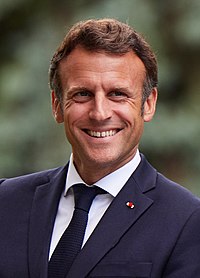
France will be the first State to respond to the European Union’s initiative announced last week to set up a humanitarian air service to Goma. We will release an immediate contribution of 34 million euros in humanitarian aid, which will be added to the amount of nearly 50 million announced by the European Union.
The air bridge will link with Goma, the capital of DR Congo’s eastern North Kivu province, where fighting with the rebel group M23 has displaced more than 600,000 people.
The DRC government has accused Rwanda of backing the militia group M23, which re-emerged from dormancy in late 2021, subsequently occupying swathes of territory in North Kivu.
Tensions ongoing for months between Rwanda and the Democratic Republic of Congo over rebel groups have brought the two countries to the brink of war again.
Congo, which has repeatedly become a conflict zone due to the economic and political interests of neighbouring countries, is currently home to dozens of armed groups.
While Congo accuses Rwanda of supporting the rebel group March 23 Movement (M23), which is made up of Tutsi – an ethnic group of over 5 million people, Rwanda is threatening a cross-border operation against Congo, citing the existence of the Democratic Forces for the Liberation of Rwanda, an armed rebel group which poses a security threat to the Central African country.
Congo, which has been seeking stability since the 1996-2003 Congo wars, faces a renewed threat of war that ethnic identities have rekindled.
Despite a cease-fire decision in two separate negotiations with the leaders of armed groups and neighbouring countries in Kenya and Angola, tensions between the two countries still continue to escalate.
Eastern Congo, which borders several countries such as Rwanda, Uganda and Burundi, is also the region where dozens of precious metals like gold and cobalt are mined.
Congo, the biggest African country by land area after Algeria, stands out with its ethnic diversity.
Nearly 250 ethnic groups live in the country and many local languages are used in daily life. Official languages include Kikongo, Lingala, Tshiluba, and Swahili as well as French – which is a remnant of the country’s colonial past.
The settlement of Hutus – an ethnic group that was displaced from Rwanda – in the regions where Tutsis, who were discriminated against by citizenship and land laws in the Kivu region, lived, caused major conflicts in eastern Congo after the Rwandan genocide.
After the Rwandan genocide, Congo has become the country where migrants, who moved to Burundi, Tanzania and Congo itself, had the most problems.
Congo’s protection of the perpetrators of the Rwandan genocide and its support for arming them in refugee camps are among the issues that deepen the crisis between the two African countries.
While Congo protected the perpetrators of the genocide, Rwanda provided military, political and economic support to the Tutsis in eastern Congo, emboldening their organizational structure.