
The life of a man whose political ideals were always in contradiction with his political analysis
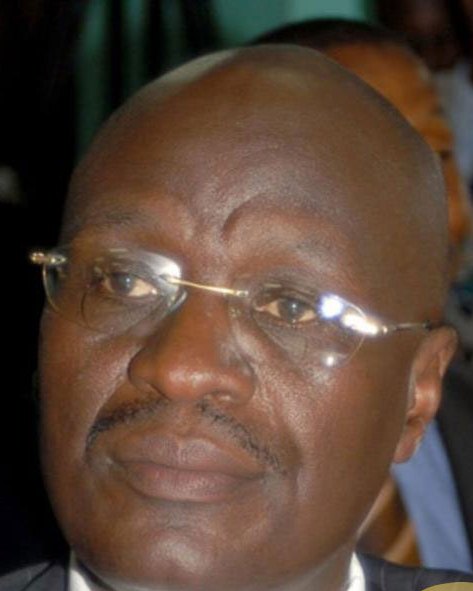
Maj. John Kazoora, who died on Easter Sunday April 20th, 2025, was a ferocious political animal. I met him in 1996 during the 6th parliament when I was a young journalist filled with passion for investigative journalism. Kazoora was a Member of Parliament representing Kashari. We struck a close relationship of journalist and source, teacher and student, mentor and mentee. His political career embodies the constant contradiction between political ideals and the hard reality of political life.
That is how Kazoora and I came to forge a close relationship. I would spend hours with him at the parliamentary canteen indulging in political gossip. Often, he was in the company of Nathan Byanyima, Guma Gumisiriza, Bernadette Bigirwa or Winnie Byanyima. In many ways, Kazoora the political analyst was different from Kazoora the political idealist. As an idealist, he stood for democracy and accountability. Yet as an analyst, he would spent hours explaining to me why different politicians took decisions – the political calculations that made them act the way they did.
For instance, when President Yoweri Museveni began efforts to amend the constitution and remove term limits, Kazoora told me the president would most likely win. Why, I asked. He said Uganda is a poor country without a large private sector. This means that most of the opportunities for personal advancement are controlled by the state. This gives an incumbent president enormous leverage over Members of Parliament. He would tell me that many MPs are heavily indebted. Faced with a choice to vote for their ideals or for their survival, most would choose the latter. Yet when he faced this choice, Kazoora voted for his ideals. Till this day, I wonder why.
In fact, during the process of amending the constitution to remove term limits, Kazoora stood for his ideals. Yet he knew he was digging his political grave. He would tell me that during the 2001 elections, the Museveni camp will descend on his constituency to ensure he does not return to parliament. The threats against him were many and vicious yet he remained unbowed. He ran and lost as he expected and yet never took grievance for it. Instead, he accepted his loss stoically and went on with his struggle for the Uganda he believed in. His exclusion from political patronage seemed to strengthen his resolve to stand by his beliefs, than surrender them.
When he published his book, Betrayed by My Leader, he sent me a copy. It was a fascinating read. Typical of the man, he sought to show how the NRM and Museveni had veered off the course of their revolutionary ideals. His query were the many meetings he and his colleagues from Ankole had had with the president. During those tribal meetings, Museveni revealed the considerations that shaped his appointments of people into public office.
For instance, in one meeting, Museveni told MPs from Ankole that he had appointed Specioza Kazibwe vice president because she was a woman, a Musoga and a Catholic, but that she was not competent. In another meeting, he said he had made Jeje Odongo army commander to please the people of Teso even though he had no management skills to run the army. In both cases, Museveni was despising the leadership skills of people he had appointed to very important offices, and this rattled Kazoora.
Yet Kazoora was not perfect. We had disagreements and this is where I realized that personal grievances drive even the most principled politicians away from their ideals. My first disagreement with him came in late 1997 to early 1998 during the censure of Muhwezi. The whole censure began on false information that Muhwezi owned Customs House. Kazoora led the fight. With his colleagues, they listed a series of properties and companies Muhwezi owned, inflated their values, added assets owned by his mother-in-law, brother-in-law, even friends and invented others.
They took this list to parliament and the media to create an impression that Muhwesi was corrupt, and they succeeded. I could not accept this blatant manipulation of public opinion. I saw firsthand that Kazoora and many of his colleagues, in their struggle to fight corruption, were employing lies and subterfuge. It turned out that in the late 1980s, Muhwezi had accused Kazoora of corruption when they worked together at ISO. This had taken Kazoora to jail and almost ruined his political career. Kazoora was determined to use this chance to take vengeance against Muhwezi. And he did with extraordinary skill. I vehemently opposed him. Yet, although our disagreements were heated, they never undermined our relationship. And unlike many Ugandans, he never called me names.
Kazoora was therefore human. Indeed, during the censure, Muhwezi had a meeting with him. Kazoora told him point blank that he was doing this to avenge his imprisonment. On that, Kazoora was his true self. He didn’t stab anyone in the back. If he had a grievance with you, he told you. But I was saddened that on Muhwezi, he could abandon his ideals in favor of pursuing a personal vendetta. His life, like that of the rest of us, was, therefore, filled with contradictions. But at a broad political level, he was to a very large degree, in fact larger than most politicians I have met, a courageous and principled man.