

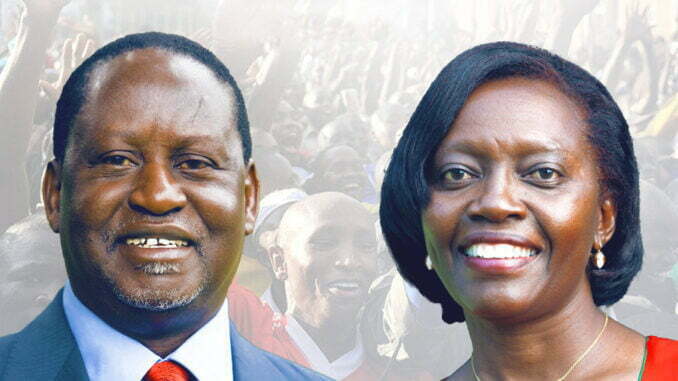
The elections this time round is dominated by class rather not ethnicity

Kenyans go to the polls on 9 August this year and for the first time; the contest is dominated by class rather than ethnicity.
Kenya has a painful history of violence during its election seasons. The lowest ebb was after the 2007 elections when over 1 100 people were killed and left 650 000 displaced, resulting in a controversial International Criminal Court case at the Hague.
Four candidates were cleared by Independent Electoral commission to run for the presidency. The two main contenders are former Prime Minister Raila Odinga and the current deputy president, William Ruto.
The country faces an increasing debt burden, higher taxation and a weakened shilling. The key issue swaying voters is the economy, exacerbated by post-COVID-19 global inflation that has sent essential commodities prices soaring, according to International Crisis Group.
The economy will be the main battleground in the competition for votes, with debates over class likely to trump (although not completely overshadow) ethnic allegiance.
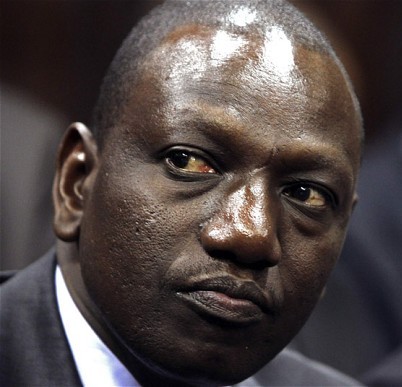
Ruto has firmly positioned himself as a populist leader with his ‘hustler nation’ slogan designed to position him as the preferred candidate for working-class Kenyans.
He is challenging what he describes as the ‘dynasty’ politics of his rival Odinga, who is making his fifth bid for the presidency, backed by President Uhuru Kenyatta, who is barred constitutionally from running again.
Both Odinga and Kenyatta are sons of Kenya’s first vice-president and president respectively. Ruto says the pair represents an entitled old guard in a country where three-quarters of the population is under 30 and post promises such as eradicating high unemployment are unfulfilled.
In contrast, Odinga is running on the ‘Azimio la Umoja’ platform – with a unifying agenda aimed at bringing Kenyans together to address corruption and unemployment.
In what was presented as a move to strengthen democracy, Odinga and Kenyatta tried and failedto initiate constitutional changes through the Building Bridges Initiative. It was aimed to expand the executive and set up the office of the official opposition leader in the national leadership structure.
The initiative also intended to create more voter constituencies, even though this was rejected through civil society litigation and public opposition from Ruto, who described it as ‘political conmanship.’
Both presidential rivals have already chosen their running mates from the Kikuyu – Kenya’s largest ethnic group. The Kikuyu also dominate much of the country’s business landscape, with significant interests and land ownership around the Nairobi Metropolitan area.
However, despite both sides’ ethnic arithmetic and balancing, it is the candidates’ records on practical delivery that are being pushed to the fore.
Odinga has selected veteran lawyer, women’s rights campaigner and former justice minister Martha Karua as his running mate. Karua is the first woman in Kenya to be nominated for the role in a major ticket.
A renowned human rights defender, her selection has led to the mobilisation of women, especially in rural areas and on social media.
Ruto has opted for the lesser-known RigathiGachagua in the hope of mobilising support in the Kikuyu heartland of Mount Kenya. Despite their business dominance, there is a large Kikuyu underclass who arguably haven’t benefited from having leaders from among their numbers, which Ruto will try to capitalise on.
More important is Gachagua’s experience as a former civil servant and personal assistant to Kenyatta when he was the opposition leader between 2002 and 2006.
More class-focused politics than ethnic-tinged competition doesn’t necessarily translate into more peaceful elections. But all the signs are that Kenyans are tired of violence and more focused on economic survival.
They are also apathetic about elections, as reflected in low voter registration. (Although the National Cohesion and Integration Commission released a report in May identifying 16 out of Kenya’s 47 counties as ‘volatile’.)
A key indicator of violence will be how the courts and police conduct themselves during and after the elections. Kenya’s police force was blamed for one-third of the deaths during the 2007 poll, according to the Commission of Inquiry into Post Election Violence led by Justice Philip Waki.
Violence in the 2013 and 2017 elections was less deadly, and the court’s demand for a re-run of the 2017 election indicated a strengthening of Kenya’s vital democratic institutions.
Other developments that suggest the August polls may be more peaceful are the handling of voter registration, the successful application of technology in the voter process and votes transmission, and transparency of the Independent Electoral and Boundaries Commission.
All the signs point to Kenyans being less interested in electing leaders based on ethnic identity and more on their capacity for good governance. This has made it difficult to assess who between Odinga and Ruto is leading.
Fake polls and new surveying techniques conducted through social media platforms by notable personalities have arguably eroded trust in ore-election opinion polls.
However, the presidential race will undoubtedly be tight, with the possibility of a second-round run-off. Whoever wins, the priority will be putting the economy back on track.
August could hopefully see the beginning of a shift from ethnic-based to issue-based politics – a sign of political maturity in Kenyan elections.