

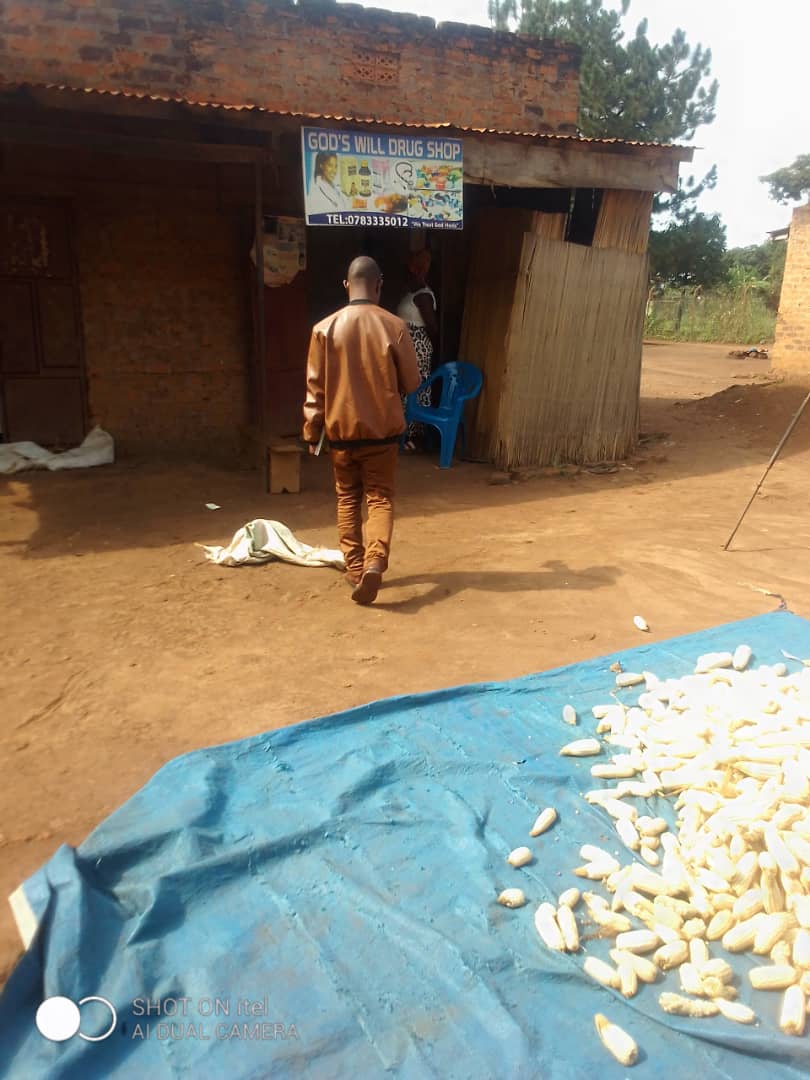
In the remote Kijunjubwa Sub County and Kigulya Division, in Masindi Municipality, the struggle for access to basic health care is a daily battle for survival as the heart-wrenching stories of residents like Sarah Nalule and John Mutegeki reveal the harsh reality of a community grappling with life-threatening challenges due to the lack of nearby medical facilities. However, as desperation grows, the community mobilizes to build its own health unit, a beacon of hope.

A Mother’s Ordeal: The Midnight Struggle for Life
Mrs. Sarah Nalule, a 32-year-old mother of three, remembers the night she almost lost her unborn child due to the absence of immediate medical care.
“I was pregnant with my last born and we had no choice with my husband but to make the journey to the health center in the next sub-county. No vehicles were available, and the only option was to walk.”Mrs. Nalule explains.
Sarah’s journey started at 11 p.m., in the night when they started walking in the roads, unpaved and riddled with potholes, stretched ahead like a dark, unforgiving serpent. Her husband Mr. Jackson Muzairwa, realizing the gravity of the situation, took it upon himself to carry her part of the way when she could no longer muster the strength to walk.
“The pain was unbearable and by the time we reached at Miirya health center in Miirya sub county, it was 10pm.—nearly 5 hours later. I was in severe pain, exhausted, and terrified that I wouldn’t make it.”Mrs. Nalule added.
At the health center, Sarah delivered her baby safely, but the ordeal had taken a toll. The long, grueling walk left her in severe pain, and her newborn arrived into the world exhausted from the strain.
“I didn’t get any complications in delivery, but I blame the severe pain and the child being born exhausted on the long distance I had to walk,” she said.
According to Sarah Nalule, for those without access to private transportation, walking is the only option, a journey that can take anywhere from two to six hours, depending on the starting point.
In the rural village of Kigulya, where access to modern healthcare remains a distant luxury, the story of John Mutegeki, a 45-year-old farmer, is a sobering reminder of the consequences of delayed medical intervention.
Mr. Mutegeki’s life is rooted in a lifelong reliance on traditional remedies revealing the perilous intersection of cultural beliefs and the harsh realities of a health system in crisis.
John Mutegeki’s ordeal began several months ago with what he initially dismissed as a common cold. “Months ago, I developed a severe cough, and I thought it was just a common cold and decided to treat it with herbal remedies. I’ve used these herbs all my life, and they’ve always worked—until now.”Mr Mutegeki said
For weeks, John Mutegeki relied on his deep-seated belief in traditional medicine, convinced that the herbal concoctions passed down through generations would cure him. However, as the days turned into weeks, his condition only worsened. The once mild cough grew more severe, evolving into chest pains and difficulty breathing.
It wasn’t until experiencing throat disorders, including issues with his vocal cords, that I finally acknowledged the severity of his condition.
“When I realized I could barely speak, I knew something was seriously wrong and the journey to the health center seemed impossible. I was too weak, and there were no vehicles to take me there and by the time the gravity of the situation was noticed, it was almost too late” Mr Mutegeki said while shaking his head in regret.
In Kigulya Division and Kijunjubwa sub county where transportation options are scarce and roads are rough and unpaved, seeking medical help can be a daunting challenge however John’s family, desperate to get him the care he needed, eventually managed to arrange for a boda-boda (motorcycle ) to transport him to the nearest health center in Miirya sub county—a journey that took over two hours on treacherous terrain.
By the time John arrived at the health center, his condition had deteriorated significantly. He was diagnosed with a severe throat infection, a condition that could have been easily treated had he sought medical attention earlier.
According to John, the delay in treatment had allowed the infection to spread, causing more damage and making recovery a more arduous process.
“I’ve learned the hard way that sometimes, traditional remedies aren’t enough, if I had gone to the health center sooner, I could have avoided all this.” John reflects, his voice mixed with regret.
Mr John Mutegeki’s story is a stark illustration of the broader health crisis facing Kigulya where modern medical facilities are few and far between, and where the belief in traditional medicine runs deep, the need for improved healthcare access and education is more critical than ever.
The stories of Sarah Nalule and John Mutegeki are emblematic of a broader crisis in Kigulya Division—a community where the lack of nearby medical facilities and reliable transportation has turned health care into a luxury that few can afford.
This absence of a health facility forces locals to travel up to 12 miles to access medical care, a distance that poses a significant challenge, especially in emergencies
Similarly, Mary, a 28-year-old shopkeeper in Kijunjubwa, found herself in a dire situation. She experienced recurring headaches and dizziness but, fearing the long journey to the health center, she relied on over-the-counter painkillers. Her symptoms persisted, and when she eventually visited a doctor, she was diagnosed with high blood pressure which had already caused complications.
Elderly individuals, often suffering from chronic illnesses like hypertension and diabetes, also face severe challenges. Regular medical check-ups and access to medication are critical for managing these conditions. However, the absence of local health facilities means many go without necessary medical care.
Grace Nakanwagi, a 67-year-old widow, suffers from hypertension. She explains, “I need to check my blood pressure regularly and take medication daily. But the health center is too far, and I can’t make the journey often. Sometimes, I run out of medicine and have to wait for my children to visit and help me get more. It’s a constant struggle.” Grace Nakanwagi said.
In Kigulya, residents are compelled to seek medical services in Miirya Sub County, while those in Kijunjubwa Sub County head to Kijunjubwa Town Council for treatment. This situation has led to a troubling trend where many patients opt for self-medication rather than undertaking the arduous journey to health centers.
Children and the elderly are among the most vulnerable populations affected by the lack of health facilities in sub-counties and use of herbal remedies for self-medication.
Dr. Brian Mugisha, the Assistant Masindi District Health Officer, says the the absence of nearby maternal health services means that many women are forced to give birth at home and their birth are not usually registered and done often without the assistance of a skilled birth attendant.
Dr Mugisha his office is aware of the limited access of health services in both Kigulya and Kijunjubwa sub-counties.
“We are fully aware of the challenges faced by the people of Kijunjubwa and access to health services in this area has been inadequate for far too long, and we are committed to making a change,” Mugisha said,
One of the key strategies implemented by Dr. Mugisha and his team is the introduction of health center outreaches, a program designed to bring essential health services directly to the villages.
According to Dr. Mugisha, these outreaches are conducted weekly in Omwiguru, Miduuma, and Kateirwe villages—three of the most remote and undeserved areas in Kijunjubwa.
“Every week, our medical teams travel to these villages to provide a range of services, including antenatal care, immunizations, and health education, The goal is to reduce the distance that residents, especially pregnant women and young children, need to travel to receive medical attention,” Dr. Mugisha explained.
“The outreach program has been a lifeline for many in Kijunjubwa. For expectant mothers who might otherwise struggle to reach a health center, the presence of medical professionals in their own village can mean the difference between life and death. The services provided during these outreaches are critical, as they address the most pressing health needs in the community” he said.
According to Dr Mugisha, each outreach targets to over100 patients
In addition to the health center outreaches, Dr. Mugisha and his team are doing a sensitization campaign to address a pervasive issue of widespread use of herbal medicine.
While traditional remedies have long been a part of the community’s cultural heritage, Dr. Mugisha expressed concern over the unregulated and potentially harmful use of these treatments.
“Our office is deeply concerned about the dangers of consuming herbal medicines, especially when their quality and dosage are unknown, we have seen cases where individuals have suffered severe health complications due to improper use of these herbs.”Dr Mugisha said.
To combat this issue, the district health office has taken to the airwaves, using local radio stations to educate the public about the risks associated with herbal medicine and Dr. Mugisha emphasized the importance of this initiative, noting that radio is one of the most effective ways to reach the rural population in Kijunjubwa.
“We are conducting sensitization programs on local radios to inform people about the dangers of using herbs without proper knowledge, the radio programs also encourage residents to seek professional medical advice instead of relying solely on traditional remedies.” Dr Mugisha said.
Dr. Mugisha noted that there has been a noticeable increase in the number of people seeking care at health centers, as well as a growing awareness of the importance of regulated medical treatments.
“We are doing everything we can with the resources we have,The outreach program is effective, but it is not enough. These communities need permanent health centers where they can receive care at any time.” Dr. Mugisha.
The lack of infrastructure is another significant hurdle. The roads leading to Omwiguru, Miduuma, and Kateirwe are in poor condition, making it difficult for medical teams to reach these areas, especially during the rainy season. Dr. Mugisha pointed out that the rough terrain not only delays the delivery of services but also poses a risk to the health workers themselves.
“The roads are a major challenge, there have been times when our teams have been delayed or even had to turn back because the roads were impassable. This is something that needs urgent attention from the authorities.”Dr Brian said
Despite these challenges, the response from the community has been overwhelmingly positive. Residents of Omwiguru, Miduuma, and Kateirwe have expressed their gratitude for the outreach program, with many acknowledging that it has already saved lives.
Mr Musa Katamba a health inspector in Kijunjubwa Sub County says these regular visits from medical teams have fostered a sense of hope and trust in the health system, something that has been lacking in the past.
Mr. Milton Kutegeka, the LC3 Chairperson of Kigulya Division, has raised concerns about the dire state of health facilities in the area. With a population of approximately 25,000 residents, the division is grappling with significant health challenges, particularly affecting children and HIV-positive individuals.
Mr. Kutegeka highlighted the critical lack of health facilities in Kigulya Division, which has resulted in numerous children facing health issues without adequate medical support.
Mr Kutegeka Milton is advocating for better health care services in the region calling on the government to establish a new health center within the division, arguing that it would significantly reduce the number of preventable deaths and improve the overall well-being of the community members.
“We need a health center here in Kigulya because our people are suffering, and it’s unacceptable in this day and age. We’ve petitioned the government, but the response has been slow. We won’t give up until we see real change.”Mr Kutegeka said.
In response to these pressing issues, the community led by Mr Kutegeka has mobilized to build their own health unit in Nyakalogi village.
“Community members are actively contributing funds for the construction of the new health unit in Nyakalogi village demonstrating a collective effort to address the health crisis and ensure better access to medical care for all residents”Mr Kutegeka said.
The initiative reflects the community’s resilience and determination to overcome the challenges posed by inadequate health services.
Mr. Kutegeka say upon competition of the constricted facility, the Kigulya division leadership will officially write to the Ministry of Health and Masindi Health Office to equip the facility with the medicine and health professionals.
“We shall understand the services our facility will show upon its completion and engagement with the health officials, right now we are focusing on having the buildings for our Nyakalogi health center” Mr. Kutegeka said.
The stories of Sarah Nalule and John Mutegeki serve as stark reminders of the human cost of inadequate health care infrastructure. In Kigulya Division, the lack of nearby medical facilities and reliable transportation is not just an inconvenience—it is a crisis that threatens the lives of countless residents.
The Ugandan government’s policy mandates that every sub-county should have at least one public health center however as this policy is part of a broader effort to decentralize healthcare and ensure that all citizens have access to essential medical services the implementation of this policy has been inconsistent, leaving many sub-counties without the promised health facilities.
Dr. Zaccheus Buhanga the Masindi leprosy focal person says Leprosy patients in the district are too weak and with a lot of bodily disability challenges to walk long distances for drugs both for leprosy and other illnesses.
Dr. Buhanga says, he is forced to deliver leprosy drugs to patients in three homes since the drugs cannot be accessed in health centers.
“We get our Leprosy drugs through the regional leprosy focal person, I deliver them myself to patients because they can’t find them in the health centers because of the long distances and the fact that they are all weak and disabled” Dr. Buhanga.
Dr. Buhanga says he normally informs the regional leprosy office to send more drugs in case of drug stock-outs which he delivers to leprosy patients at their homes.
“Our drugs come from National TB and leprosy program offices and are designed to go through our regional Leprosy supervisors whom I always request in case patients need them” Mr. Buhanga said.
“Sometimes I have to be forced to use my own fuel to go and take drugs to these leprosy patients in their homes because we don’t get special funds which I would use for fuel” Dr. Buhanga added.
According to Dr. Buhanga Masindi has 19 patients on leprosy treatment who are at risk of spreading the disease to more people in their homes and neighborhoods.
Leprosy disease can be recognized by the appearance of patches of skin that may look lighter or darker than normal skin and with other medical examinations.
The psychological impact of these struggles is also significant. Families live in constant fear of medical emergencies, knowing that help is far away. The stress and anxiety of dealing with chronic illnesses without adequate support take a toll on mental health.
Residents of Kigulya and Kijunjubwa sub counties are expressing frustration over the dire state of local healthcare, relying solely on two private drug shops that are significantly under stocked.
“Even by the mere look, the available drug shop does not qualify to be called so; it’s not stocked with drugs,” said Mr. Musa Muhamad, a resident of Kigezi.
His sentiment echoes the growing discontent among locals who are finding it increasingly difficult to access necessary medications.
To verify these claims, we visited the only available drug shop in the area, labeled “GOOD IS GOOD DRUGSHOP.” Upon requesting vitamin C tablets, a common over-the-counter supplement, it was confirmed that they did not have any in stock. This revelation underscores the critical shortage of basic medical supplies that residents face daily.
Mr. Musa Buhama a resident of Kijunjubwa trading center says only family planning programs by different non-governmental organizations which normally takes the services but not general medications.
The locals in the two sub counties further survive on the politicians who organize the medical camps in the area.
In 2023, only two medical camps were organized which was not impactful to patients who needed more diagnosis.
The persistent healthcare crisis in Uganda’s sub-counties has sparked calls for government action and accountability as advocacy groups, civil society organizations, and concerned citizens are demanding that the government fulfill its promise to provide health facilities in every sub-county.
“I’ve seen too many women give birth in unsafe conditions because they can’t reach a health center in time. Many of these births result in complications that could have been easily managed in a proper facility. It’s heartbreaking to see so many preventable deaths.” Mr. Milton Kutegeka.
Stakeholders in Masindi want Investing in health centers, training and retaining medical personnel, and ensuring a steady supply of medical supplies to be made and to be given special consideration as some of their essential steps.
The journey to universal healthcare access is long and complex, but it is achievable with concerted efforts and sustained commitment.
“The government must prioritize healthcare infrastructure and ensure that funds are allocated transparently and efficiently. It’s not enough to have policies on paper; they must be implemented in practice. Communities are suffering, and immediate action is needed.” Mr Kiiza Earnest former minister of Bunyoro affairs says.
Mr Balam Barugahara the minister of youth and children affairs says he has contacted the Ministry of Health about the need for health centers in both Kijunjubwa and Kigulya sub-counties.g
“We have been informed that the healthy facilities in the Kijunjubwa and Kigulya will be put in the next budget and we shall extend health services to our people in those areas”Mr Barugahara said while in Masindi.
Community involvement and ownership are also critical. When residents are engaged in planning and decision-making, healthcare solutions are more likely to be effective and sustainable. Empowering communities to advocate for their rights and hold leaders accountable can drive meaningful change.
Mr. Mudu Micheal, the Masindi District Health Educator, confirmed that the issue of poor access to health services is real and pressing.
“We acknowledge that people in our district are walking long distances to access healthcare services and his has been an ongoing problem, and it is affecting the health and well-being of our community.” Mr. Mudu said.
The district health authorities have been in communication with the Ministry of Health, seeking urgent intervention and support to address this issue. The need for more healthcare centers improved transportation infrastructure, and mobile health clinics are among the solutions being proposed.
Residents have expressed their frustrations, citing that the long journeys are not only exhausting but also pose risks, especially for those who are critically ill or need immediate medical attention. The situation is particularly dire for the elderly, pregnant women, and children, who are most vulnerable.
Mr. Mudu emphasized the commitment of the district health office to finding a sustainable solution as they are working closely with the Ministry of Health to explore all possible avenues to bring healthcare services closer to the people.
The Masindi district’s plight highlights the broader issue of healthcare accessibility in rural Uganda, where infrastructure challenges and resource limitations often hinder the delivery of essential services. The community remains hopeful that their pleas will lead to swift action and tangible improvements in their healthcare system.
Buruli Member of Parliament, Mr. Alled Ronald Akugizibwe, has taken a significant step towards improving healthcare in the Kijunjubwa and Masindi regions.
Mr. Akugizibwe says that a formal communication has been sent to the Ministry of Health, highlighting the critical challenges faced by residents in these areas.
He emphasized the urgency of including the construction of a new healthcare facility in the upcoming budget to alleviate the burden of long distances that residents currently face in order to access medical services.


