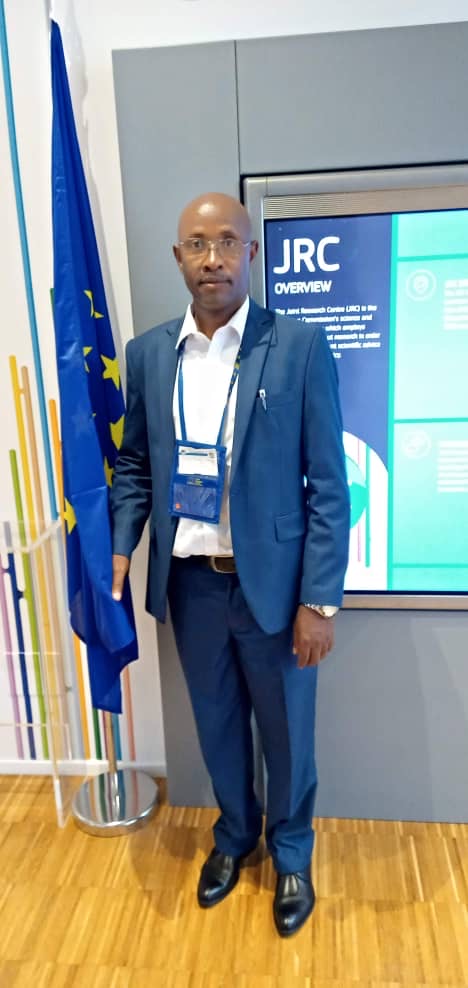
Dr. Damiano Kato Abooki Senior Lecturer
The intern is working in and dealing with difficult situations.
When Ebola is at the borders, politicians lock the gate. Economists lock the gate. Planners lock the gate. Lawyers adjourn cases and lock the gate. Quantity surveyors close Bills of Quantities and lock the gate. Housing estate managers lock their offices and go home.
The doctor goes to receive the patient.
And you deny him or her a token of allowance.
Someone you entrust with one’s life is not a student or learner.
Those people are above the ordinary.
EXECUTIVE SUMMARY
This article examines the 2026/2027 medical intern crisis in Uganda through the lens of sacrifice.
Government deployed 2,417 interns, introduced NETH policy stating “No internship, no graduation,” and scrapped monthly allowance by comparing internship to legal apprenticeship at LDC.
Interns boycotted. The author argues this comparison is false because medicine is Emergency Class One.
The central question: Our children are encouraged to sacrifice, but when they are sacrificed, what do they leave behind? Agony and feeding flowers with wreaths. Who can be at that front line if not the intern?
1. THE DIFFICULT SITUATIONS
The author, as an acadwmician, has observed interns in Mulago, Kiruddu, Mbale, Gulu, Mbarara.
The intern deals with:
– Labour ward at 2 AM – Mother with postpartum haemorrhage – Blood on floor – No senior – Must decide – Cut or mother dies in 10 minutes
– Casualty – Boda-boda accident – Open skull – Relatives shouting – No gloves in store – Must improvise
– Isolation ward – Suspected Ebola, Marburg, Crimean Congo – Sample must be taken – Risk to own life – No hazard pay
– Medical ward – 80 patients, one intern, no running water – Must work 36 hours continuous
This is not theory. This is not LDC moot court where prosecution proves case. This is not UMA calculating Bill of Quantities for cement. This is life.
2. WHEN EBOLA IS AT THE BORDERS
The author notes the pattern during epidemics:
When Ebola was declared in Mubende (2022), in Kasese, at Uganda-DRC border (2023, 2024, 2025), who locked gate?
– Politicians locked gate – Issued statement from Kampala – Did not go to border
– Economists locked gate – Calculated cost of lockdown – Stayed in office
– Planners locked gate – Drew quarantine map – Stayed in boardroom
– Lawyers locked gate – Courts closed – Cases adjourned
Who went to receive the patient at border?
The doctor – Often the intern – In full PPE, sweating, taking temperature, taking blood, admitting.
In 2026, government said such intern is a student, learning, not entitled to Shs1 million allowance.
The author asks: If someone is entrusted with receiving Ebola patient at border, with holding the life of a mother and child, is that person a student? In which university does a student hold Ebola patient?
No. Someone you entrust with one’s life is not a student or learner. That person is a frontline officer.
3. ABOVE THE ORDINARY
Those people are above the ordinary.
Ordinary person runs from blood. Intern runs to blood.
Ordinary person runs from Ebola. Intern puts on gown and goes to Ebola patient.
Ordinary person fears death. Intern signs for death – When patient dies on table, intern must tell mother.
That is why Uganda Medical Association President Dr. Frank Asiimwe called free labour “inhuman, unethical, betrayal.” He revealed 300 interns had not received even Shs1 million before scrapping.
Federation of Uganda Medical Interns President Dr. Silver Ssegonga stated: “Internship doctors aren’t students, and paying them helps differentiate them from continuing medical students.”
The author agrees: Paying is not favour. Paying is recognition that those people are above ordinary.
4. THE SACRIFICE AND WHAT IT LEAVES BEHIND
Our children are encouraged to sacrifice but when they are sacrificed what do they leave behind?
This is the philosophical core.
Government encourages sacrifice: “Work for free for nation.” “Be patriotic.” “Training is not employment.” Politicians clap.
But when intern is sacrificed – Works 36 hours, gets no allowance, catches tuberculosis from patient, collapses from exhaustion, or dies from Ebola caught at border – What does he or she leave behind?
Not promotion. Not pension. Not house.
Agony and feeding flowers with wreaths.
Family puts flowers on grave. Colleagues put wreath. Ministry issues condolence message. Then silence. Next cohort deployed.
The author asks: Who can be at that front line if we sacrifice them like that?
Who can stand at Mpondwe border when Ebola comes again, if we tell intern you are student, go without allowance, risk your life?
No one. Then politicians will have to go themselves. They will not.
That is why on July 31, 2026, interns unanimously resolved not to report until NETH policy withdrawn and allowances guaranteed. Not because they are greedy. Because they are tired of being sacrificed and leaving only agony and wreaths.
5. NUMBERS AND RESOLUTION
– 2,417 to 2,490 interns deployed to 77 centres
– Budget UGX 35.7 billion for interns and SHOs
– Shs2.5m (2021) Shs1m (2022) Zero (June 2026) Shs1.26m gross (Aug 18, 2026 after Parliament pressure) Shs2m promised (Oct 2026, President Museveni, Shs125bn to UMA SACCO)
But numbers are not story. Story is trust.
CONCLUSION
Medical attention is Emergency Class One.
Lawyers can wait for prosecution to prove case. Quantity surveyors can wait for Bills of Quantities. PQM can wait for housing estate meeting. Politicians can lock gate when Ebola is at borders.
Doctor cannot.
Someone entrusted with one’s life is not student.
Those people are above ordinary and must be paid, protected, housed, insured as such.
If Uganda continues to encourage sacrifice but rewards sacrifice with agony and wreaths, who will be at front line tomorrow when Ebola returns?
No one. And then the miracle churches will be full, and the hospitals empty.