

“We came into this world like brother and brother, and now let’s go hand-in-hand, not one before another” — William Shakespeare, The Comedy of Errors
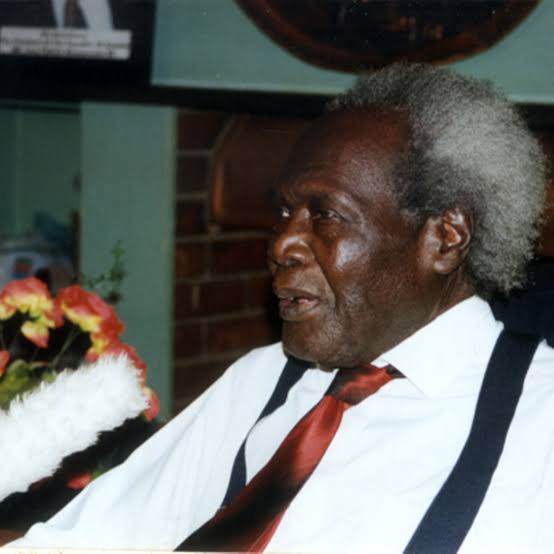
Indeed, it was a popular error, often repeated in the media, that the late Obadiah Akaki, President Yoweri Museveni’s friend and benefactor, was Dr Apollo Milton Obote’s brother.
Granted, the two shared the same father, Stanley Opeto, but Obadiah was Obote’s half-brother, not exactly a brother born of the same father and mother.
Apollo Obote entered this world alongside his younger brother, Michael Engena — a man you have probably never heard of. Their mother was Pulisikira Achen.
Unlike the Margai brothers of Sierra Leone — Sir Milton Margai, the country’s first Prime Minister (1961–1964), who was succeeded by his younger brother Sir Albert Margai (1964–1967) — Apollo Obote-Opeto and Michael Engena-Opeto were born into the same family but took very different paths in life and death.
Apollo went to Makerere University, where he studied economics, political science and English literature. He later became the founding President of the Republic of Uganda.
He died in October 2005 at the age of 82, leaving behind internationally recognised and enduring footprints on the political landscape of Uganda and beyond.
He also left behind his widow, Miria Kalule, the often-unsung heroine who stood beside him through Uganda’s turbulent political journey. Together, they had four sons: Tony Akaki, Hon. Jimmy Akena, Edward Engena Maitum and Ben Opeto.
Let me now introduce Dr Apollo Obote’s younger brother, Michael Engena.
He lived in such obscurity that few people — including some younger members of the Oyima clan — have ever heard of him.
I have visited the family graveyard several times to pay my respects, but Michael Engena is absent from it too.
Why?
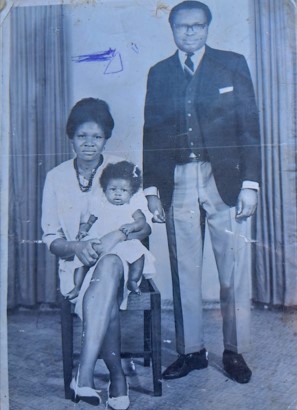
Michael Engena travelled to the Soviet Union, now Russia, where he studied international relations, peace and security.
While his elder brother Obote found a life partner in a Muganda woman, Maria Kalule, Michael’s heart was captured by a Munyoro woman, Mary Achieng, from Kiryandongo.
Together, they had seven children. They were: Opeto Michael (alive); Alaba Betty Guru (deceased); Akullu Alice (deceased); Akullu Sara (alive); Acen Diana (alive); Awat Helen Loi (alive); and Iya Rose (alive).
Mr Engena was serving as an Under-Secretary in the Ministry of Internal Affairs in Entebbe when Idi Amin seized power on January 26, 1971.
He was killed in a manner so brutally cruel that even a carnivorous animal would appear ashamed to use such a method to bring down its prey.
Eyewitnesses, including members of his family, have told us that Michael Engena was still alive when his legs were tied to the back of an army Land Rover, which sped away towards Makindye Barracks in Kampala.
Other witnesses at Makindye Barracks have also recounted that the vehicle arrived with what remained of Michael Engena’s legs still tied and dangling from the back.
The rest of his body had been destroyed along the tarmac.
He was only 32 years old.
This explains why Michael Engena is missing from the family graveyard at Abi-Ibuti village — “stranger, come and spend the night here” — in Akokoro Sub-county.
For the past 55 years, the entire 21-mile stretch of the old Entebbe Road to Makindye has been Michael Engena’s unmarked grave.
I look back at former Uganda Army soldiers of the 1970s and 1980s with more sorrow than anger.
Yet, I cannot help but describe such acts as barbaric and savage.
Why?
Those in the south who complain about northerners killing their people should also ask Michael Engena’s surviving children about what northerners have suffered at the hands of fellow northerners.
Every tribe, clan and family lost members to soldiers and rebels from different parts of the country.
Dr Apollo Obote’s family and clan were among those who bore the brunt of this violence.
After all, the vegetation immediately beneath a great tree suffers the most when a storm brings that tree down.
I shudder to imagine how many people in northern Uganda would have survived the vicious cycle of revenge and tribal bloodshed had Yoweri Museveni not intervened and ended the cycle in 1986.
Dear Michael Engena, rest in eternal peace along the old Entebbe Road.
Only our own deaths will finally relieve us of the memory of your suffering and the painful manner in which your life was taken.


