

President Yoweri T. K. Museveni is set to be sworn in early next week to start and serve his five year term. His government and National Resistance Movement (NRM) party will be focusing on implementing its five year manifesto. Among the sectors targeted to be implemented include the natural resources.

Did you that Uganda has quite a number of minerals?
According to the NRM party manifesto, the mineral deposits discovered and found to be commercially viable include;
- a) Iron ore: In addition to the previously known iron ore deposits of Muko 126 2 0 1 6 – 2 0 2 1 127 (30million tonnes), Bukusa (23 million tonnes), and Sukulu (45 million tonnes), new reserves were discovered at Buhara in Kabale (48 million tonnes), Nangara in Kisoro (eight million tonnes) Rugando, Butogota in Kanungu (55 million tonnes), bringing the total reserves to 116 million tonnes of iron ore in the country with a gross value of $15.6b.
- b) Gold: a total of 7.8 million ounces of gold have been proven as follows: at Tiira (500,000 ounces) and Alupe (800,000 ounces) both in Busia, Kamalenge in Mubende (5 million ounces), Mashonga in Bushenyi (I million ounces), Kampano in Ibanda (500 ounces). These put the total gross value of gold in the country at $10.9b.
- c) Vermiculite reserves have increased from five million tonnes to 54.9 million tonnes at Namekhara in Manafwa district and the reserves have a gross value of $11.5b. d) Limestone/marble reserves in the country have increased from the known 30 million tonnes in Hima, Dura Muhokya and Tororo to over 300 million tonnes after quantifying reserves in Karamoja.
- e) Nickel (Ni)-Platinum Group Elements (PGE): Ground magnetic and Transient Electromagnetic (TEM) surveys were undertaken in Karuma, Kiryandongo district. Also ground geochemical surveys were undertaken and confirmed nickel, copper, and cobalt anomaly. In other words good grades of the three minerals exist.
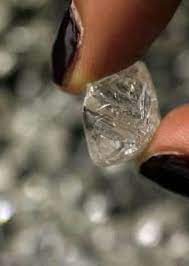
Other minerals found to be commercially viable include: beryl, bismuth, columbite, tantalite, chromite, diamond, tin (cassiterite), wolfram (Tungsten), National resistance movement 128 M a n i f e s t o 129 asbestos, clay, diatomite, feldspar, granite gneisis, graphite, gypsum, kaolin, kyanite, marble, mica, rock salt, silca sand, talc, cobalt, lead, zinc, uranium, vermiculite and nickle.
Other minerals whose commercial reserves have been established include Copper (6 Million tonnes), Cobalt (5.5 Million tonnes), Columbite -Tantalite (3.5 Million tonnes) , Niobium (130 Million tonnes), Tin (3.5 Million tonnes), Tungsten /wolfram (2.155 Million tonnes), Rare Earth Elements (73.6 Million tonnes), Phosphates (280 Million tonnes), Kaolin (3.8 Million tonnes), Gypsum (2 Million tonnes), Salt (22 Million tonnes), Glass sand (2 Million tonnes), Dimension stone (2 Million tonnes) and Aluminous clays (3 billion tonnes).

In addition, the Manifesto says 19 updated geological maps with new mineral potential zones at a scale of 1:250000 have been produced and these include:- Fort Portal, Kampala, Mbarara, Homa Bay, Masaka Kabale, Jinja, Arua, Didinga, Mbale, Masindi, Hoima, Moroto, Aloi, Gulu, Packwach, Kaabong-Lodwar, Kitgum and Kapenguria. The maps can be accessed through a geological and mineral information system portal at www.uganda-mining-go.ug:81/ugandaGMIS.
The NRM party Manifesto also reads in part “In the Karamoja region, geological mapping have been completed in two map sheets namely; Panyangara and Muruariam in Kotido District. Geochemical sampling continued in Abim District. Government also continued to sensitise stakeholders in the Karamoja region about the planned airborne geophysical surveys of Karamoja mineral resources of Karamoja; and Mining Policy and Legislation”.
The government has also trained 1,000 local artisanal and small scale miners (600 men and 400 women) to improve livelihood, health and safety of the citizens involved in mining for social and economic transformation was done.
“Sustainable management of natural resources is considered vital by the NRM for a country like Uganda. Therefore, the NRM government will encourage investment in natural resources so that this sector contributes fully to the transformation of the country.
The ultimate goal is value-addition to the natural resources as a way of creating jobs and earning better revenue from them while also ensuring their sustainable exploitation for generations to come” the NRM manifesto document reads in part.
It adds “minerals have a great potential of contributing to economic growth and poverty alleviation through exports. They are also essential in employment creation over the medium-term through value-addition. Furthermore, sustainable exploitation of minerals will provide vital resources needed to fund the backlog of infrastructure investments”. Ugandans are encouraged to investor in the sector.

NRM party outlines some of its achievements in the sector
Out of aerial geophysical surveys carried out, the NRM government has been able to locate and quantify commercial mineral deposits in Uganda. As a result new geological maps have been produced showing significant increase in known mineral resources base in the country
The following achievements have been registered:
- a) Some 21 wells discovered have been confirmed to have 6.5 billion barrels of oil and 500 billion cubic feet of gas. A total of 106 exploration and appraisal wells have been drilled out of which 120 had hydrocarbons, registering one of the highest drilling success rates in the industry.
- b) A total of 17 of the wells said to have oil have been taken up by investors for development. The remaining four were returned to the Government for non-commerciality.
- c) Appraisal of 16 wells has been concluded. National resistance movement 132 M a n i f e s t o 133 d) Feasibility studies for the oil refinery and an export pipeline have been completed.
- e) The Government has developed a National Content Policy and Implementation Strategy and Plan covering tenets of employment for Ugandans; procurement of locally produced or available goods and services; national enterprise development; enhanced vocational and higher education and training; and measurement and monitoring of national content.
- f) Three international oil companies were licensed to undertake exploration of oil and gas in the country, namely: – Tullow – CNOOC – Total These companies all hold equal equity participation in the existing contract areas. Investment in seismic surveys, exploratory and appraisal drilling reached a total of $2.832b by the end of 2014.
- g) Establishment of a Petroleum Technical Institute in the country.
- h) Regulation of expatriates in the sector enabling the contribution to employment in the country. Some 52% of direct and 95% indirect and induced jobs are occupied by Ugandans.
- i) Under a Public Private Partnership (PPP) arrangement, we refurbished 132 2 0 1 6 – 2 0 2 1 133 the 30 million-litre Jinja strategic fuel storage facility and restocked it.
- j) Government has procured a consultant to implement the Resettlement Action Plan and compensate land owners for the Uganda portion where the pipeline for the refined petroleum products from Eldora (Kenya) to Buloba — near Kampala — is laid.
- k) The feasibility study and the preparations of tender documents for the Kampala-Kigali Pipeline have also been completed. A decision was made by the Governments of Uganda, Kenya and Rwanda to develop the pipeline as a strategic regional infrastructure under the Northern Corridor Integration Projects Summit.
- l) The tender for the Engineering Procurement and Construction contractor for Eldoret-Kampala segment was advertised on 9th September 2014 and prequalification of the firms was completed, now awaiting financial closure so that the tender documents are provided to the shortlisted firms.
- m) In order to ensure implementation of sound environmental management in the Albertine Graben area, Management Plans for protected areas like the Queen Elizabeth, the Murchison Falls, the South Maramagambo Forest Reserve to adequately provide for oil and gas activities have been put in place.
- n) Nakasongola strategic fuel reserve is undergoing development. National resistance movement 134 M a n i f e s t o 135 Way Forward To exploit the oil and gas the following will be done: The NRM Government will build a refinery with capacity to produce 60,000 barrels per day in two phases. Under phase 1 the refinery will produce 30,000 barrels per day, thus meeting the current local demand of 23,000 barrels per day. It will take three years to be constructed while the second phase that will see the refinery produce 60,000 barrels daily will take five years. The refinery will be constructed under a PPP arrangement. Investment in the refinery will lead to creation of petrol chemical industries thus resulting in jobs and supply of petroleum products to the local and the East Africa regional market. Local self-sufficiency in petroleum products will also save the country the foreign exchange we spend on importing petroleum products hence giving a better balance of trade position. The NRM government will build an export pipeline to enable export of oil with the Eastern Africa region and international market, continue collaborating with the E.A partner states in the development of shared infrastructure and harnessing of the natural resources.

NRM manifesto and its way forward for the sector;
The NRM Government will promote and ensure rational development and utilisation of mineral resources in a safe and sustainable environment for socio-economic development and will among others continue to carry out surveys to establish the geological and mineral potential of the country and improve monitoring and regulation in the mining sector, and will review the mining policy and mineral legislations to improve the investment climate in the sector. Besides these moves and achievements to the mineral sub sector, the government has great plans to harness its oil and gas resources.


