
“When we captured power last year, we discovered that Obote had left a debt of about two billion US dollars. Yes, two billion US dollars, can you imagine. I don’t know what the man did with all the money”- President Museveni

By Oweyegha-Afunaduula
26 th January 2024
In this article I want to write about the ideology or policy model of neoliberalism, which has been adopted unquestioningly by the NRM regime in Uganda and is to a large extent the cause of the untold suffering of Ugandans in diverse dimensions. Neoliberalism is often associated with the leadership of Margaret Thatcher, the Prime Minister of the U.K. from 1979 to 1990 (and leader of the Conservative Party from 1975 to 1990) and Ronald Reagan, the 40th President of the U.S. from 1981
to 1989 (see Liz Manning, 2022). One immediate outcome of Thatcherian-Reaganian neoliberalism was the disempowerment of the one powerful global labour movement. In Uganda, Unionism is almost “dead”. Union leaders are integrated in MRM politics. Talk of NRM-nization of unionism in Uganda!
When I say “liberalizing everything”, I mean applying the ideology or policy model of neoliberalism to spheres of life and dimensions socio-economic, sociocultural, socioecological, sociopolitical dimensions of the total economy of a country. However, liberalizing Nature is nothing but robbery!

In my article “NRA rebellion in Uganda: Occupation, Liberation, Counter-Revolution or Revolution?” I define neoliberalism as:
“a political approach that favours free market, capitalism and reduction in government spending and by extension borrowing. The ideology of neoliberalism postulates that the reduction of state interventions in economic and social activities and the de-regulation of labour and commerce liberates the enormous potential of capitalism to create an unprecedented of social well-being. Central to the neoliberal ideology is the idea that governments are poor economic managers and inefficient compared to private enterprise. Another way of looking at it is that it is a form of capitalism that promotes private market- based interests at the expense of public and state supported institutions”.
Liz Manning (2022) defines neoliberalism as “…a policy model that encompasses both politics and economics that favours private enterprise and seeks to transfer the control of economic factors from the government to the private sector. Liz Manning goes on to clarify that many neoliberal policies concern the efficient functioning of free market capitalism and focus on limiting government spending, government regulation and public ownership.
More recently, neoliberalism has been associated with policies of austerity and attempts to cut government spending on social programmes (Liz Manning (2022). This is very evident in the social stance of President Tibuhaburwa Museveni, who as his love with neoliberalism was growing, pronounced that infrastructural development should come first, then nature and environment and social development last. This is what explains the state of our social services, and so long as the President shoes not change his stance against social development, Ugandans should expect nothing
but meteoric decline in social services.
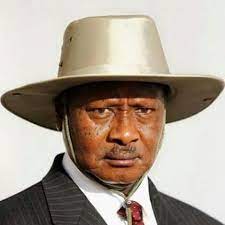
On NRM’s first “Liberation” Day 26 th January 1987, President Tibuhaburwa Museveni said: “When we captured power last year, we discovered that Obote had left a debt of about two billion US dollars. Yes, two billion US dollars, can you imagine. I don’t know what the man did with all the money”. Today Uganda’s public debt stands at 25 billion dollars! If Obote could ask from his grave, the question would be; “What has the man done with all that money? What have Ugandans gained in terms of social development? Isn’t it robbery?”
Fortunately, there are many criticisms of neoliberalism, including its potential danger to democracy, social development, workers’ rights, sovereignty, right to self-determination, citizenship, ownership of land and resources, pluralism, leadership and governance, with the rulers, especially in Africa, tending to be less inclusive, more exclusive and dictatorial. In some countries, they begin to rely more on outsiders than the citizens to gain legitimacy and approval to govern.
Before I develop my thoughts further on my topic above, let me clarify the meanings of neoliberalism, and liberalism and liberalization. Neoliberalism is distinct from liberalism insofar as it does not advocate laissez-faire economic policy, but instead is highly constructivist. It advocates a “strong” state to bring about market-like reforms in every aspect of society. Liberalism is a political and moral philosophy based on the rights of the individual, liberty, consent of the governed, political equality, right
to private property and equality before the law. However, while in the West people are at liberty to practice perverse sex – homosexuality – in Uganda there is a law against homosexuality. Liberalization refers to the process of relaxation of trade rules and regulations of a country by the government, to pave the way for economic growth and ostensibly development. It involves opening up trade opportunities with other countries, which results in an increase in foreign exchange and also in job creation for the citizens of the country. Uganda fully opened up her economy to global economic forces through full-blown liberalization.
I want to use green land grabbing to illustrate how neoliberalism has affected society in Uganda, with a gaining and the majority losing. However, let me give a list of what the NRM regime has done or achieved in the last 38 years under policies dominated by neoliberalism. Both positives and negativesare discernible. It was the NRM regime in Uganda that:
Introduced privatization in Uganda
Adopted neoliberalism in Uganda
Liberalized Uganda’s total economy without liberalizing politics
Made Uganda the first country in Africa to embrace globalization unquestionably as the pathway to development, before South Africa and the African Union did.
Took Uganda into the World Trade Organization (WTO)
Sold virtually all public enterprises.
Introduced a Uganda Constitution 1995 that disadvantages th Periphery but benefits the Centre politically and economically
Allowed ethnopolitics (political ethnization and ethnic politicization) to take root in Uganda
Institutionalized political inequality, allowing political pluralism but restricting alternative parties
to their headquarters, which are frequently raided by army and police
Allowed green land grabbing to proliferate and to be carried out mainly by soldiers and nomadic pastoralists
Expanded the electricity grid to produce more electricity
Decided that Uganda’s heavy crude oil in Bunyoro be mined and transported to the sea through a pipeline.
Introduced money bonanzas as means of rural development
Introduced SACCO in place of cooperatives, which the NRA destroyed during its bush war in Luwero Triangle
Incubated the Rwanda Patriotic Army (RPA) and Rwanda Patriotic Front (RPF) within its ranks and then unleashed them into Rwanda to overthrow the regime of Juvenal Habyarimana
Introduced factories where swamps existed
Destroyed the industries of Jinja by moving them to Kampala and Mbarara
Destroyed the indigenous forests of Bugala island in Kalangala and replaced 10,000 hectares
of forest with oil palm grass, which looks like a tree.
Allowed sugarcane growing and settlement in Mabira Rain Forest
Allowed sugarcane growing in the Bugoma game corridor in Bunyoro.
Oversaw the expansion of small-scale sugarcane growing and the proliferation of sugarcane
crashing factories in Busoga and other areas
Expanded the Parliament of Uganda from 80 members in the 1960s to well over 500 members
and still wants to expand it further
Bantustanized Uganda by creating numerous Districts, ostensibly to decentralize power and authority from the Centre then ended up recentralizing power and authority, especially those regarding how taxes collected in the districts are allocated and when.
Converted State House in an Institution of government
Presided over the meteoric fall in quality of education in schools and universities
Introduced apartheid-like education and a refugee economy.
Introduced domestic and external slavery involving several youths entering modern slavery
Introduced an anti-homosexuality law to the chagrin of the West where it is manifesting like a new faith and antithesis of heterosexuality.
The British colonialists grabbed land everywhere in Uganda, including the 9000 square miles in Buganda. However, during the last 38 years of NRM rule there has been far more green grabbing in the country. There is increasing realization that there are subtle, fluid and indirect interconnections between climate change politics and land grabs, not only in Uganda but on the whole globe. In my articles “The New Imperialism in Uganda: Primitive accumulation by dispossession” and ”Land grabbing in Uganda yesterday, today and tomorrow” respectively published by Ultimate News of February 1 2023 and February 14 2023, I submitted that there was a new imperialism in Uganda through primitive accumulation by dispossession. I even did not hesitate to submit that those consistently engaged in land grabbing are either in power or connected to power. I even submitted that the overwhelming majority of the land grabbers are ethnically-related and belonging to the nomadic pastoral human energy system, which today predominates in the leadership and governance of the country.
When I was growing up in the 1950s and 1960s in Uganda, I came to know that we had the following stock farms and ranches: Bulago Stock Farm. Aswa Ranch, Kasolwe Stock Farm, Nshaara Ranch, Lusenke Stock Farm, Maruzi Ranch, Rubona Stock Farm, Gt Apwono Ranch, National Bull Stud, Nshara Ranch, Sanga Field Station,
Ruhengyere Field Station, Community Breeding Satellite Centres, National Poultry Development Resource Centres, Rwakitura Stock Farm and Ranch, Kisozi Ranch, and Njeru Stock Farm. However, under the neoliberal processes and a spate of green land grabs many of these resources are under constant threat of being grabbed by people in power or those connected to power. Maruzi Ranch, for example, was invaded by people with long- horned cattle. Some people said they came from Tanzania where they were chased by former President Jakaya Kikwete. The Independent of February 4 2023 also reported that Government was being sued for illegal extension
of Aswa Ranch boundaries. The Ranch now has long-horned cattle.
Rwakitura Stock Farm and Ranch is now owned by President Tibuhaburwa Museveni. The Independent August 2019 reported that President Tibuhaburwa Museveni bought Rwakitura in 1967. However, that was also the year he joined University College, Dar-es-Salaam, formally a constituent College of the University of East Africa that also included Makerere University College and Nairobi University College.
Who was managing it while he was a student, and where did he get the money to buy it. Was the Uganda government selling public stock farms and ranches at that time to even students? I remember Rwakitura because my father, Charles Afunaduula Ovuma, then Speaker of Busoga Lukiiko in the early 1960s, led a group of counselors on a visit to the stock farm. When they came back my father narrated
to me all that he had seen on the Stock Farm, including a research station. Rwakitura aside, the President also owns a farm on what used to be Kisozi Ranch, in Gomba, which in the past belonged to the army.
Another stock farm known to be under the threat of being grabbed is Njeru Stock Farm in Buikwe. The threat is coming from the Minister of Internal Affairs, General Kahinda Otafiire who claims that the land is his. The Independent of November 1 2019 reported the General saying that he legally acquired the Njeru Stock Farm; However, there are some documents from London, which I have seen which show that both an Original Title and Altered Title exist. Since the matter is in Court, the Court will determine whether the farm is still a public property.
Neoliberalism encourages green Land grabbing and loss of property by the public in favour of private owners either legally or illegally. Once acquitted illegally ownership can and has always been legalized.
Green land grabbing and property grabbing are not about to end. It is only beginning to peak.
Neoliberalizing everything is a gateway to robbery of public properties.
For God and My Country.
Benjaminsen, T. A. and Bryceson, I. (2012). Conservation, green-blue grabbing and accumulation by dispossession in Tanzania Journal of Peasant Studies, 39 (2): 335–355 Borras, S. and Franco, J. Towards a broader view of the politics of global land grab: rethinking land issues, re framing resistance. ICAS Working Paper Series, 1–39, The Hague International Institute of Social Studies (ISS).
Cotula, L, Vermeulen, S., Leonard, R. and Keeley, J. (2009). Land grab or development opportunity?
Agricultural investment and international land deals in Africa, London/Rome: IIED/FAO/IFAD.
Jennifer, C. Franco and Saturnino M. Borras Jr (2019). Grey Areas in Green Land Grabbing: Subtle and indirect interconnections between climate change politics and land grabs and their implications for research. Land Use Policy. Volume 84, May 2019, Pages 192-199.
Liz Manning (2022). Neoliberalism: What it is, With Examples, Pros and Cons. Investopedia. https://www.investopedia.com/terms/n/neoliberalism.asp July 29, 2022.
Melissa Leach (2022). Green grabbing. Green Economy Coalition, ESRC Steps Centre, 31July 2012.
Oweyegha-Afunaduula (2023). The New Imperialism in Uganda. Primitive accumulation by
dispossession. Ultimate News, February 1 2023.
Oweyegha-Afunaduula (2023). Land grabbing in Uganda yesterday, today and tomorrow. Ultimate
News, February 14 2023.
The Independent (2029). MUSEVENI: I bought Rwakitura in 1967, whose money could I have stolen then? August 18 2029.
Vidal, J. (2008) The great green land grab The Guardian UK , 13 February Available
from: http://www.guardian.co.uk/environment/2008/feb/13/conservation [Accessed 31 October 2011].