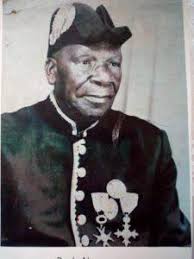
Paul Ngorogoza was a statesman of Kigezi. He belonged to the Abainika subclan under the Ba-Muhutu clan and is believed to have been born around 1897 in Rwanyena Rubaya Ndorwa Kabale District.
His great grandfather, Mbogozi, son of Ndabagyera, son of Muzoora, was head (OMUKURU) of Abainika at Rwanyena. His father was Bangirana.
Ngorogoza was born in a polygamous family, and he was the 2nd born of the 3rd wife. His elder brother was Ndereya Rubaare and a sister Elizabeth Banagente.
His other siblings, including the step ones, were Yonasan Kihinda, Kangye, and Gaburyeeli Katabazi.
Ngorogoza had other close relatives of Abainika, such as Bambona, son of Butootera, who was head of Abainika at Bukinda. Indeed, when he retired, Ngorogoza decided to settle in Bukinda.
Ngorogoza’s other relatives were Batata, son of Bahururu, who was the head of Abainika at Nyabirereme, and he was the grandfather of Robert Kitariko, the first man from Kigezi to study in India.
Ngorogoza never attended any formal school apart from undergoing training in catechism classes at Kitabi Catholic Parish Igara Bushenyi Ankore.
The training in catechism classes was to enable Ngorogoza to join the Catholic Church, and indeed, in 1922, he got baptised at Kitabi Catholic Parish.
Ngorogoza’s life came to the limelight in 1923 when he was appointed as a village chief (Omukungu). In some areas, the village chief was known by the Luganda word as OMUTONGOLE.
After his excellent service as village chief, he was promoted to a Parish or Muruka chief in 1925.
During his tenure as Muruka chief, he witnessed the following events:
1. In 1927, the brewing of Enturire was banned.
2. In 1927, the marriage registration law was promulgated. Bride price or enjugano was set and fixed by local government at one cow and a bull or one cow and five goats. Whoever charged more than that, the excess would be forfeited to the government.
3. In the same year of 1927, registration of births and deaths was enforced.
In April 1929, the government began the policy of employing native Kigezi chiefs. The number of Baganda and Baziba chiefs was reduced, and the vacant places occupied by the natives.
In May 1929, the following appointments were made:
1. Ngorogoza was appointed as Gomborora Chief of Kikungiri.
2. Suleman Rushuuga became the gomborora chief of Bubaare.
3. Paul Kakwenza became the gomborora chief of Kambuga. He was the father of Semu Rwakiseeta.
4. P. Muhimba became the gomborora chief of Bufundi.
5. Kanyoomwa Asuman became the gomborora chief of Rwamucucu.
6. Yowana Bukwirwa became the gomborora chief of Kamwezi.
7. Kabari became the gomborora chief of Rujumbura.
8. Andrea Buhweira became the gomborora chief of Kashambya.

The appointment of natives as saza chiefs also followed suit in 1930:
1. Rukiga county, which comprised of Rukiga and Ndorwa, had been ruled by a Muganda known as ED Kagubara.
2. Then, in 1930, Rukiga was divided into Rukiga and Ndorwa.
3. Thomas Rwomushana became saza chief of Rukiga.
4. Mukombe was appointed saza chief of Ndorwa
5. Paul Kangwagye was made saza chief of Kinkizi, but after a short a while, he was replaced by Paul Ngorogoza.
6. Karegyesa, who had succeeded his father Makobore in 1920, remained the saza chief of Rujumbura in 1930.
7. Gichanwa was already a saza chief of Bufumbira.
8. Please note that the saza of Rubanda was created in 1960 after curving it out of Ndorwa and reallocating the gomborora of Bufundi from Bufumbira to Rubanda county.
From 1927 to 1929, there was rapid population growth in Kigezi. Ngorogoza was one of the key personalities of Kigezi who collaborated with fellow chiefs in Kigezi to lobby the colonial government, the King’s of Ankore, Toro, and Bunyoro to migrate people into new found lands.
The main causes for rapid population growth in Kigezi were:
1. The people of Kigezi liked to produce many children for labour and clan protection purposes.
2. When the natives were allocated chieftainship after retiring the Baganda colonial agents, the chiefs of those days were paid salaries that varied according to the number of people a chief was administering. Chiefs with more people in their areas of jurisdiction obtained more than those with few people. So chiefs encouraged people to produce more children and also encouraged and attracted some people to their areas.
3. Then, between 1927-1928, there was a great famine in Rwanda, which forced the people of Rwanda to move into Kigezi, especially counties of Ndorwa and Rukiga. Even after the famine had subsided, a number of these families settled in Kigezi because they were hesitant to go back for fear of the ruthless Belgians. Moreover, the majority of these people who had fled from Rwanda to Kigezi were more of Bakiga core clans that are predominant from across in Byumba Rwanda. So, it was easy for themselves to settle and integrate in Kigezi.
Because of his agitation for the overpopulated people to be relocated, Ngorogoza was nominated as a member of the committee that was tasked with the resettlement of the migrant Bakiga. This committee was headed by the District Commissioner.
The committee made successive journeys to inspect land in the following areas:
1. Kambuga, Kihihi, Kinaaba, Rutenga, Kirima, Rubimbwa, Kihanda, in Kinkizi
2. Rwerere, Nyakariro, Kazindir, Bugangari, Bwambara, and Ruhinda in Rujumbura.
3. Bugamba and Mwizi in Rwampara Ankore.
4. In 1946, Ngoroza and colleagues were responsible for the esettlement in areas of Nkore such as Buhweju, Mitooma, Ibanda, and Bunyaruguru.
5. Resettlement in Toro took place from 1955 in Rwimi, Mwenge, now known as Kyenjojo and Kyaka, now known as Kyegegwa.
In 1946, Paul Ngorogoza was elected as the first Secretary General for Kigezi for a term of 5 years. Although Ngorogoza did not know English, he was helped by using Kiswahili, which he had picked from Baziba clerks, and the support from saza and gomborora Chiefs
In 1952, Ngorogoza won again for the 2nd time ad the Secretary General for Kigezi, but this time for a period of years.
In 1956, the post of Secretary General was won by Kitaburaaza, the saza chief of Rujumbura.
In 1956, Paul Ngorogoza was appointed as the Chief Judge of Kigezi, who would adjudicate over cases referred to from saza chiefs.
Fortunately for Ngorogoza, he had amassed experience as muruka, gomborora, saza Chiefs, and serving ad Secretary General. The judiciary was further strengthened by the creation of a post of assistant magistrate to which Festo Rwamunahe was appointed. Festo Rwamunahe was a son to Miranda, the head of Makobore’s army. His other brothers were Biteeyi, who was saza chief of Kinkizi but died in 1959, Nyabagabo (father to Hon Rukikaire), and a sister Merabu who married Biahop Festo Kivengere the 1st Ugandan Bishop of Kigezi.
In his judicial duties, Ngorogoza was assisted by Bwiire, who was appointed as registrar.
Ngorogoza served as Chief Judge up to 1959.
It’s said that at one time, Andrew Cohen, the British Gurvernor of Uganda, visited Kabale, and while a meeting with the Commissioner, chiefs, Secretary General, and other key personnel, Ngorogoza was frank to admit that his English was limited but he uses Kiswahili and local Rukiga in execution of his duties. At this point, the Gurvernor asked meaningfully why a person who does not know English was appointed a judge?
Someone tipped Ngorogoza what Cohen was saying and, in a deep voice, retorted, “KYO NIMUGAMBIRE OGW’OMWANA COHEN NGU EMISHANGO NDASHARA EY’ABAKIGA TINDASHARA EY’ABAJUNGU”. The whole council hall burst into laughter because of such a brilliant response. Andrew Cohen coiled back in silence into his seat, never to joke around with Bakiga.
In 1959, Paul Ngorogoza was finally appointed as the Chairman of Kigezi Appointments Board, a post he held until he retired in 1960.
The great man of Kigezi died in 1984 and was buried with honour, pomp, and substance at his home located in Bukinda in Rukiga Kabale.
Also read; https://www.google.com/url?sa=i&url=https%3A%2F%2Ftwitter.com%2Fjmnkangi%2Fstatus%2F549891287198203904&psig=AOvVaw1440ZoBeSY_bsTedhksbpB&ust=1728398654929000&source=images&cd=vfe&opi=89978449&ved=0CBcQjhxqFwoTCKiwk_bA_IgDFQAAAAAdAAAAABAn
Before he died, Ngorogoza had received awards and medals for his distinguished service to the nation, and the church as follows:
1. OBE – Order of the British Empire awarded to him by the Queen of England.
2. KSG – Knight of St. Gregory, a class in one of the orders of knighthood of the Holy See of Rome or Papacy. This was awarded to him by Pope Paul VI.
The above opinion was written by Dr. Spero Byokunda