

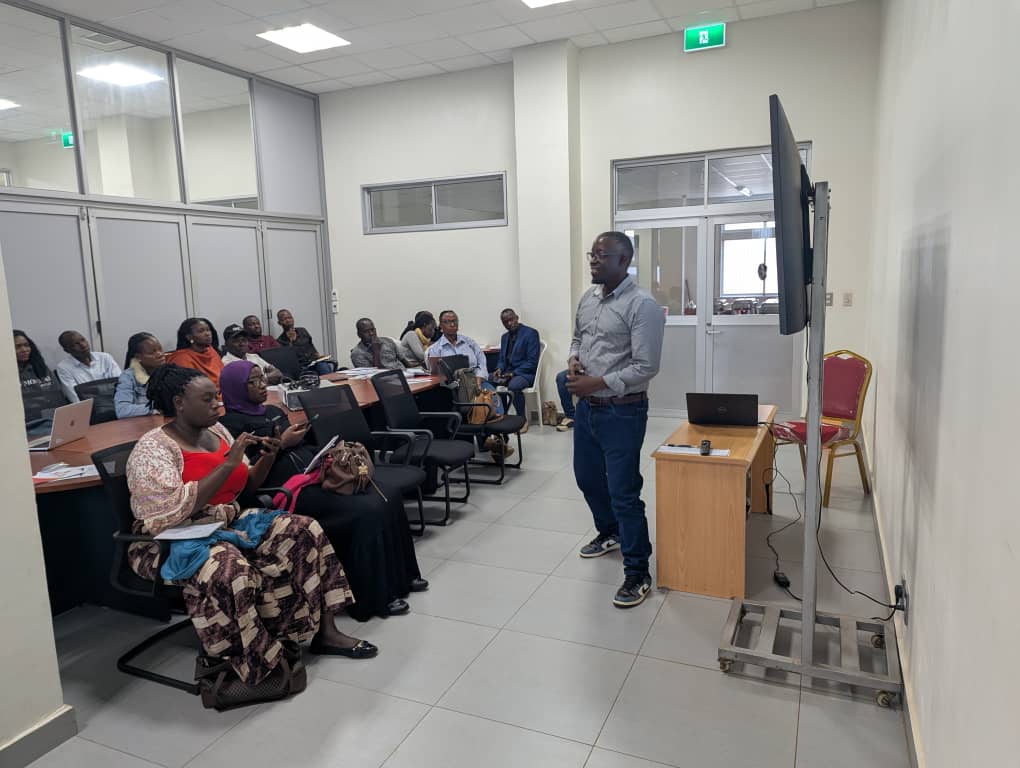
Wabinyai Fidel Raja the Lead data Scientist and software engineer at AirQo talked to Magara Darious the Managing editor of eastafricanwatch.net on the air pollution conditions of Kampala Capital City Authority(KCCA). Read the full exclusive interview below;

- What is AirQo and what does it do?
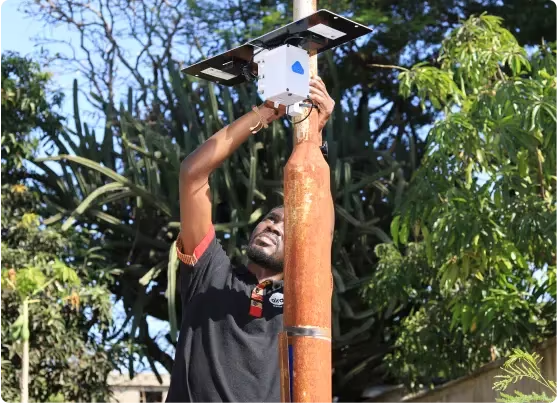
AirQo is an air quality research and monitoring initiative based at Makerere University. We empower communities across African cities with accurate, hyperlocal and timely air quality data to drive air pollution mitigation actions. Many African cities lack actionable data and evidence on the scale and magnitude of air pollution in order to tackle air pollution, a major urban environmental health challenge. By building and deploying a network of low-cost air quality sensors in African cities, we close the air quality data gap that many of these African cities face. We leverage data science and machine learning to provide real-time air quality information and insights through digital platforms, helping stakeholders raise awareness and advocating for policies that mitigate air pollution across the continent.
- How does it work with KCCA and The Government?
AirQo works in close collaboration with the Kampala Capital City Authority (KCCA) and national agencies like the National Environment Management Authority (NEMA). We provide the critical data that enables these mandated agencies to develop informed policy frameworks and action plans. A key milestone of this partnership was our support in developing the National Environment (Air Quality Standards) Regulations, 2024, which established a vital foundation for nationwide air quality enforcement. Beyond policy, we partner with KCCA to drive community awareness, encouraging the behavioral shifts necessary to reduce urban pollution. By providing city authorities with clear evidence of pollution scales, we help them address one of the most significant urban health challenges.
- What has AirQo achieved since it was established?
Since 2015, AirQo has made significant strides in advancing air quality monitoring across the continent. :
- Extensive Network: We have deployed over 350 air quality monitors across 16+ African cities in 10 countries, including Uganda, Kenya, Nigeria, Cameroon, Zambia, Senegal, Ghana, South Africa, Burundi, and Madagascar.
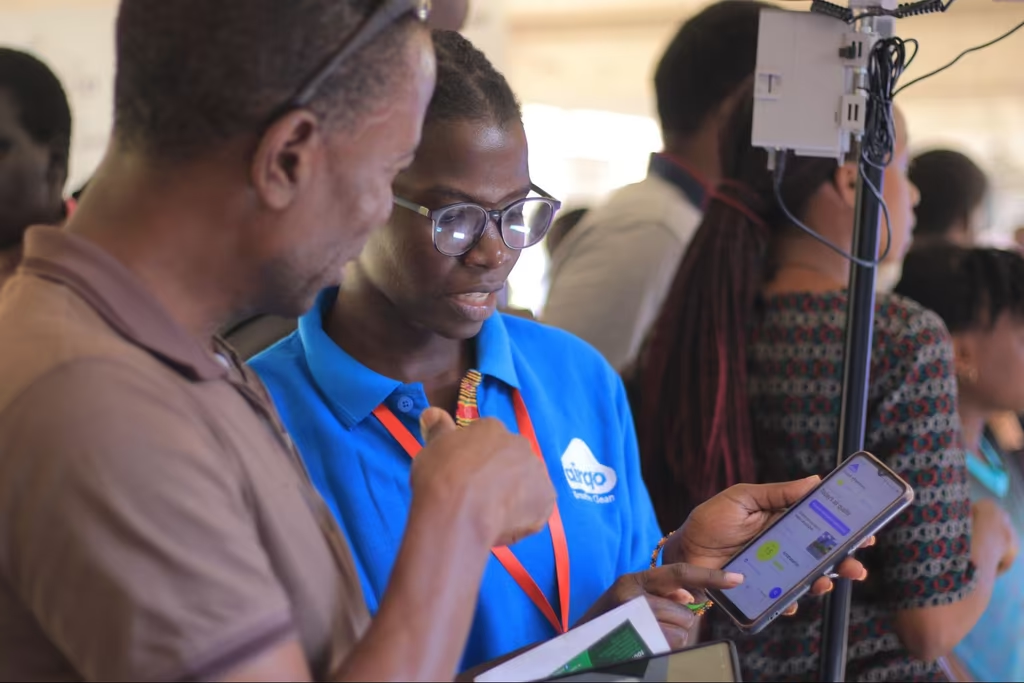
- Digital Accessibility: We developed open-access digital tools, including an analytics platform and a Mobile App, giving citizens and leaders free access to real-time air quality data.
- AI Innovation: We use Artificial Intelligence to forecast air quality, providing predictive insights that help communities plan their activities safely.
- Policy Influence: Our data has directly informed local ordinances and bylaws aimed at protecting public health.
- Scientific Contribution: We have published over 20 peer-reviewed research papers, expanding the global body of knowledge on air pollution specifically within the African context.
- How does the organization plan to tackle air pollution in Kampala?
Our strategy for Kampala is centered on the principle that “you cannot manage what you cannot measure.” We are committed to expanding open access to air quality data, ensuring that information is a public good. By championing open-source technologies, we allow other innovators and researchers to build upon our platforms, creating a collaborative ecosystem that accelerates clean-air solutions across the city and the broader continent. 5. How bad is a charcoal stove in relation to air pollution?
While charcoal stoves are a traditional way of cooking, they are significant contributors to both indoor and outdoor air pollution. These stoves emit fine particulate matter (PM2.5)and carbon monoxide, which can accumulate in poorly ventilated spaces. In many urban settings, household cooking remains a primary source of pollution exposure. Transitioning to cleaner cooking alternatives is one of the most effective ways to improve immediate air quality for families.
- Is a motorcycle a serious air polluter? How does it compare to a bus? Motorcycles, including boda bodas, play an important role in urban mobility but can contribute to air pollution, particularly when not well maintained. When comparing transport modes, buses typically carry many more passengers at once, which makes them more efficient in terms of emissions per passenger. This means that improving and investing in mass public transport systems can be an effective way to reduce overall urban emissions. At the same time, the transition to cleaner technologies such as electric motorcycles presents an opportunity to further reduce emissions.
- The government is supporting electric vehicles and boda bodas. How feasible is this?
The transition to electric mobility in Uganda is promising and represents an important step toward cleaner urban transport. Electric vehicles can help reduce exhaust emissions and, over time, may offer lower operating costs. However, scaling this transition will require continued investment in charging infrastructure, supportive policies, and reliable energy systems. While progress is already being made, a gradual and well-coordinated approach will be key to long-term success. 8. What other technologies can be promoted for clean energy (cooking and transport)? Beyond electric vehicles, a range of technologies can support cleaner energy use across both cooking and transport. For cooking, options such as liquefied petroleum gas (LPG), electric and induction cookers, and biogas systems offer cleaner alternatives. In transport, electric vehicles, can help reduce exhaust emissions and, over time, may offer lower operating costs. However, scaling this transition will require continued investment in charging infrastructure, supportive policies, and reliable energy systems. While progress is already being made, a gradual and well-coordinated approach will be key to long-term success.
- What other technologies can be promoted for clean energy (cooking and transport)?
Beyond electric vehicles, a range of technologies can support cleaner energy use across both cooking and transport. For cooking, options such as liquefied petroleum gas (LPG), electric and induction cookers, and biogas systems offer cleaner alternatives. In transport, electric vehicles, hybrid engines, and improved public transport systems all play an important role. Integrating these technologies creates a multi-layered approach to reducing our reliance on high-emission energy sources.

- How can the public be mobilized to support clean energy and reduce air pollution?
Public engagement is essential in addressing air pollution. When citizens have access to timely air quality data, they can make informed daily decisions and can also advocate and demand change from the local leaders and amongst themselves. Through community engagement and education, we can empower communities to become advocates for their own environment, as they are more likely to act when they understand the health risks of air pollution. There is also a need to back these with alternative solutions – providing affordable clean energy options and financial incentives or subsidies to make the switch easier.
- Please share your closing remarks and message to the public.
At AirQo, we believe in one simple message: Breathe Clean. Air pollution is not just an environmental issue; it is a public health crisis. According to the World Health Organization, air pollution causes around 7 million premature deaths globally every year. In Africa alone, hundreds of thousands of these deaths are linked to polluted air, with a growing burden in rapidly urbanizing cities like Kampala. The reality is that many of these deaths are preventable. By transitioning to clean cooking, improving transport systems, and adopting cleaner technologies, we can significantly reduce exposure to harmful pollutants like PM2.5. Clean air should not depend on where you live or how much you earn. It is a basic human right. Every individual and government has a role to play:
- Choose cleaner cooking methods where possible
- Become an air quality community champion
- Stay informed about air quality. Download the AirQo App to stay updated
- ● Government should enforce air quality standards, invest in clean energy, and support affordable alternatives for households and transport Together, informed citizens and committed government action can deliver cleaner air and healthier lives. Lastly check my presentation here; What do we know about air quality in Uganda (1)


