



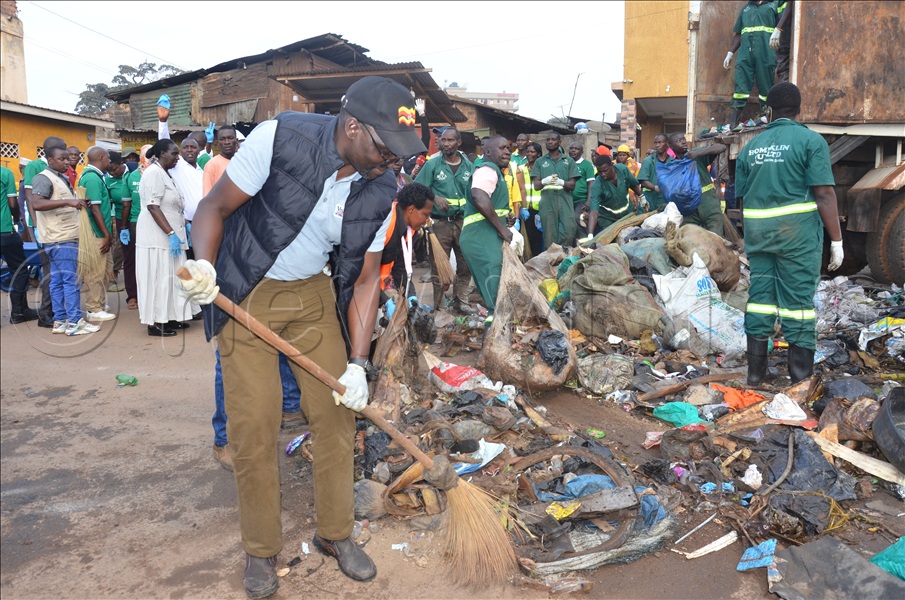
Every last Saturday of the month, Uganda takes a break from its usual routine as communities participate in the national cleaning exercise. From 7am to 10am, streets, trading centres, markets and other public spaces are expected to come alive with people sweeping, collecting rubbish and cleaning their surroundings.
But as the exercise becomes a regular feature of Uganda’s calendar, a question is increasingly worth asking: Does dedicating Saturday morning to cleaning contribute to the wider productivity of the economy, or does it unintentionally slow down business activity?
For many Ugandans, Saturday is not necessarily a day of rest. It is an important business day, particularly for companies, small and medium-sized enterprises (SMEs), informal traders and other businesses that depend heavily on morning customers and employees to work for them.
The hours between 7am to 10am can be important for those going for work and traders. Shops open, markets become busy and customers move around purchasing food, household items and other merchandise. When normal activities are interrupted, some businesses may lose valuable trading hours.
Most workers may also find themselves reluctant to report for work after the exercise. If a person is expected to spend the morning cleaning and then travel to work afterwards, the remaining working hours may be too short to make the journey worthwhile. For some businesses, this can mean fewer employees, customers and lower sales, yet employers have to pay workers.
This raises the possibility of reconsidering the timing of the exercise rather than abandoning the principle behind it. What if community cleaning were moved to Saturday evening, perhaps from 5pm to 7pm?
By that time, many people would have completed their day’s work. Businesses could operate normally during the morning and afternoon, while communities would still have an opportunity to clean their neighbourhoods.
Such a change could potentially allow Ugandans to achieve two objectives at the same time: maintaining clean communities while protecting important business hours.
Uganda’s economic ambitions depend not only on investment and infrastructure but also on millions of small daily transactions taking place across the country. A shopkeeper opening early, a market vendor selling produce, a bodaboda rider transporting customers, a restaurant serving breakfast and a customer purchasing goods all contribute to economic activity. That is why the timing of a public exercise deserves consideration.
For a country seeking to increase productivity, create jobs and strengthen businesses, it may be worth examining whether the current three-hour window achieves the best balance between environmental responsibility and economic activity.
Therefore, we do not really need a Saturday Cleaning Day because we are not children and we should be respected. If it must be held, it should be scheduled on a Saturday in the evening or Sunday, as people need Sunday as their day of rest and family time.
Alternatively, the activity could be limited to a shorter period, such as 6:00am to 9:00am, rather than 7:00am to 10:00am and once every three months.
Other public holidays
Uganda also recognises days including Liberation Day, Archbishop Janani Luwum Day, International Women’s Day, Labour Day, Martyrs’ Day, National Heroes Day, Independence Day, Christmas, Boxing Day, Good Friday, Easter Monday and the two major Eid celebrations.
The year begins with New Year’s Day on January 1, followed by NRM Liberation Day on January 26, which commemorates the change of government in 1986.
The argument presented for changing its status is that Ugandans should remain free to commemorate the martyrs in their churches and communities without necessarily making the day a nationwide work-free holiday.
A similar argument is raised concerning June 9, National Heroes’ Day. The proposal is that the national commemoration could continue, including the official ceremony at State House, while the day itself would no longer automatically close workplaces across the country.
That question lies at the heart of the proposed changes. Supporters of retaining public holidays can point to their cultural, historical and religious significance. A public holiday gives citizens time to participate in national ceremonies, worship, travel and family activities.
However, the opposing argument focuses on economic activity. Under this view, some commemorative occasions can continue to be observed without stopping ordinary business and public services nationwide.
This would represent a significant change from the existing legal framework. Uganda’s Public Holidays Act currently declares the listed days public holidays throughout the country, while the Employment Act provides employees with holiday entitlements and specific arrangements for work performed on public holidays.
The proposal questions Easter Monday, arguing that the day could instead be used for productive work and economic activity, including enabling citizens and businesses to generate income and contribute through taxation.
The debate becomes more delicate when it reaches Eid al-Fitr, which marks the end of Ramadan, and Eid al-Adha, the Feast of the Sacrifice. It is proposed that Eid al-Adha be scrapped off from the public-holiday calendar for normal economic activity.
Another proposed change concerns the presidential swearing-in ceremony. In 2026, Uganda declared May 12 a public holiday for the Presidential Swearing-In Ceremony, illustrating the President’s existing legal authority to declare additional public holidays.
The proposal is that future inaugurations should remain important constitutional and national ceremonies without automatically becoming special public holidays.
A conversation about what a public holiday should mean
At its core, the proposal is not necessarily about ending national remembrance, religious celebration or recognition of important events. It is about separating commemoration from closure.
Under such an approach, Ugandans could continue honouring martyrs, heroes, religious occasions and national milestones, while workplaces, businesses and government services remain operational on selected dates, particularly in light of increasing workloads and business pressures.
The debate therefore goes beyond the number of days Ugandans spend away from work. It touches on a larger national question: how should Uganda balance the preservation of history and faith with the demands of productivity, employment, taxation and economic growth?
That question ultimately requires consideration of both the value of collective remembrance and the economic consequences of closing the country for a day.


