

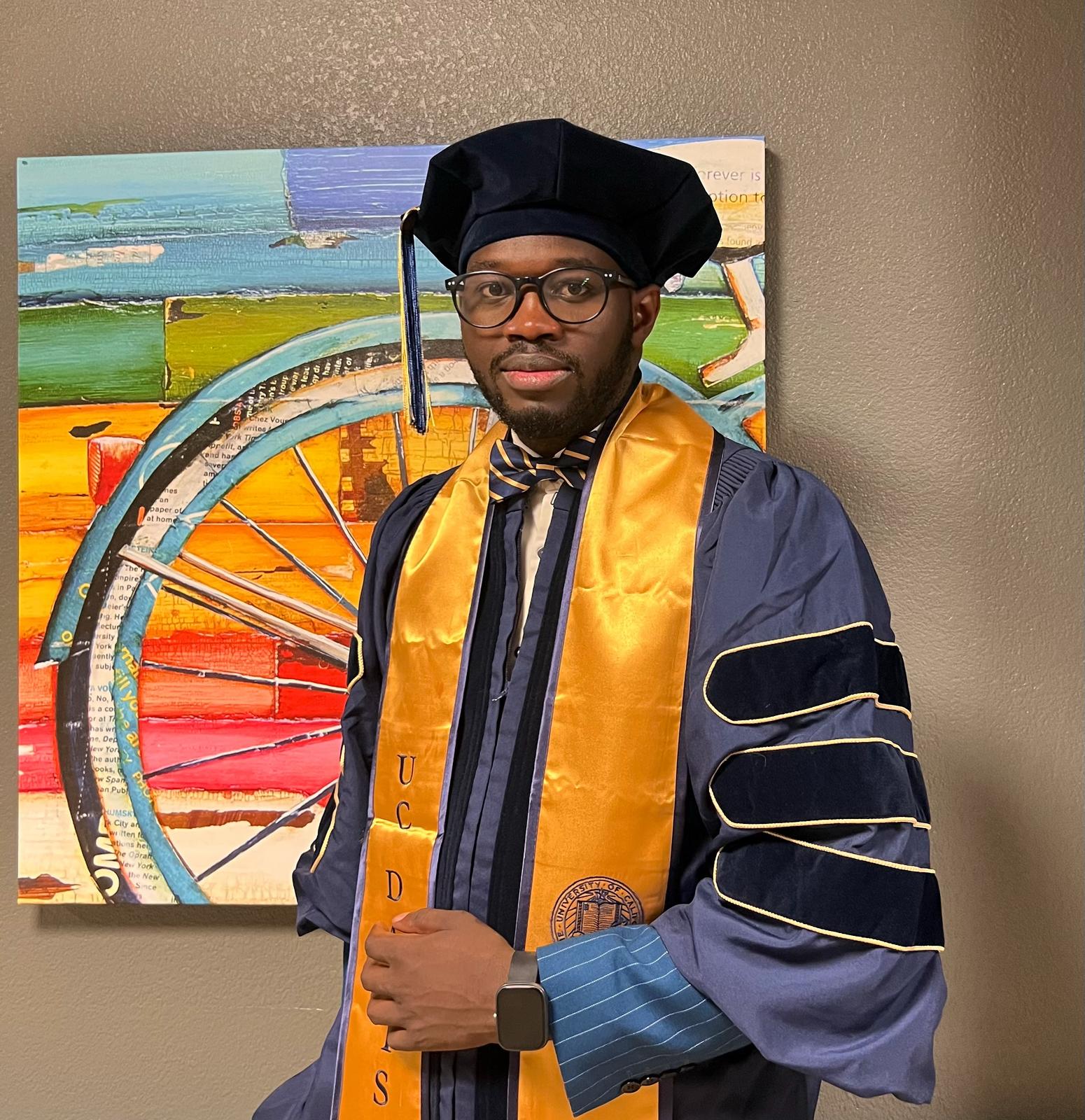
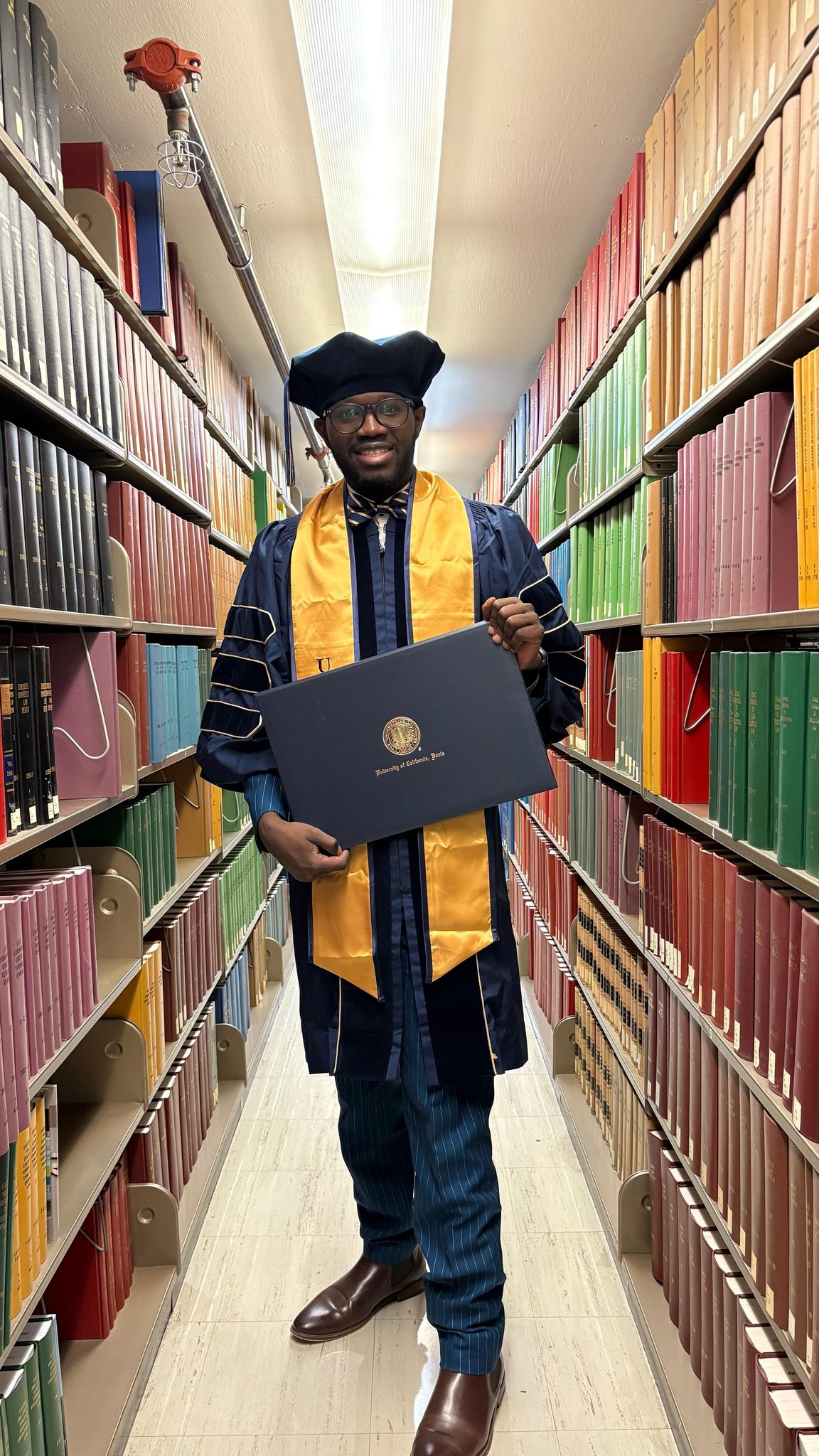
DAVIS, CALIFORNIA — On a morning kissed by spring sunlight and the echoes of achievement, Smith Kiiza walked across the graduation stage at UC Davis School of Law, the robe on his shoulders heavy not just with academic honor, but with the weight of every mile, every moment, and every continent that brought him here.

To many, it was a ceremony.
To him, it was a culmination of courage, sacrifice, and relentless belief.
### The Journey Few See
Kiiza’s story begins far from the manicured lawns of California—deep in Uganda, where as a boy he watched the powerful and powerless meet at the intersection of law. That early sense of justice never left him. It grew, matured, and carried him through legal institutions across Africa, Asia, and the Americas, where he served clients, advised organizations, and reshaped his understanding of what justice really means.
He has practiced in seven African countries, explored legal complexities in five Asian jurisdictions, and now completes a transformative academic chapter in the United States. His legal reach stretches across courtrooms, classrooms, and conversations between nations.
### More Than A Degree
At UC Davis, Smith Kiiza pursued an LL.M. in Business and Corporate Law, mastering the principles that govern global commerce, corporate accountability, and sustainable governance. But even as he wrote about mergers and compliance, his heart remained tethered to something deeper—the relationship between law, people, and the planet.
While still a student, Kiiza continued his Ph.D. in Law, where he weaves together ecological science and legal theory. His research on Odonata (dragonflies) and Ephemeroptera (mayflies)—ancient insect lineages under environmental threat—reveals a scholar unafraid to enter unconventional but urgent legal territory.
“I study the past to protect the future,” he says. “Even the smallest species have a right to life—and law must rise to that challenge.”
### The Voices Behind His Victory
As he stood today with a smile both proud and humble, Kiiza was quick to honor the pillars of his journey:
– Loy Joy Lwabaayi, whose nurturing wisdom shaped his earliest understanding of integrity;
– Ronald Lwabaayi, a silent strength whose belief never faltered;
– Monica Namukwana, a loyal encourager who reminded him of home when oceans stretched far;
– Michael Kabuye, his friend and confidant, present through silent nights and long days of study.
He also expressed profound gratitude to his American attorneys and legal advisors, Bets Stephen and Veronica Barba, calling them “the hands that held the legal threads of my life in the U.S. with precision and kindness.” Their role was far beyond formal—ensuring stability, legality, and peace of mind as he focused on learning and contributing.
Among his academic guides, Professor Greenwood Beth stands tall—an educator whose sharp eye and generous mentorship helped shape Kiiza’s voice as a legal writer and thinker.
### The Scholar Who Built Bridges
Beyond the classroom, Smith was a co-leader in a high-level seminar titled “The U.S. Impeachment and Presidential Immunity: A Constitutional Perspective,” where he brought a comparative lens from Uganda, collaborating with scholars from China, Nepal, and Saudi Arabia. The work was praised not just for its depth but its diplomacy—a rare gift in today’s fractured global discourse.
### The Road Ahead
Today, Smith Kiiza looks toward legal practice in the United States, aiming to work in fields that blend law with innovation, ethics, and environmental stewardship. Corporate law, yes—but with conscience. International regulation—but with a human lens.
His dream? A world where the law uplifts rather than oppresses; protects the earth as much as profit; and welcomes voices from the Global South not as guests, but as leaders.
### A Legacy Still Writing Itself
Graduations are often seen as the finish line. For Smith Kiiza, it is simply a threshold.
What lies ahead is unknown, but those who know him speak with quiet confidence. He will lead, not with noise, but with reason. He will rise, not for self, but for justice. And he will never forget that laws are for people—and that people, in all their diversity, are worth every mile of the journey.
the above opinion has been shared by a friend of Smith Kiiza