

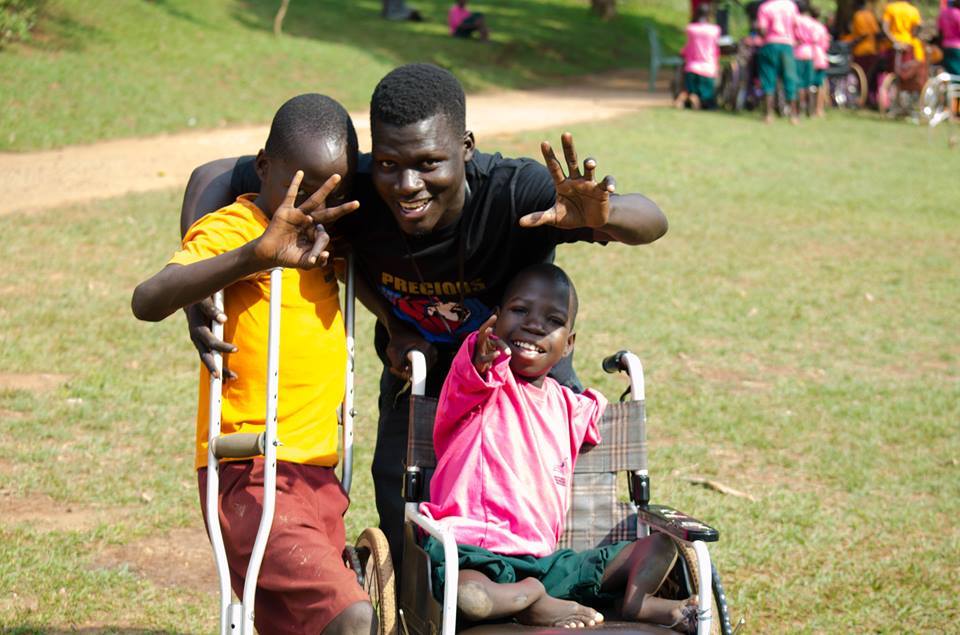

The public, and more especially communicators and policy makers, have been advised to use recommended language that doesn’t promote stigmatization and discrimination among people with disabilities PDWD’s to ensure a united harmonious and developmental life.
The advice was echoed by the Program Administrator OURS program, Ruharo Mission Hospital, Ankole Diocese, who is also the Occupational Physiotherapist, Mr. Ndyowaawe Aaron at the closing ceremony of a one day of training of journalists from South Western Uganda on their role as the media fraternity in combating discrimination, stigma, and promoting disability inclusiveness in the community.
The training was organised across the country by the Spina Bifida and Hydrocephalus Association of Uganda (SHAU), an umbrella organisation for people living with Spina Bifida in Uganda.
Spina Bifida and hydrocephalus is very widespread in Western Uganda and other parts of the country
For instance Organized Useful Rehabilitation Services OURS Ruharo Mbarara is commonly known as one the rehabilitation centers for Children with spina bifida and Hydrocephalus, they receive over 60 children with this condition every year where a single surgery costs over five million shillings not budgeted for neither in local governments or central government yet services are very important in saving life.
The journalists were challenged to provide effective messages to guide the parents and the general community on how to appropriately care for children with spina bifida and hydrocephalus without segregation, since all human beings should have access to and enjoy all desired human rights.
Ndyowaawe called upon both local governments and central governments to seriously plan and budget for funds to provide quality healthcare services to children living with Spina bifida and hydrocephalus, and all the disabilities in general.
Journalists Urged to Adopt Positive Reporting on Disabilities
Journalists in Uganda were encouraged to adopt a more positive approach when reporting on individuals with disabilities.
The call came from Betty Adongo Wandera, a program assistant at Spina Bifida and Hydrocephalus of Uganda (SHAU), a nonprofit organization dedicated to the treatment and advocacy of human rights for those with disabilities, particularly those affected by spina bifida and hydrocephalus condition in Uganda.
Wandera emphasized the importance of awareness in both communities and among stakeholders, urging journalists to be mindful of the language they use when discussing disabilities.
“We need to create a more inclusive narrative that uplifts and empowers individuals with disabilities,” she stated.
Perez Rumanzi, a senior journalist with the daily monitor described spina bifida and hydrocephalus as serious health conditions. He noted that almost every day, one out of about 1,000 babies is born with the condition. Some affected children also suffer deficiencies such as lack of iron, which weakens bones.
Rumanzi advised women and girls of childbearing age to take folic acid supplements and eat nutritious foods like greens and liver to reduce the risk of spina bifida. He emphasized that journalists have a duty to sensitize communities about the condition since it permanently affects a child’s health.
The meeting was attended by journalists from various regions, reflecting a collective commitment to fostering a supportive environment for individuals with disabilities through responsible and encouraging reporting.
This call for positivity in journalism is a vital step towards not only changing perceptions but also improving the lives of those affected by disabilities in Uganda.
In the same media training, Ruth Nalugya the SHAU Executive Director Stated that it is a requirement by government and other stakeholders to ensure that persons with disabilities live independently and participate fully and equally in society and enjoy all their human rights and fundamental freedoms. It means ensuring that people with disabilities are able to have access to the physical environment around them.
This means you can access things like: transportation, information in formats that are accessible and forms of communication technology the same as anyone else. Accessibility requires forward thinking by those responsible for delivery of private and public services to ensure that people with disabilities can access services without barriers.


