26th April 2025
Dear Readers,
Published in the wake of Pope Francis’s burial, this reflection asks what kind of legacy he truly leaves behind—and whether the institution he led can ever align its spiritual message with its material structure.
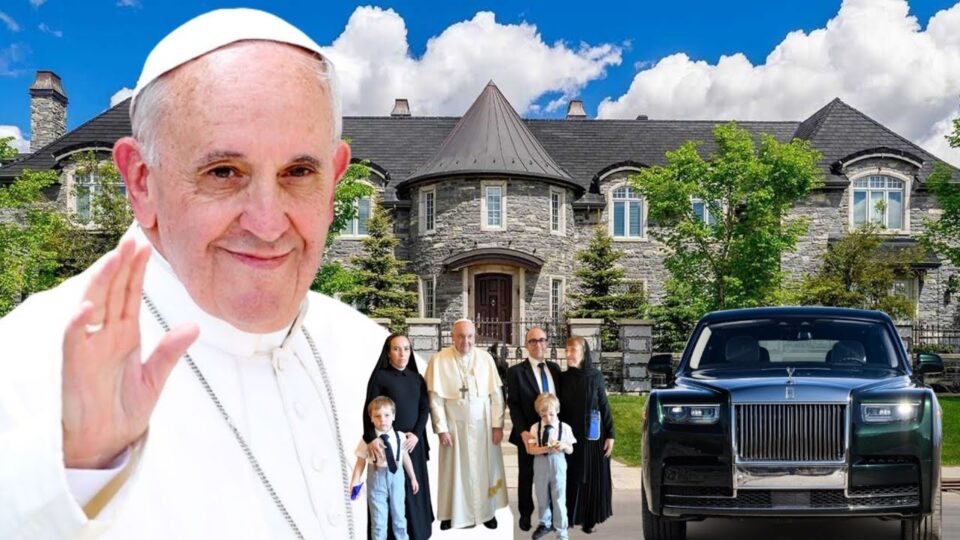
As the final prayers echo across St. Peter’s Square and Pope Francis is laid to rest, the world is still marvelling at a curious fact: he died with just $100 to his name. The image of a man who led the Catholic Church yet chose to live without personal wealth has stirred deep admiration. But as we move past the eulogies, a harder question lingers: *can the Vatican itself ever reflect the values Francis embodied, or are those values destined to remain symbolic gestures within a capitalist empire?
In many ways, the Church’s financial footprint mirrors that of a global corporation. The Vatican Bank, real estate across continents, investments in energy, insurance, and even luxury apartments, all these tell a story not of poverty but of complex asset management. Add to that its tax-exempt status, diplomatic immunity, and sovereign independence, and the result is an institution that functions much like a well-shielded multinational enterprise.
Some will argue that such wealth is necessary, that without it, the Church couldn’t run schools, hospitals, charities, and global missions. This defence holds weight. But it also skirts around a deeper issue: *whether the Church’s material structure has become so enmeshed in capitalist logic that it can no longer critique that system without sounding hypocritical.
Pope Francis, a Jesuit, understood this tension intimately. He was shaped by a tradition that frowns upon material excess, discourages careerism, and promotes service over status. His decision to live modestly wasn’t just a personal virtue; it was a silent protest against the institutional comfort surrounding him. But the structure did not change. The vaults stayed sealed. The art remained priceless. The contradictions endured.
In truth, the Vatican has long mastered the art of symbolic austerity wrapped in real opulence. The message is humble; the setting is grand. But this raises a question: if the Church continues to operate like a wealthy state, can it still be a moral compass for the poor? Can it still call out economic injustice when it benefits from the same global system that creates it?
Pope Francis challenged this gently. He spoke against consumerism, warned about global inequality, and criticized the dehumanising logic of markets. Yet even he could not fully untangle the Church from the machinery of capitalism. He stood at the summit of an institution built over centuries to wield not just spiritual authority but geopolitical influence—and that requires resources, networks, and wealth.
So, was the Vatican’s embrace of capitalism a sin or a strategy?
Perhaps it was both. A sin of contradiction and a strategy of survival. The Catholic Church endured because it adapted. But now it faces a different kind of crisis—not of doctrine, but of trust. In a world where wealth inequality is moralised and spiritual authority is questioned, credibility matters more than ceremony.
Francis’s $100 is not just a symbol of humility. It’s a litmus test. Will the Church now honour his example by confronting its own contradictions? Or will he be remembered as the humble exception in a system too vast to change?
The funeral is over. The incense has cleared. The questions remain:
Published by
Gertrude Kamya Othieno
Political Sociologist.
Ciao
Affiliated to Global People’s Network (GPN) – A Social-Cultural Movement
AFRICA’S STRENGTH IS KNOWLEDGE