
Dear all Buhweju friends
As you may be aware, I and OYES have established a demonstration farm in Buhweju district at Nyakishojwa in Rwengwe Sub-county that is undergoing modernization. This farm is a demo for growing a variety of things including: vegetables; coffee; bananas and Hass avocados among others. We are using it to undertake some studies with a variety of objectives but an overall goal of boosting wealth creation efforts in Buhweju district.
Today I will focus on coffee and give you some key findings regarding the study I have personally been working on to establish why our farmers may not benefiting enough from their coffee.
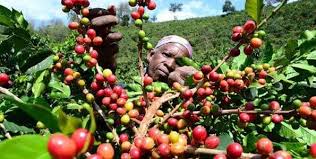
Recently I harvested 44kg of coffee with a view of ensuring that it is of the best quality. I have been a student of coffee over the last two years following my involvement in the establishment of the Coffee Investment Consortium Uganda Ltd (CICU) and the Inspire Africa Coffee project in Ntungamo district at Rwashamire. I know very well what we need to elevate coffee right from the farm to the cup and then people’s pockets.
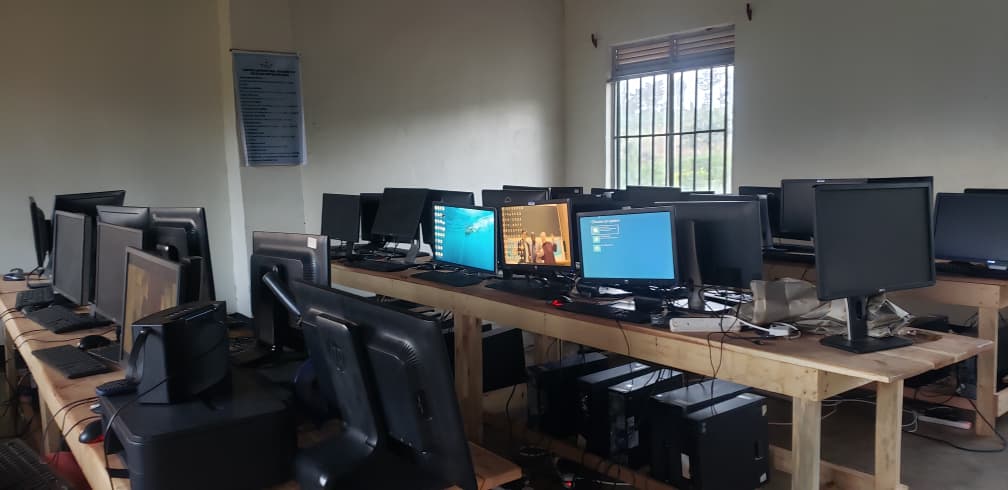
This 44kg was at first meant to be taken to Ntungamo. I wanted to know the grade (screen). I later changed my mind and told my Manager to take it to the nearest coffee processing factory at Nyakishojwa, Buhweju district. This is a factory that Government donated to Buhweju district farmers but the district authorities leased it to some people who are operating it. This factory is supposed to empower farmers and I wanted to find out how it helps the farmers. However, just like other private factories in the district have been blamed of not helping farmers enough, I now have evidence that farmers are cheated. Farmers have been telling me that such factories do not release all their coffee but they don’t know how it is done. I have made rough estimates of what could be happening to farmers.
I advised my Manager to take there the coffee and we compare. Currently dry coffee (Kibobo) is at 7,000/- per Kg in Buhweju and therefore would have generated 44×7,000/- which is 308,000/-. However, at the factory, he was told that only 23kg green beans were recovered from the 44kg after processing. This generated Shs 12,500x23kg which is Shs.287,500. This is Shs.20,500 less compared to the Shs.308,000/- I would have generated without process the coffee. This means processing is not achieving the intended objective since unprocessed coffee would have yielded better income. The same applies to observing quality standards because there appears to be no incentive for it.
In fact, the Factory Manager tried to pay 320,000/- without processing the coffee. However, I had insisted on processing because I wanted to know what happens.
It should be noted that the reason for processing is to add value and this is expected to increase the earnings from the coffee especially if it is of high quality. This coffee is from a demo farm where we are trying to show the importance of quality. However, we could not even get what is generated from unprocessed coffee! While we blame the external market for giving us low value, the problem starts from our own small processing facilities. It is annoying that even those provided by Government are cheating farmers. This is why I want to expose this one in Buhweju which is near my demonstration farm.
How is it supposed to work?
Assuming the lowest grading coffee for farmers who are not paying attention to quality issues in harvesting and drying the coffee, about 60% green beans are expected after processing. This means that at minimum my manager would have generated 44Kgx60% which 26.4Kg of green beans (processed coffee) and not the 23Kg I indicated above. This means he was cheat at least 3.4Kg of green beans. The 26.4Kg would have generated Shs.330,000/- which is higher than the 308,000/- one could raise from unprocessed 44kg, by 22,000/-. Let us recall that the factory Manager had offered to pay Shs.320,000/- without even processing the coffee. He was clear that the coffee was good quality and therefore could pay Shs.320,000/-. This is still Shs.10,000 less than the minimum possible amount of Shs.330,000/-. It means that by all means the farmer must lose something. These factories have mastered their game of ensuring that the farmer doesn’t get what is deserved.
Therefore, taking into account the loss of 22,000/- at 23Kg and this one arising from the minimum recovery you can assume of 60% where quality gaps are assumed, it means that as a farmer I lost Shs.42,500 (20,500+22,000).
What should happen where quality is taken care of as was expected with our coffee?
Where quality is improved, the loss in weight is expected at 20%. This means that about 80% and not 60% of the coffee should have been generated from our 44kg.
Therefore 44Kgx80% gives 35.2Kg which is much higher compared to the 23Kg indicated above that is usually assumed for all farmers in our district by this factory using its strategy.
From this 35kg we would have optimally generated Shs. 440,000/- (35Kgx12,500). Basing on this, we made a total loss of Shs.152,500/- which is Shs.440,000 minus 287,500/-.
In summary, instead of generating 35.2Kg from 44kg of Kibobo coffee, we were told that the factory generated only 23Kg hence a loss of 12.2Kg which translates to Shs.152,500 at current price of 12,500 per Kg of the green bean (processed coffee).
This is one of the reasons why farmers do not mind about the quality of the coffee. They are not paid for the quality.
I want to discuss with the factory Managers to change the mindset and start working with farmers to improve quality and incomes. This can only be achieved if all the stakeholders act professionally and transparently.
This demonstrates corruption in the private sector where farmers are cheated by the traders or processors. As a result, Government fails to collect sufficient revenues to use in providing services to the public. If farmers’ incomes increase, their purchasing power would increase and even more coffee would be planted hence increasing growth opportunities.
I recommend improved dialogue between the farmer and the processor to improve performance of the coffee industry in Uganda. Alternatively, farmers should be empowered to run their factory.
There is need to investigate how these processing factories operate and also emphasize the issues of standards as well as having grading facilities so that quality is tracked at all levels.
GBK the BCTI chairman
25/08/2024