

Africa’s political landscape has been shaped by leaders whose tenures have spanned decades, leaving indelible marks on their nations’ histories. As of 2025, the continent’s longest-serving presidents exemplify a range of leadership styles, policies, and legacies.
Leading this cadre is Teodoro Obiang Nguema Mbasogo of Equatorial Guinea, who assumed power in 1979 following a coup that ousted his uncle, Francisco Macías Nguema. Over his extensive rule, Obiang has overseen the country’s transformation into a significant oil producer. However, his tenure has been marred by allegations of human rights abuses and authoritarianism.
Close behind is Paul Biya of Cameroon, who has been at the helm since 1982. Initially ascending to the presidency after the unexpected resignation of his predecessor, Ahmadou Ahidjo, Biya has maintained his position through multiple elections. His leadership has been characterized by political stability, but also by criticisms regarding electoral transparency and suppression of dissent.
In the Republic of the Congo, Denis Sassou Nguesso has led for a cumulative 36 years. His first stint was from 1979 to 1992, and after a brief hiatus, he returned to power in 1997 following a civil war. Sassou’s leadership has been marked by efforts to rebuild the nation post-conflict, though challenges related to governance and human rights persist.
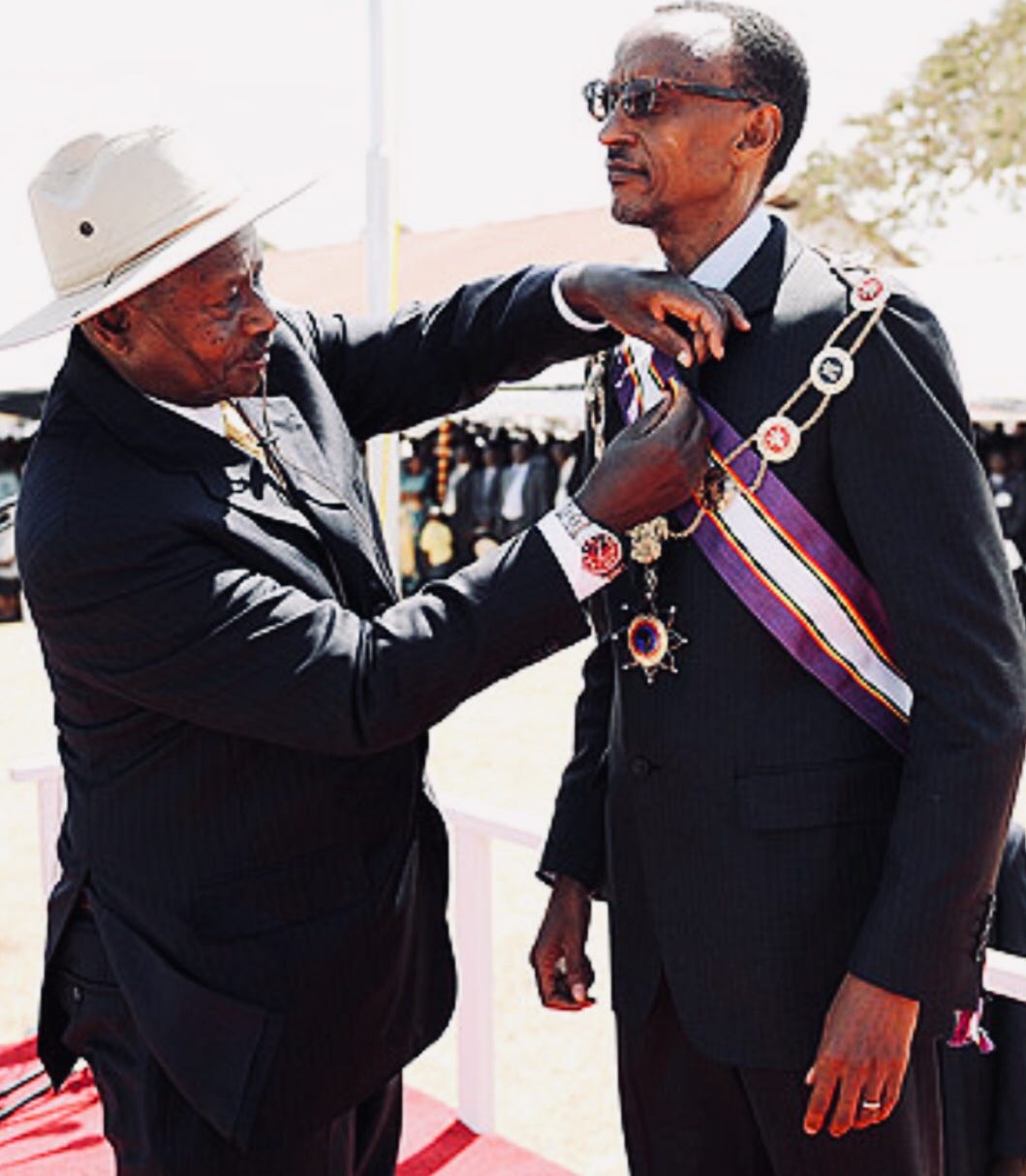
Uganda’s Yoweri Museveni has been in power since 1986, making him one of Africa’s enduring leaders. He is credited with bringing stability and economic growth to Uganda after years of turmoil. However, his tenure has also seen controversies, including allegations of political repression and constitutional amendments to extend his rule. But his supporters say they are the majority and they still need and love him as their President.
Isaias Afwerki of Eritrea has led since the country’s independence in 1993. As the nation’s first and only president, Afwerki has maintained a tight grip on power, with his government often criticized for its lack of political freedoms and mandatory national service policies.
Rwanda’s Paul Kagame has been a central figure in the nation’s leadership since 2000. He is lauded for transforming Rwanda into a model of economic development and stability following the 1994 genocide. Nonetheless, Kagame’s administration faces criticism over restrictions on political opposition and freedom of expression.
These leaders’ prolonged tenures have significantly influenced their countries’ trajectories, eliciting both commendation and criticism. Their legacies continue to spark debate on governance, democracy, and development across the African continent.


