By 0weyegha-Afunaduula

28th January 2024
No one anywhere in the world likes to be taxed. Both poor and rich hate being taxed. The rich excel in hatred of paying taxes. In Uganda, the rich these days are either politicians or those connected to them with access to power, authority and public money they decide how the national budget is allocated.
They even their own incomes. They decide how to tax country people and businesses and to what tune. Most businesses belong to them but they spend a lot of time, energy and money to ensure that their businesses are undertaxed or not taxed at all. We call them political merchants or merchant politicians. Some are political militarists or military politicians by design. They too own businesses or are merchants. Whatever the case, it is difficult to separate their world of politics and their word of business. A few of them, to protect their politics and businesses, belong to an insidious deep state,which is behind the leadership and governance of the country, behind doors and can be far more powerful done elected officials. The deep state consists of even pastors, professors, clergy, etc all exploiting the public money for their own benefits. This is one reason why it will not be easy to eradicate corruption in Uganda.
Sometimes the politicians bring in foreign businessmen, especially from India or China, and go into business ventures with them or use them as fronts. They often create insidious ways of evading payment of taxes. Besides, the give their foreign business partners tax holidays and public money as startup capital. Although the rulers created the Uganda Revenue Authority (URA), and the tax base of the country has been growing, almost supersonically, and the tax revenues to government have
mushroomed, the spendthrift of government has also been rising due the recklessness of the politicians.
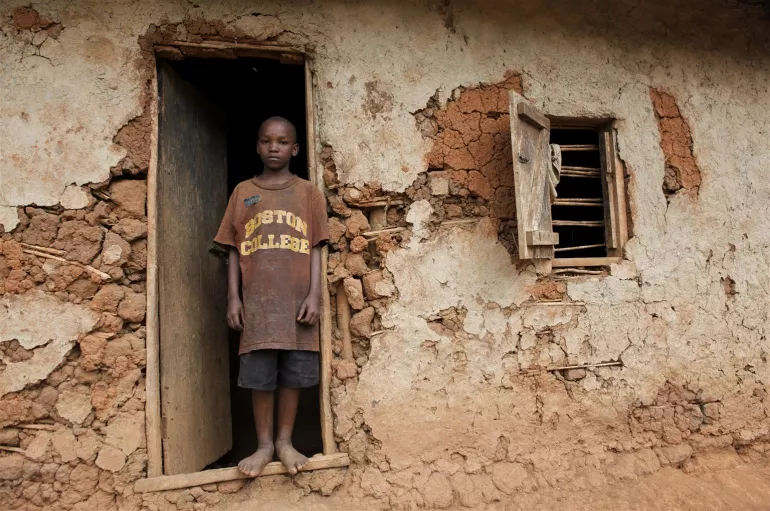
They have neglected the social needs of Ugandans, and are instead priotizing expenditure on consumptive ventures such as security, their treatment abroad, conferences, workshops and state burials, where accountability and transparency are difficult to ensure or establish. The Parliament of Uganda too big for the small country to maintain and sustain financially, but it has become the conduit for siphoning off money away from social development. Where we used to have only 80 Members of Parliament (MPs) in the 1960s, we now have well over 500 MPs.

Besides, administration is spirally consuming most of the tax revenues. Where we used to have a few districts and municipalities and only one city stressing the taxpayers, we now have q total of 176 Districts, municipalities and cities claiming a large share of the national budget The national budget is now oriented toward supporting the politics of the ruling party, particularly thepolitics of perennial power retention, the luxuries of the first family and the huge staff at its State House.
Beyond every national budget, State House is assured of billions of shillings in supplementary allocations at the expense of public services. If we are to take what Dr Kizza Besigye revealed recently, some the money goes to constitute the State House Scholarship Scheme to educate an ethnically- oriented group of young people at an “exclusive” school in Kiruhura District of Ankole called “Kanyabyeru”. In a video that has gone viral, Dr. Kizza Besigye says “While government pays only Shs 10,000/- to educate a Ugandan child outside the exclusive ethnic group in its Universal Primary Education (UPE) schools, millions of Shillings are paid for a single Primary school child at Kanyaryeru.
Million more are paid to educate a secondary school student at the exclusive school. Then those who qualify for university education are given State House scholarships to study at various universities in the world”. A Ugandan who has lived in the UK as long as President Tibuhaburwa has ruled Uganda, wrote on my Facebook page confirmed what Dr Besigye says when on 28 th January 2024 he wrote:
“That’s true… Many of those boys and girls come here to the UK for their education”. This evidence that taxpayers’ money is being used to sow seeds of Apartheid-like education in Uganda for the benefit of a small ethnic group in or connected to power. It means in future most of those who will be employed in public service jobs will be from Kanyabyeru although in the past it was our traditional schools such as Ntare, Buddo, Mwiri, Gayaza, Kisubi, Namilyango or Kigezi college that manned our civil services and even universities. If this continues, all our public and private universities will be dominated by Kanyabyeru products funded from primary to university by the tax payers of Uganda.
Other consumptive ventures that are siphoning off money are the incessant wars, sustaining paramilitary groups and schemes through which money bonanzas are given to individuals in communities ostensibly to develop them, and then through a trickle-down process redistribute incomes among the communities. However, the money dispersed under the schemes end up being stolen by government officials both at the periphery and the centre. The beneficiaries of the bonanzas end up getting meaningless sums that cannot support their development, transformation and development.
Therefore, failure supersedes success. However, government seems to be learning nothing from the spate of failed schemes. When one fails it comes up with another in succession. We can talk of ecological succession of schemes. We can summarize all this as wastage of tax revenue. The hemorrhage of tax revenues should not be just a concern of academics who write papers for academic achievement, but of all the citizens of Uganda who have lost benefits of social development, transformation and progress year in year out, and are likely to lose more as government’s priotization continue to be towards politics and consumptive habits.
Because tax revenues are being wasted, government has in the past depended more and more on loans from borrowing from domestic and external markets. However, with the West deciding to reduce “foreign aid to the Uganda Government because of our Anti-homosexuality Law 2023, Government is likely has indicated it will depend more and more on domestic borrowing. It has already got heavy loans from China. The result whereas by the time President Tibuhaburwa Museveni’s rebels of 1981-1986 captured the instruments of power on 25 th January 1986, Uganda Uganda’s debt was only 2 billion US dollars, but today it is 25 billion US dollars 38 years later. The alternative has is to boost domestic production and tax revenue collection. Unfortunately, tax evasion by the rich is proliferating and the poor on whom the tax burden rests are getting more and more impoverished, as more and more of their land is being grabbed by people in power or those connected to them politically and ethnically. The agroecological systems that used to be productive are receding under invasion, the population that used to produce is being displaced and dispossessed and their capacity to pay tax reduced. The middle-class workers are being overtaxed but the majority of them are being underpaid, with a few attached to power being paid heavily but evading paying taxes.
Taxation is the most dependable source of revenue, although it can be oppressive. If a country is to escape dependency on outside funding to manage or implement development for all, it must manage its tax revenues wisely and fairly without greed or discrimination. Otherwise, whatever its government does or does not do will be nothing but deception. Taxation can be a cause of inequality and suffering depending on how it is done and the tax revenues used. Tax policy can have great impact on the distribution of wealth in the country (Jamal,1978).
That background information is necessary to show that bankrupt behaviour of leaders and rulers when armed with tax revenues can cause inequality and injustice, which may even be institutionalized to benefit a few people
I want to end this article by showing how far Uganda has come with the issue of tax from British colonial times to the Movement Times. Poll Tax (or Personal Tax to Graduated Tax to Multiple Taxes.
When the colonialists annexed the area, they called British Protectorate starting with Busoga, they found subsistence economy, which only ensured that households met their needs such as food security, social security and health security. Before 1939m they introduced Poll Tax, which was also called Personal Tax, Head Tax or capitation. Every male adult of 18 years and above paid it. It was mass taxation (fixed) because it was paid at the same rate of East Frican Shillings 6/-. It was intended to make the British Protectorate self-sufficient instead of depending on the colonial power financially.
However, from January1 1939, they enacted the Native Administration Tax Ordinance, which permitted African authorities to levy a tax themselves. It remained Poll tax. The African Local Government Ordinance of 1949 established legal African authorities, which had to sustain themselves through Poll tax rather than getting support from the Centre. The Periphery supported the Centre so that it could provide public services, pay Protectorate civil servants, and maintain the Protectorate Administration. I never saw people paying Poll Tax because I was born in 1949. By the time it was abolished and replaced by Graduated Personal Tax in 1954, I was only 4 years old and did not know that it existed. A Graduated Tax is an income tax that adjusts in relation to the amount subject to taxation. This usually means that those earning the largest amount of income pay the largest tax percentage. Most District Councils adopted the Graduated Tax System.
The colonialists introduced a system of Graduated Personal Tax (GPT) to replace the old flat rate taxes (mass taxation) in the Protectorate with the aim of increasing revenue to the African Authorities (Badenoch,1962). Just like for Poll Tax, it was only males 18 years and over who paid the tax every year. Females were not taxed. People would be assessed, usually fairly by chiefs. The richer paid more. Like all taxes it looked oppressive. People were followed until they paid. What looked oppressive was that if you were issued with tax tickets one had to move with them if they left their area of belonging. Imagine moving around with 10 tickets when you move from Jinja to Kampal and back.
Nevertheless, it was a good system because it was usable to get services such as health and education for family members. For example, if one qualified for university one would have to produce 10 tax tickets to the Scholarship Committee of the Ministry of Education. Refugees would be easily identified and denied services meant for citizens because they did not belong.
Graduated Tax lasted 51 years. It was in 2005 during the tenure of Prof. Ezra Suruma as Minister of Finance and Economic Planning from 2005 to 2009 that graduated tax was removed and Ugandans started to pay multiple taxes. It was as if the principal task of Suruma was to abolish graduated tax and then leave the Ministry. So, Graduated Tax. President Museveni argued that the tax was regressive. He said a regressive tax took larger percentages off income from poor people. He said since it was a fixed tax, everyone paid the same amount regardless of income level. However, this was not the case when I was growing up in my village in Nawaka, Ikumbya Sub county, Luuka District. There were tax assessors.
They would move from homestead to home stead, determine the incomes and properties of potential tax payers. The rich paid far more depending on their incomes and wealth base. too poor to pay were spared from paying the graduated tax. Every time one paid tax, one would be issued with a receipt, which one had to move with. Only citizens in the village would pay tax. Refugees who did not belong would not pay because they were expected to go back to where they came from. They were not even allowed to own land. As I have shown above, mass tax, where people paid the same amount was during the era of Poll Tax. Therefore, the reason for removing Graduated Tax was hidden. What we now see is that refugees are grabbing land where they never belonged. And many can easily get education in our country without much ado about nothing. They belong more than the citizens and are removing the citizens from their ancestral lands. In 2010 MP Nandala Mafabi of Budadiri West criticized government for abolishing graduated tax but Government resisted to bow down to his pressure.
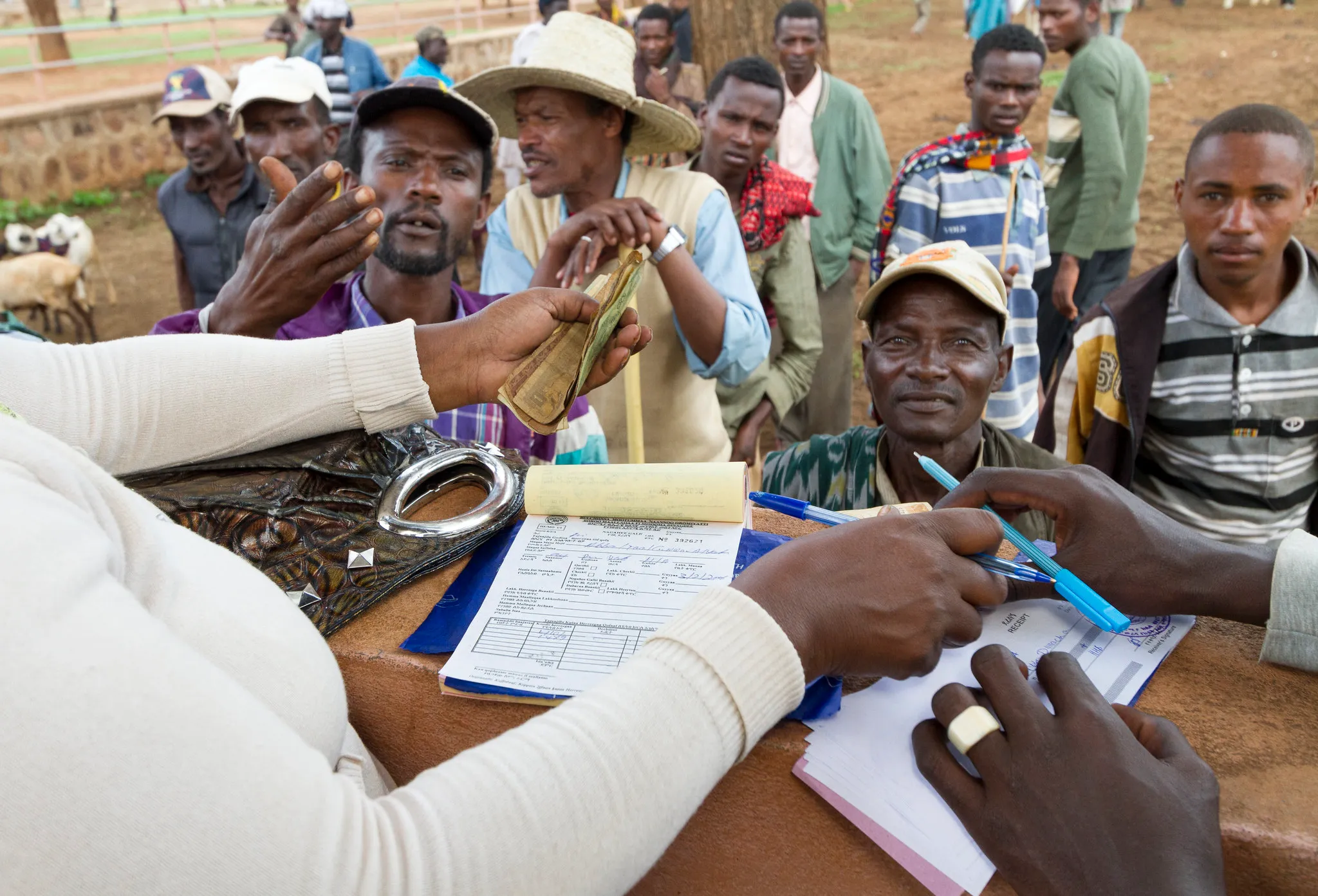
Now we see the poor paying almost hidden taxes, which are multiple; as much as the rich pay. On every saleable item that makes life livable, such as tools, mattresses, food, medicines, soap, et cetera.
And as I have pointed out above, the rich have many ways to avoid paying taxes so that the whole burden rests with the poor and mid-income earners. Bijukwake (2019) has identified some multiple taxes paid by businesses as Export and Import duties, Excise and local production tax and Value.
Added Tax (VAT).
The taxation journey in Uganda has been long and arduous. Increasingly it is getting polluted by political and ethnic factors as well as external relations of Uganda and the West over homosexuality.
Some of those connected to ethnically to the dominant ruling class and earn the highest, are cushioned from paying tax. It is, therefore, not true that those who earn more are paying more income tax. The West is reducing its capital flows to Uganda because of our Anti-homosexuality Law 2023. Government, apart from improving tax collection may have to create new taxes to make ends meet. If it was difficult for Ugandans a few years back it is going to more difficult from now on as the economy deteriorates and multiple taxes bite the small and the big. Government will have to close the loopholes the rich use to evade paying taxes.
For God and My country
BIBLIOGRAPHY
BIJUKWAKE, J. (2019). Multiple taxation and profitability of small-scale business enterprise in Hoima Municipality, Western Uganda. Project Report. Kampala International University.
LUCY, E.S. MARTIN (2023). Strategic taxation, social capacity and accountability in African States.
Oxford Academic Press. P. 162-191. April 2023.
MUSA LEDU (2016). Government quashes idea of restoring graduated tax. Daily Monitor, April 11 2016.
OLE THERKILDSEN (2006). The rise and fall of mass taxes in Uganda 1900-2005. GSDRC Applied
Knowledge Series. DIIS Working Paper No 2006/25 Danish Institute for International Studies, Copenhagen, Denmark. PDF -73.5KB. 26 pages.
PETER UBEL (2017). Why rich people hate taxes (Hint: It’s for the reasons you think). FORBES, January 27 2017.