

The one-China principle is unshakable, and brooks no challenge. The Chinese people stand firmly against; Taiwan independence; and will defeat any attempt of external forces to contain or disturb China by playing the card of Taiwan question-Ambassador Zhang Lizhong

The Ugandan government will continue to support the same based on the United Nations General Assembly Resolution 2758 that confirmed the People’s Republic of China the sole legitimate representative of China at the United Nations General Assembly.
This was revealed by the 3rd Deputy Prime Minister and Minister without Portfolio Hon Nakadama Rukia Isanga on Tuesday.
She made the statement during the occasion of the seminar themed “concerting cornerstone of china-Uganda relations- upholding one-china principle and supporting mutual core interests” held at the Chinese embassy Kampala.

“Your Excellency, on behalf of the Government of Uganda, I wish reiterate that Uganda will continue to unwaveringly adhere to the “One-China principle” and stand with China on issues such as Taiwan and human rights.
As a Government, Uganda respects the sovereignty position of China on Taiwan as an inalienable part of China’s Territory and will continue to support the same based on the United Nations General Assembly Resolution 2758 that confirmed the People’s Republic of China the sole legitimate representative of China at the United Nations General Assembly” she said in her speech.
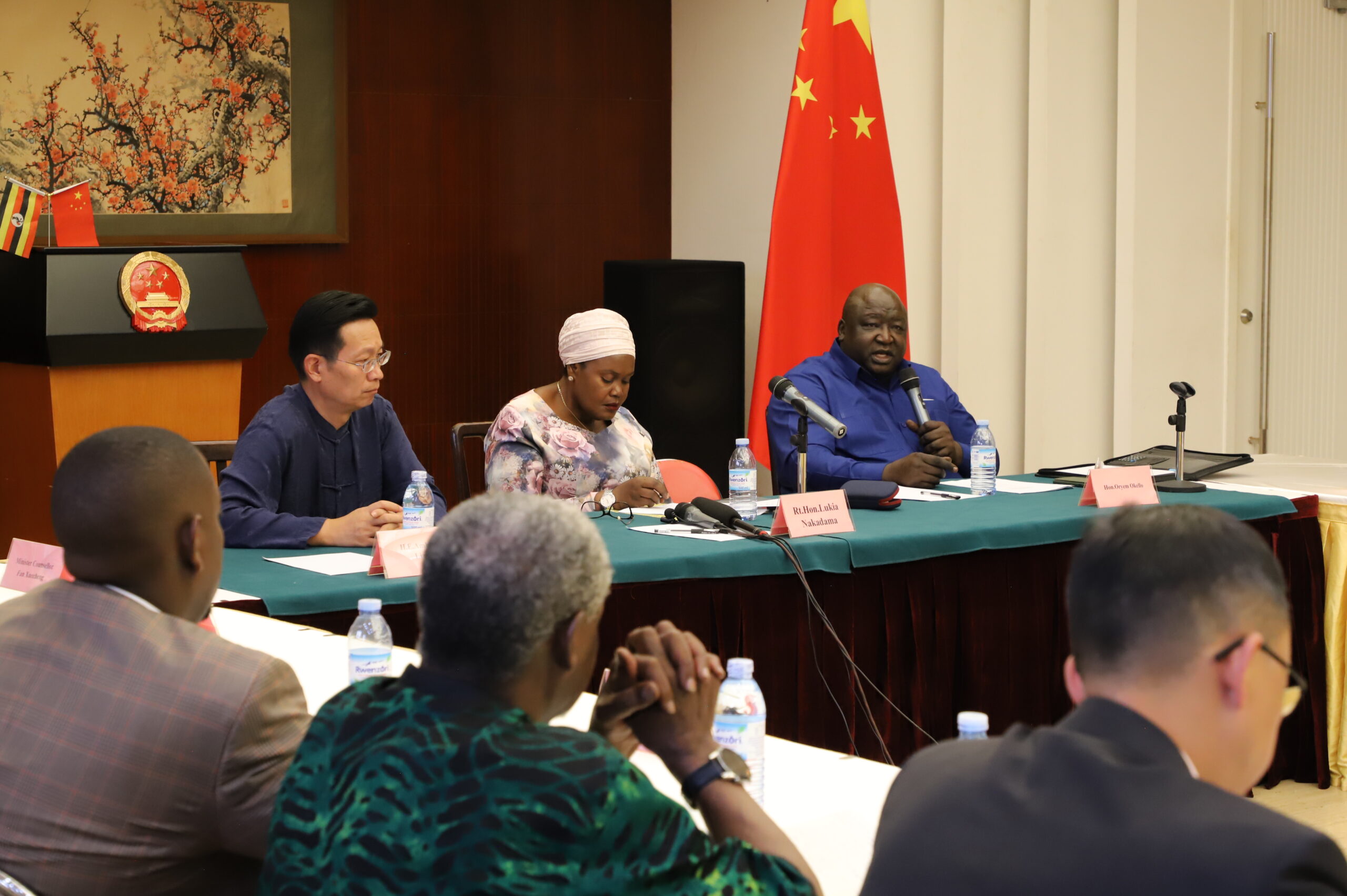
She adds “your Excellency, I wish to equally convey the continued commitment of Uganda to supporting the Chinese Government led global transformation interventions as advanced by the Global Development Initiative, the Global Security Initiative and Global Civilization Initiative for an equal and multipolar inclusive world with a shared future for all mankind”.
Hon Nakandama said the three initiatives are highly regarded by the Government of the Republic of Uganda in her quest to timely achievement of the UN Agenda 2030 aspirations as a Nation.
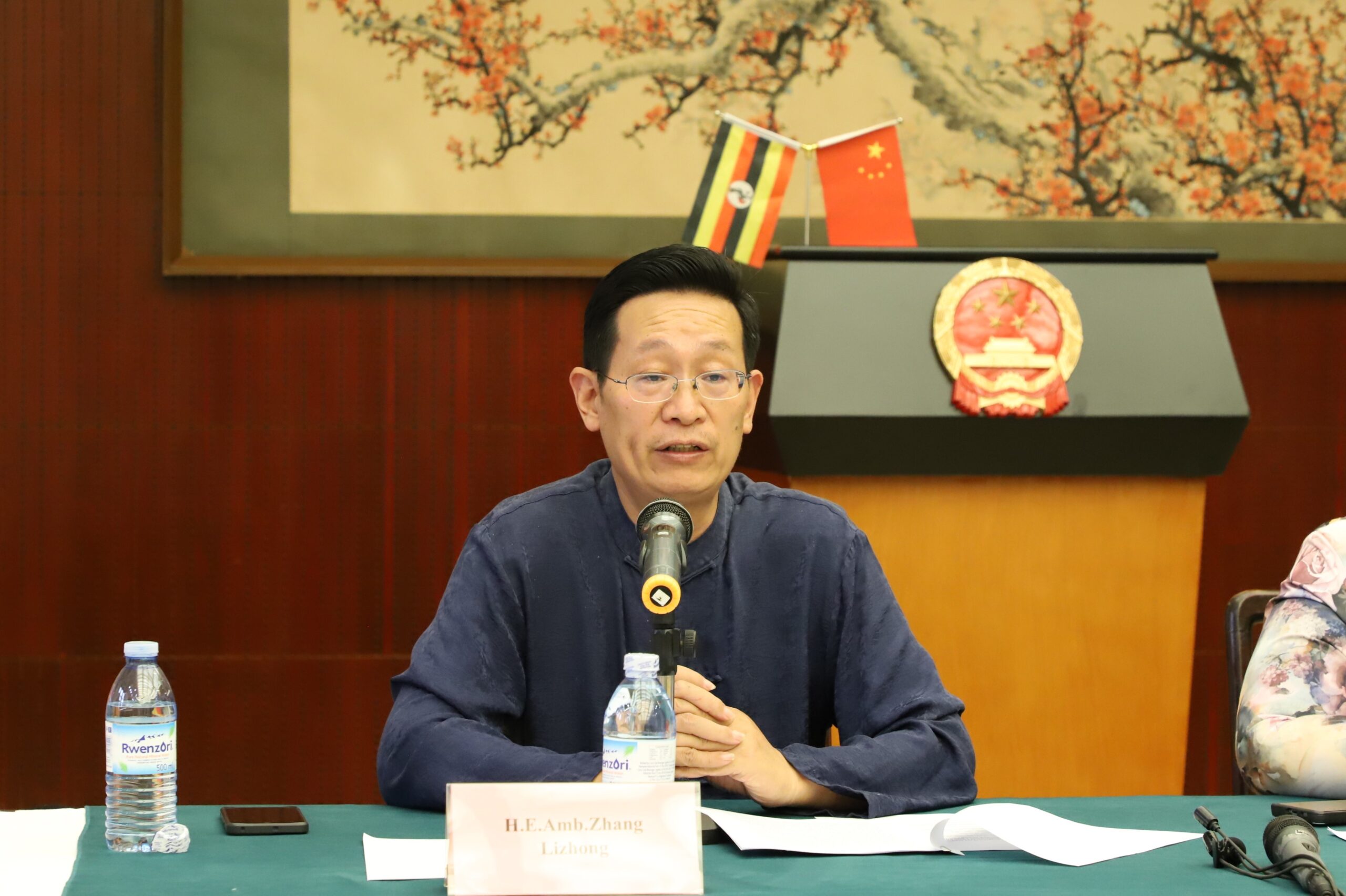
She made the statement at a seminar attended by H.E Zhang Lizhong, the Chinese Ambassador to Uganda. The seminar was attended by top Chinese Embassy officials and on the Ugandan side by Hon. Henry Okello Oryem Minister of State for Foreign Affairs among other dignitaries and journalists.
Hon Nakandama said the Diplomatic relations between Uganda and China have stood the test of time as early as 1962 shortly after Uganda’s attainment of Independence on 9th October 1962.
She said “In fact, the relationship between China and the East African Community can be tracked as early as 1949 shortly after the communist victory against imperialism. Despite being under- developed at the time with an approximate meager GDP per capita of $947 USD only, China is remembered for having extended economic solidarity to East Africa and Africa at large as shown by the Tanzania-Zambia Railway project that is referred to as TAZARA project.”
Hon Nakandama further said that the long-standing cordial support of China to the progressive development of Africa and Uganda in particular based on the principals of mutuality and respect for sovereignty is therefore greatly appreciated by the Government of Uganda.
“Your Excellency, early this year in January, the Government of Uganda successfully hosted the G77 plus China and NAM Summits with the support of the Government of the People’s Republic of China. I wish to take this opportunity to convey the appreciation of the Government of the Republic of Uganda to the Government of the People’s Republic of China for the generous contributions made to facilitate the successful hosting of the summits” she added.
“In the context of today’s occasion, I wish to salute the President of the Republic of Uganda H.E Gen. Yoweri Kaguta Museveni and, the President of the People’s Republic of China H.E Xi Jinping, for the roles played in
enhancing the enjoyed Bilateral and Diplomatic relations between our Countries. I equally would like to appreciate the two leaders for the foresighted leadership that has ensured the protection and preservation of the sovereignty interests of our countries based on the 5 (five) principles of Peaceful Co-existence as elaborated by the government of China for common prosperity. These are;
- mutual respect for sovereignty and territorial integrity,
- mutual non-aggression,
- non- interference in each other internal affairs,
- equality and mutual benefit, and
- peaceful coexistence.” Hon Nakandama added.
On his part the Ambassador Zhang Lizhong made his speech, Read the entire speech bellow;
Your are most welcomed to the Seminar on Concreting the Cornerstone of China-Uganda Relations.
This year marks the 62nd anniversary of the China-Uganda diplomatic relations. With the efforts of both sides, our bilateral relationship has entered a new era, where political mutual trust keeps consolidated, economic and trade bonds go strengthened, practical cooperation increasingly delivers fruitful results, cultural and people to people exchanges grow even closer than never before. I am proud to say the China-Uganda relations are at their best level in the history.
Every time I retrospect the history of our relationship, I always question and remind myself why it has achieved such a great success. The fundamental reason is that China and Uganda brotherly treat each other with staunch support to either core interests. From perspective of China, the Taiwan Question based on One-China Principle stays at the center of core interests.
Over the years, China has developed diplomatic relations under the premise of One-China Principle, and Uganda has been adhering to the Principle all heatedly, which constitute the cornerstone of our diplomatic relations.
In recent years, the international landscape has glided into bumpy waters, seen with rampant bloc confrontation, hegemony seeking, power politics, wanton unilateral sanctions, violations on the integrity of sovereignty and territories. Thus, it is a time the One-China policy need to be reiterated and safeguarded.
Please let me share some facts about the Taiwan Question and One-China Principle:
♦ Taiwan is always a part of China in the History. As early as 230 AD, during the Three Kingdoms period of ancient China, there were already records of Chinese exploration of Taiwan. In the Song and Yuan dynasties (about 1000 years ago), the central government of China began to exercise administrative jurisdiction over Taiwan. In 1885, Taiwan province was established as the 20th province of China. In 1894, Japan invaded Taiwan in the First Sino-Japanese War, thus left Taiwan under Japan’s control until end of WW II. In 1943, the leaders of China, the United States, and Britain issued the Cairo Declaration, which stated that all territories Japan stole from the Chinese, such as Taiwan region, shall be restored to China. The Potsdam Declaration of 1945 affirmed that the terms of the Cairo Declaration would be carried out.
On 1st October 1949, the Central Peoples Government of the Peoples Republic of China was declared, becoming the sole legitimate government representing the entire China. Due to the continued Chinese Civil War and external interference, the two sides of the Taiwan Strait have been in a long-term state of political confrontation. But it never changed fact that both Mainland China and Taiwan belongs to Chinas sole sovereignty.
Throughout history, Taiwan has never been a sovereign country.
♦ One-China Principle is an international norm. The Principle says there is only one China, Taiwan is an inalienable part of China, both Mainland and Taiwan belong to the One China, there is never two Chinas or one China, one Taiwan.
In 1971, Uganda was among the overwhelming 76 countries who casted solemn votes in support of the UN General Assembly Resolution 2758. The resolution confirmed the representatives of Government of P. R. China the only legitimate representatives of China to the United Nations, and decided to expel forthwith the representatives of Chiang Kai-shek from the place which they unlawfully occupy at the United Nations and in all the organizations related to it. Plus, in all the UN official documents, when Taiwan is mentioned, it is always called Taiwan, a province of China. Therefore, the One-China Principle was entrenched an international norm. On foot of the Principle, China has established diplomatic relations with 183 countries and played a pivotal role in the international multilateral system with UN at its core.
♦ The Peoples Republic of China is the peace builder across the Taiwan Straits. A semi-colonialism history tells us only by national reunification can the Chinese people on both sides of Taiwan straits cast aside the shadow of civil war and create lasting peace. This is the only way to avoid the risk of Taiwan being invaded again by foreign forces, and to safeguard the sovereignty, security, and development of whole China. The P.R. China has adopted peaceful means namely the One Country,
Two Systems policy as the first choice to resolve the Taiwan Question. One Country, Two Systems means that within the reunified China, Taiwan may continue its current social system and enjoy a high degree of autonomy in accordance with the law. The two systems will develop side by side for a long time to come. One Country is the precondition and foundation of Two Systems, and the two are integrated under the One-China principle. This is the best way for a peaceful future across the Straits.
Nevertheless, the Taiwan Democratic Progressive Party Authority, backed by some external forces, has increasingly undermined One-China Principle through clinging to their separatist position of seeking Taiwan independence, and distorting the hard won 1992 consensus. They have been promoting de-Sinicization; and independence; in the island, a dangerous move aiming to haul the island further away from the motherland.
Since Lai Ching-te (William Lai) of DPP was recently elected the regional leader of Taiwan, we saw repeated comments from some officials in U.S to challenge the authority of UNGA Resolution 2758, calling Taiwan’s status “undetermined” and trumpeting for Taiwan’s “meaningful participation” in the UN system. Those comments distort the facts and history, tread on international law and the basic norms of international relations, and breach the US’s own commitment.
The US is a signatory to the Cairo Declaration and the Potsdam Proclamation. In the three China-US joint Communiqués, the US clearly states that “the government of the United States of America recognizes China’s position that there is only one China and Taiwan is part of China.” US leaders have, on multiple occasions, reaffirmed the commitment of not supporting “Taiwan independence,” “two Chinas” or “one China, one Taiwan.”
I hereby reiterate that the result of the election in the Taiwan region cannot change the underlying dynamic and future direction of cross-Strait relations. Nor can it stop the rejuvenation of the Chinese nation and Chinas reunification, which is the trend of the times and history. The one-China principle is unshakable, and brooks no challenge. The Chinese people stand firmly against; Taiwan independence; and will defeat any attempt of external forces to contain or disturb China by playing the card of Taiwan question.
Ladies and gentlemen,
Looking forward, I am confident that China-Uganda relations and practical cooperation will voyage to a new height based on our mutual support to the each other’s core interests.
Regarding today’s topic, I have 3 ideas to share:
First, I once again extend appreciation to the Ugandan government and people for their steadfast commitment to one- China principle. Uganda’s valuable supports to China and the Principle at UNGA, the WHA, the Interpol Conferences and etc, have sent out a clear signal of our solidarity and comradeship.
My appreciation especially goes to Rt Hon Nakadama and Hon. Okello for gracing this seminar with their presences and viewpoints.
Second, as China seats as a permanent member of UN Security Council and Uganda the Chair of both NAM and G77+China, we need to increasingly strengthen our coordination and cooperation on the multilateral arena in supporting each other’s core interests, so to safeguard international justice and defend common interests of Developing Countries.
Last but not least, we should push forward the China-Uganda Comprehensive Cooperative Partnership to a new era, where high level exchanges to be further tightened, practical cooperation to deliver more real results, the nine programs and Belt; Road Initiative to forge ahead with bigger achievements, bringing more benefits to both our peoples.


