
KAMPALA– President Yoweri Kaguta Museveni has reiterated that the only way to achieve prosperity in Uganda is through ensuring socio-economic transformation for all.

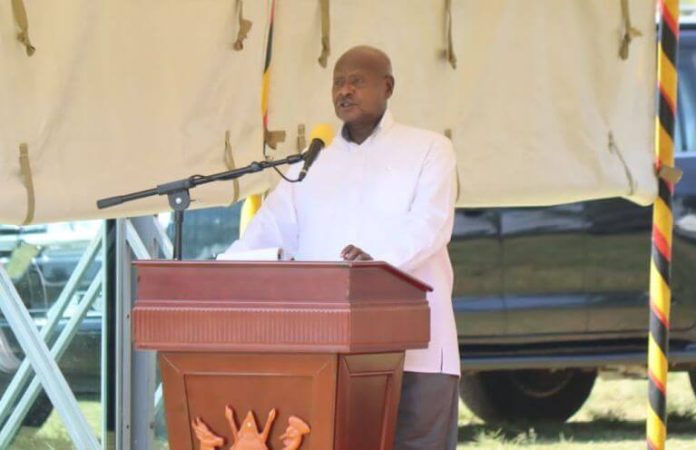
President Museveni said this yesterday while delivering a lecture of opportunity at the closure of the journalists’ 5-day Residential Symposium on Socio-economic transformation at Kyambogo University sports grounds.
President Museveni said that this message of the NRM since 1986 has been to ensure that Uganda becomes a new society based on science, knowledge and technology through socio-economic transformation.
President Museveni said that politics should be about solving the needs of the people which are the same and not diverting them into things which have no value addition to them.
Mr Museveni further told journalists that it is only through free education for all, getting all the families involved in the money economy, wealth creation, social infrastructure development and ensuring Peace and Security that socio-economic transformation and eventually prosperity can be achieved.
He was however dismayed by what he termed as parasites who have been opposing his free education for all agenda that he introduced in 1996, not knowing that the ‘Education For All’ according to the NRM is one of the key instruments of socio-economic transformation.
“Some people have been opposing free education for all these years, even in government schools. There are parasites that are looking for money from poor children. About 70% are dropping out because of the school costs,” President Museveni explained.
The President was happy to hear that journalists have come together and formed groups in form of SACCOs to benefit from government wealth creation programs and promised to engage the cabinet and see how to support them financially.
According to the organizer who is also the Personal Assistant to the President on Youth Affairs, Ms Hellen Seku the training attracted 562 participants from across Ugandan of which 134 are female.
She said journalists received orientation from keynote speakers who included, Minister for ICT and National Guidance Hon Dr Chris Baryomunsi, the NRM Secretary General Hon Richard Todwong, UPDF Spokesman Brig Gen Felix Kulayigye, Hon. Richard Todwong, the Deputy Chief of Defence Forces Lt Gen Peter Elweru, the Deputy Commander of Land Forces Maj Gen Sam Kavuma, State House Comptroller Ms Jane Barekye.
Others who addressed the journalists included Deputy Commander Special Forces Command Brig Charity Bainebabo, the Minister for Internal Affairs Maj Gen Kahinda Otafiire, Prof Mulindwa Rutanga, the Executive Director Uganda Media Center Ofwono Opondo and renowned veteran journalist Tonny Geofrey Owana.
Ms Seku told the President that the objective of the training was to share knowledge with the young journalists, ranging from patriotism, human rights, socio-economic transformation, effective communication, financial literacy, public health among others.
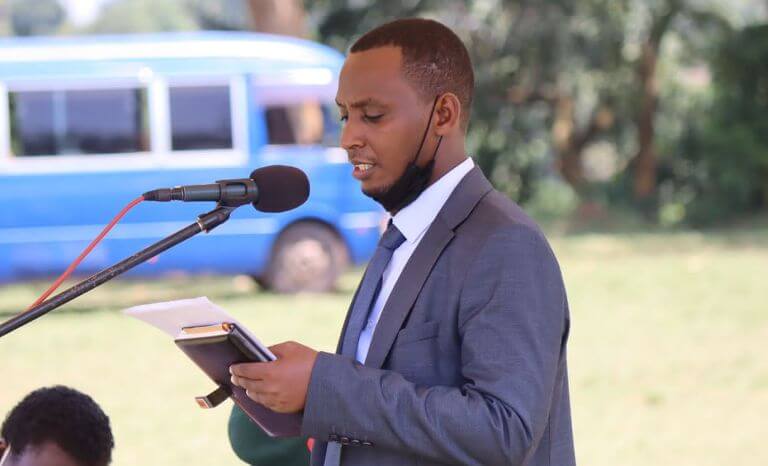
While speaking at the same event the Minister for Information Communication Technology and National Guidance, Dr Chris Baryomunsi informed the President that Uganda is among the few countries that liberalized journalism and media practice which has seen tremendous growth of media space.
Dr Baryomunsi said that Uganda now boasts of 42 Television stations and 320 radio stations down from one TV and Radio station compared to only Uganda Television and Radio Uganda respectively in 1986.
While reacting to a concern raised by President of Uganda Journalists Association Mathias Rukundo about the poor pay, the Minister acknowledged that majority of these journalists are employed by private media practitioners and the government is engaging the National Association of Broadcasters to see how they can address the concerns of journalists, but cautioned the media practitioners to remain ethical and professional despite the unpleasant working conditions.
While commenting about confrontation between journalists and security, Minister Baryomunsi revealed that they have engaged Police and other security agencies to appreciate the work of journalists and improve how they interact with them especially when reporting about sensitive matters.