By Rtd. Lt. Col. Dr. Damiano Kato Abooki
1. PRE-COLONIAL UGANDA
Before British contact, present-day Uganda was composed of several well-organized kingdoms and chiefdoms. The most prominent were Buganda, Bunyoro-Kitara, Ankole, Toro, and Busoga (Kiwanuka, 1970). These societies had centralized political systems, standing armies, systems of taxation, and codified customary law.
The economy was largely agrarian, based on banana cultivation, millet, and cattle keeping. Long-distance trade networks linked the region to the Swahili coast. Buganda emerged as the most powerful kingdom by the 18th century due to its administrative structure and military strength (Wrigley, 1996).
2. COLONIAL ERA: 1894 – 1962
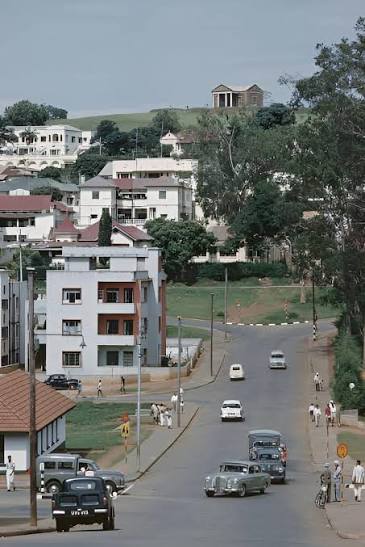
Uganda became a _British Protectorate in 1894 (Low, 1962). British colonial policy was based on “indirect rule”. The _1900 Buganda Agreement formalized this arrangement and introduced the mailo land tenure system (Mamdani, 1976).
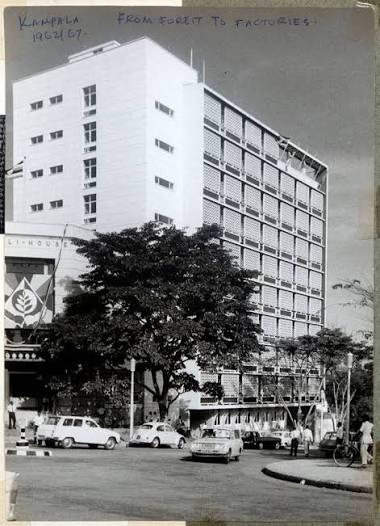
Economically, the British promoted cash crops: _cotton, coffee, and tea_ (Ehrlich, 1953). The completion of the _Uganda Railway in 1901_ linked the interior to the port of Mombasa.
Christian missionaries introduced Western education and health services. However, religious rivalry between Catholics and Protestants became a major feature of colonial politics (Tuma and Mutibwa, 1997).
Uganda was granted independence on 9th October 1962 (Mutibwa, 1992).
3. POST-INDEPENDENCE AND POLITICAL INSTABILITY: 1962 – 1986_
The early post-independence period was marked by a fragile alliance between UPC and KY. _Sir Edward Mutesa II became President and _Dr. Apollo Milton Obote Prime Minister. This alliance collapsed in 1966 when Obote suspended the constitution and abolished kingdoms (Gingyera-Pincywa, 1978).

In 1971, General Idi Amin overthrew Obote. The Amin regime 1971-1979 was characterized by military rule and economic decline (Kyemba, 1977). Amin was overthrown in 1979 by Tanzanian forces and Ugandan exiles.
What followed was instability 1979-1986, including Obote II 1980-1985 and the Luwero Bush War 1981-1986_ led by the NRA (Museveni, 1997). The war ended when the NRA captured Kampala on _26th January 1986.
4. THE NRM ERA AND NATIONAL RECONSTRUCTION: 1986 – DATE_
The NRM Government under President Yoweri Museveni prioritized peace and economic recovery. Key reforms included:
1.Security Sector Reform_: Professionalization of the UPDF and regional deployments in AMISOM, DRC, and South Sudan (Mugaju and Oloka-Onyango, 2000).
2.Constitutional Reform: The 1995 Constitution and return to multiparty politics in 2005 (Government of Uganda, 1995).
3.Economic Reform : Liberalization and infrastructure investment. GDP growth averaged 6% (World Bank, 2016). Introduction of UPE in 1997 and USE.
4. 21st Century Developments : Discovery of oil and gas in the Albertine Graben and focus on Vision 2040 (National Planning Authority, 2013).
5. CONCLUSION;
Uganda’s trajectory has been shaped by ethnic diversity, military intervention in politics, and efforts at national reconstruction. Since 1986, the focus has been on building institutions based on discipline, professionalism, and the rule of law.
NRM CHALLENGES;
Governance and Institutional Continuity
The extended period of NRM leadership since 1986 has provided policy continuity that enabled reconstruction, security, and economic recovery.
At the same time, the same continuity has raised national questions about leadership transition, renewal, and strengthening of institutions so that governance does not depend on individuals but on systems.
Key focus areas have become: deepening democratic practices, broadening political space, and ensuring that state institutions like Parliament, Judiciary, and EC operate with full independence.
B. CHALLENGES SINCE 1986
1. Governance and Institutional Strengthening;
The long period of NRM rule brought stability and consistent policy direction that helped rebuild the state. The emerging challenge is to consolidate this by strengthening institutions, encouraging leadership renewal, and ensuring democratic competition so that Uganda’s progress is anchored in systems, not personalities.
2.Security
LRA war in the North, ADF threats, and regional deployments. The task now is balancing a professional UPDF with stronger civilian oversight mechanisms.
3.Economic Transformation
Growth has been good, but job creation for the youth, industrialization, and prudent management of oil revenues remain critical.
4. Service Delivery
Access expanded through UPE/USE, but the focus now is on quality, retention, and equity.
5. National Cohesion
Managing diversity, land issues, and expectations across regions.
REFERENCES;
Dolan, C. (2009). Social Torture: The Case of Northern Uganda, 1986-2006. Berghahn Books.
Ehrlich, C. (1953). The Uganda Economy, 1903-1945. East African Economic Review, 1(2), 1-28.
Gingyera-Pincywa, A. G. G. (1978). Northern Uganda in National Politics . Kampala: Fountain Publishers.
Government of Uganda. (1995).The Constitution of the Republic of Uganda. Kampala: Government Printer.
Kiwanuka, M. S. M. (1970).A History of Buganda. London: Longman.
Kyemba, H. (1977).A State of Blood: The Inside Story of Idi Amin. New York: Ace Books.
Low, D. A. (1962). The Constitutional and Political Development of Uganda. Journal of African History, 3(1), 63-80.
Mamdani, M. (1976). Politics and Class Formation in Uganda. New York: Monthly Review Press.
Mugaju, J., & Oloka Onyango, J. (2000).No-Party Democracy in Uganda. Kampala: Fountain Publishers.
Museveni, Y. K. (1997). Sowing the Mustard Seed . London: Macmillan.
National Planning Authority. (2013). Uganda Vision 2040. Kampala: NPA.
Tuma, T., & Mutibwa, P. (1997). A Century of Christianity in Uganda. Kampala: UJCC.
World Bank. (2016). Uganda Economic Update. Washington DC: World Bank.
Wrigley, C. (1996).Kingship and State: The Buganda Dynasty. Cambridge: Cambridge University Press.
ABOUT THE AUTHOR:
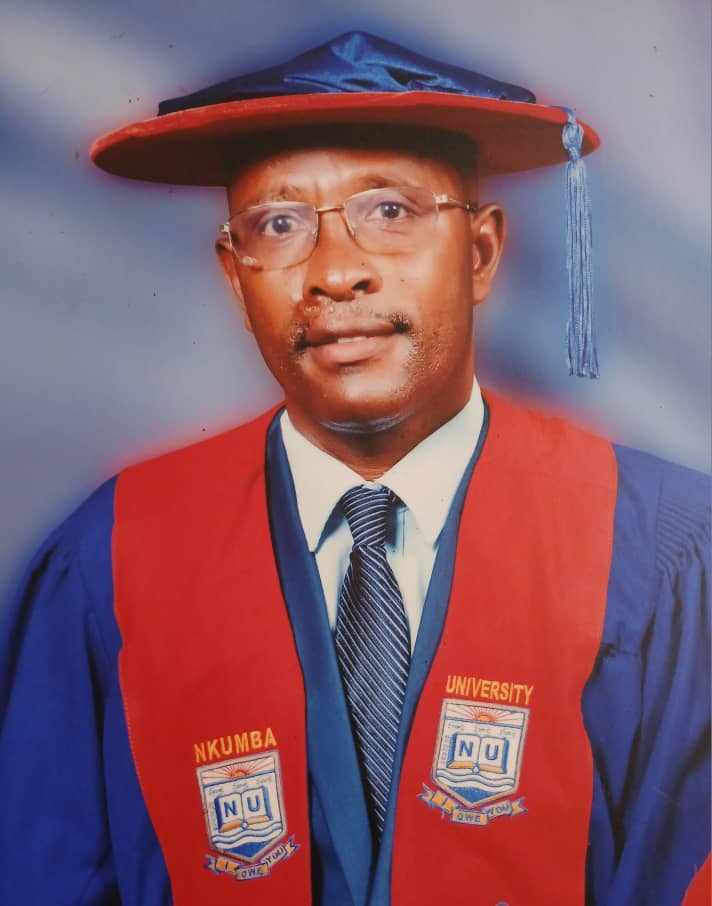
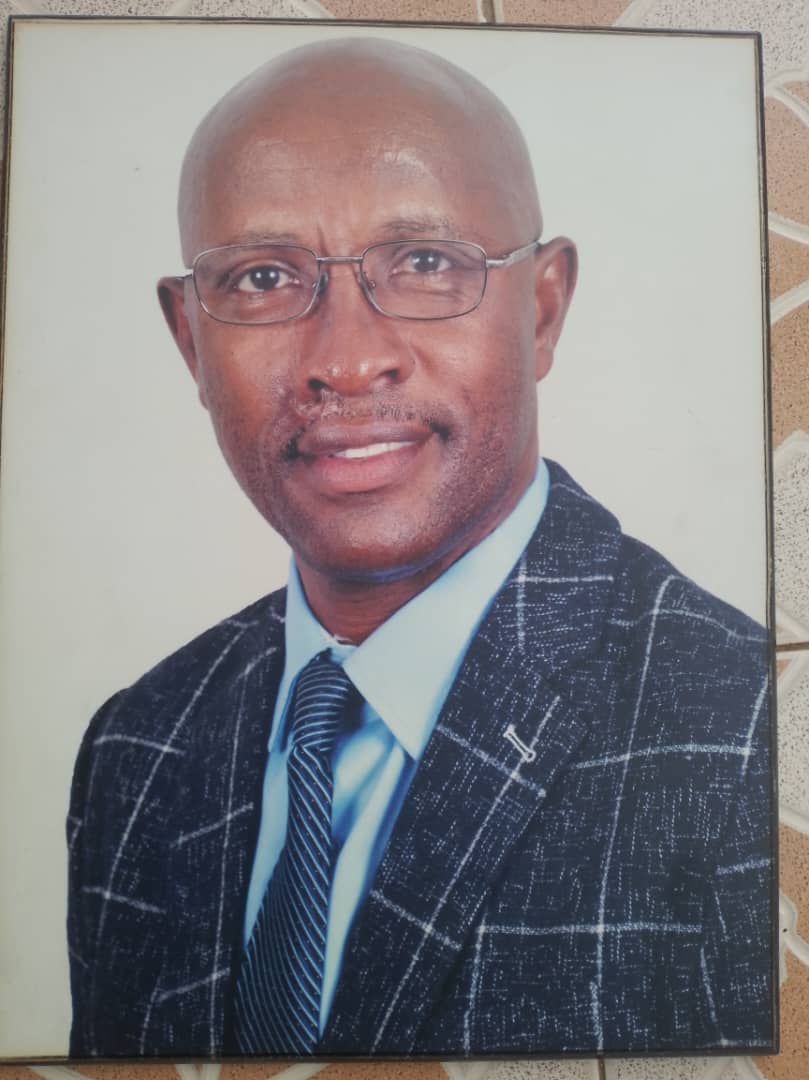
Rtd. Lt. Col. Dr. Damiano Kato Abooki is a retired UPDF officer with 24 years of service.
He holds a PhD from Nkumba University, an http://M.Ed from Makerere University, and a PGDE in Political Education. He also holds degrees in Philosophy and Theology.
He served in the PPU, SFC, AMISOM Somalia, and the Doctrine Center Mbuya. He is a political analyst and stood for MP position in 2026. His research interests include military professionalism, security sector transformation, and civil-military relations.
He is also affiliated to the International University of East Africa.
Email: damian.kato@iuea.ac.ug