
On August 9, Kenyans head to the polls and with soaring food and fuel prices, high unemployment and post-pandemic stagnation, a change in leadership could not come at a more critical time for East Africa’s largest economy.
Who are the candidates?
Deputy President William Ruto, 55 and veteran opposition leader Raila Odinga, 77, are leading in opinion polls in the race to succeed term-limited President Uhuru Kenyatta.

It’s a bitter battle between the former foes-turned-allies-turned-foes-again vying to lead the relatively stable nation in a volatile region.

Ruto calls himself the “Hustler-in-Chief,” a reference to his humble beginnings as a chicken seller in Kenya’s Rift Valley to a heartbeat away from the most powerful office in the land.
“I may be the child of nobody but we want to make this a country of everybody,” the Kenyan deputy president told us at his expansive official residence in the wealthy Karen neighborhood of Nairobi.
“We want to make this country a country of opportunity for every child in Kenya.”
Odinga, who says he is contesting for the last time, has unsuccessfully run for president four times before and challenged his loss in the last three elections.
“I had considered not running this time but there was a lot of pressure on me from my supporters to run because of what I represent,” he told us, promising change if elected.
“I’ve been saying that the aspirations and the desires of the people of Kenya as expressed in the founding document of our nation, what you can call the Kenyan dream, has not been realized.”
The two other candidates cleared to run for president are professor George Wajackoyah and David Mwaure Waihiga. They are both considered long shots and unlikely to win.
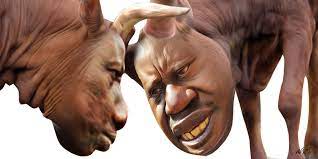
(credit John Githongo)
The president’s backing
Kenyatta ditched his deputy Ruto to support Odinga, became the chair of his Azimio la Umoja (Aspiration to Unite) coalition’s campaign, and brought along influential figures from his powerful Kikuyu ethnic group.
But Ruto has assembled a formidable coalition of his own named Kenya Kwanza (Kenya First), attracted many leaders from Kenyatta’s backyard and animated broad national appeal with an oft-repeated rags-to-riches story.
While he retains the title of Kenya’s deputy president, Ruto lost most of his powers and responsibilities in 2018 when Kenyatta reconciled with his former rival Odinga, effectively neutralizing the opposition.
A symbolic handshake with Odinga ended Kenyatta’s alliance with Ruto, a well-orchestrated union that had won them the presidency twice and scuttled their crimes against humanity cases at the International Criminal Court.
Ruto is running on that betrayal, as Kenyatta had repeatedly pledged to support his deputy when the president’s term ended.
‘I have a plan, he doesn’t’
“There is a world of difference between me and my competitor. I have a plan, he doesn’t,” Ruto says of Odinga.
He accuses the Odinga campaign of making general statements about Kenya’s huge debt burden, high cost of living and unemployment crisis without detail or clarity.
“He’s a good old man, but I don’t think today, he has the capacity to pull this country from where it is. Kenya cannot afford to have a leader who is not hands-on, who doesn’t know what he’s doing or what’s going on, who is depending on other people to make decisions.”
Both campaigns have accused the other of corruption, an intractable challenge for Kenya since it declared independence from Britain in 1963. More than $16 million is stolen from the government daily, Kenyatta has claimed.
Odinga calls the pilfered funds “budgeted corruption” and promises to close corruption corridors if he wins. “There’s a lot of pilferage. When we address this, what we are going to get as savings is going to be more than what we require to fund the projects that we are talking about,” the veteran politician nicknamed Baba told the Eastafricanwatch.net